The short answer
Shear if the timber has value or has to be placed somewhere specific. Mulcher if the material is waste and you are clearing by area rather than by stem. That single distinction settles most of these conversations, and many contractors eventually own both.
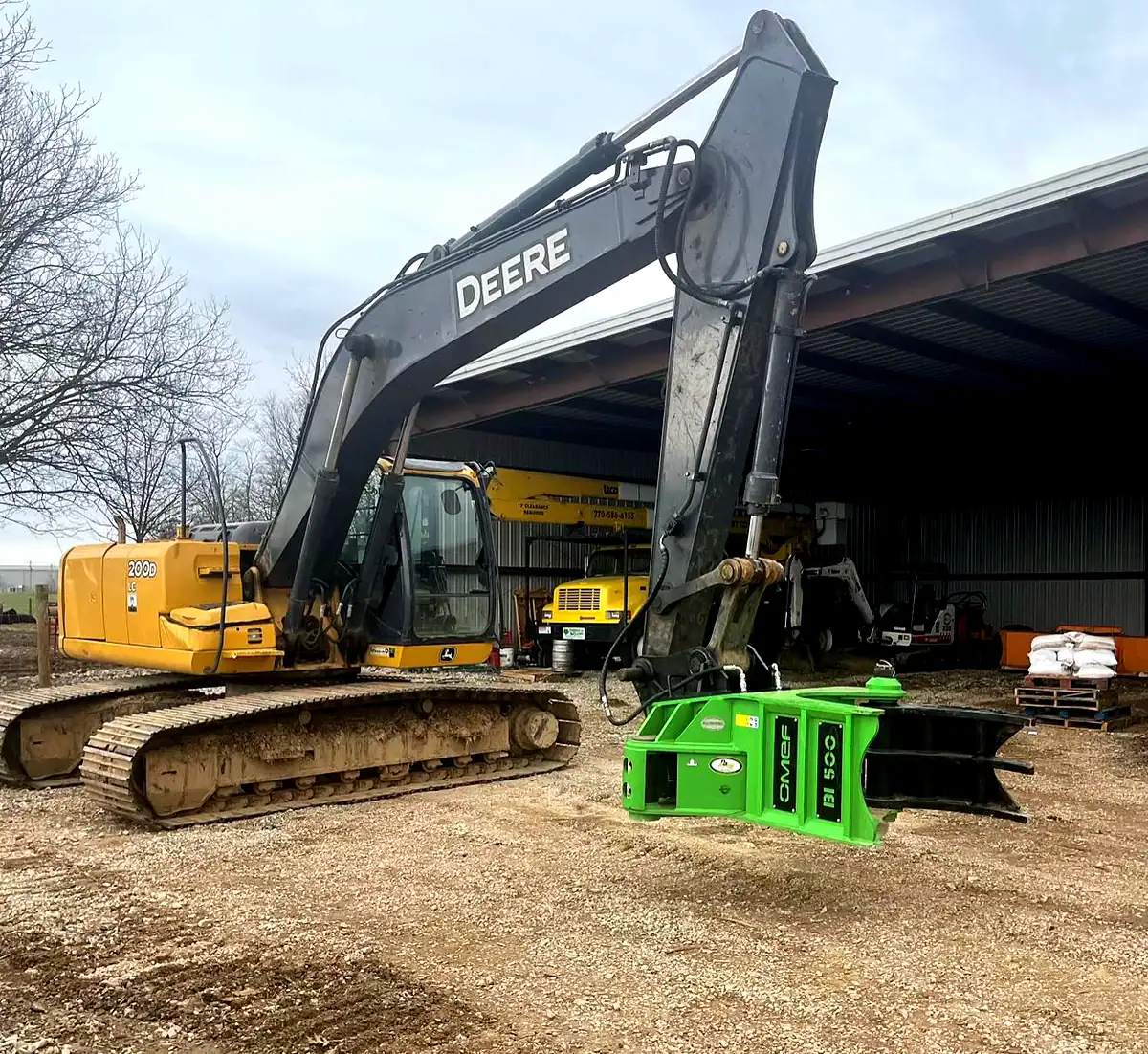
Tree shear
Grips, cuts and keeps holding the stem in one motion
Choose it when
- Timber has value and must be stacked, loaded or sold
- Stems must be placed precisely — near buildings, roads or services
- You are thinning to a spec rather than clearing everything
- You are quoting per stem, not per hectare
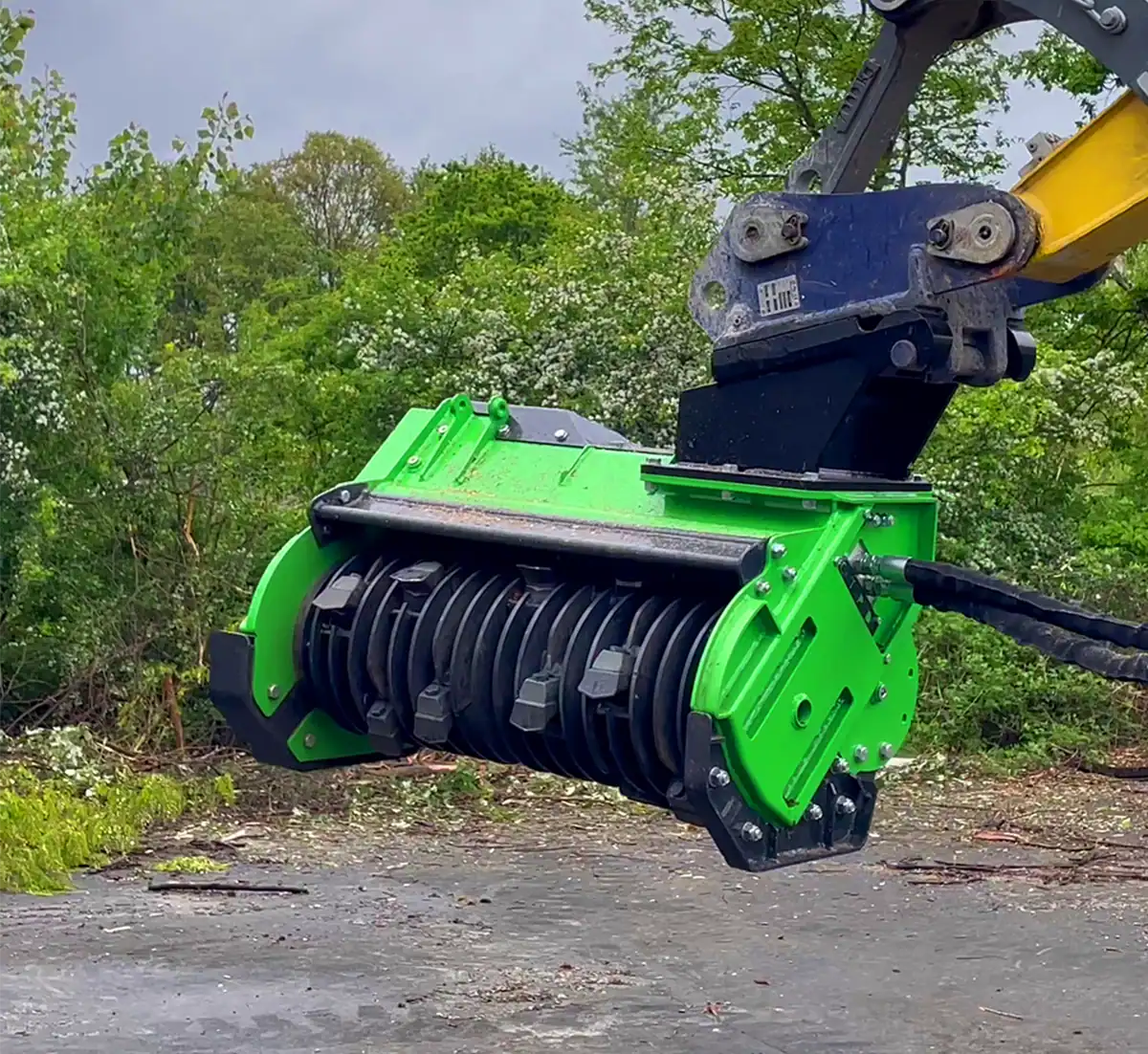
Forestry mulcher
Reduces standing vegetation to mulch in a single pass
Choose it when
- Material is waste and can stay on site as mulch
- You are pricing per hectare, as fuel reduction and roadside work is
- Stem density is high and stem diameter is moderate
- Nobody needs the timber and nothing needs carting
Side by side
| Criterion | Tree shear | Forestry mulcher |
|---|---|---|
| Unit of work | The stem | The hectare |
| Output | Whole stems, placed where the operator wants | Mulch, left in place |
| Handles valuable timber | Yes — that is the point | No, it destroys it |
| Second pass needed | Yes — stems still have to be processed and moved | No — one pass finishes it |
| Carrier range | 2–50 t | 1–30 t |
| Circuit | Double-acting | Single-acting hammer line |
| Load on the carrier | Intermittent, like normal excavator work | Continuous — pumps, coolers and final drives feel it |
| Dominant running cost | Periodic blade rebuild | Teeth, budgeted monthly in abrasive or stony ground |
Shaded cell is the stronger side on that criterion
What they cost to own and run
| Cost driver | Tree shear | Forestry mulcher |
|---|---|---|
| Dominant wear item | Blade rebuild, periodic | Teeth and tips, a monthly budget line in abrasive ground |
| Carrier load | Intermittent, like normal excavator work | Continuous — budget for improved cooling and tighter service intervals |
| Second pass | Required. Stems still have to be processed and moved, and that labour is real | None. One pass finishes the job |
| Revenue from the material | Possible where the timber has value | None. The material becomes mulch on site |
| The metric to price on | Cost per stem, or per hour | Cost per hectare |
No purchase prices appear here, because attachment pricing moves with the exchange rate, the model inside a range, rotation options and the carrier bracket. What moves the number is covered on the attachment costs page, and the utilisation question that decides whether to own either tool is on hire versus buy.
Three situations, three answers
Treated-hectare targets, mixed regrowth, material can stay on site, priced per hectare.
Mulcher. Hazard-reduction programs are measured in treated hectares rather than stems, and area targets favour a tool that finishes in one pass. Measure your own hectares per hour on your own material before you commit to a rate.
Thinning to a spec, stems have value, material is going to a landing for extraction.
Shear. The timber has value and has to be placed somewhere specific, which is exactly what a shear does and a mulcher destroys. The shear also keeps operators out of the fall zone at volume.
Corridor maintenance with a mix of open sections and stems near assets, recurring annual programme.
Both, on two machines, if the programme is large enough. The shear takes the stems that must be placed and anything near assets; the mulcher makes one pass over what is left. Many contractors in this work eventually own both precisely because they are not substitutes.
When the answer is both
On mixed sites the shear takes the merchantable stems and anything that has to be placed, then the mulcher makes one pass over what is left. Owning both is common precisely because they are not substitutes.
How buyers get this choice wrong
Costing mulching at your excavation hourly rate
Mulching is continuous load. Fuel burn, cooling demand and service intervals all move, and costing it as a dig hour understates it every time.
Pricing from brochure hectares per hour
Published productivity assumes light material, flat ground and no interruptions. Halving that figure doubles your cost base, and the difference shows up on site.
Buying a shear and forgetting the stump
A shear leaves a cut stump in the ground. If the scope includes stump removal, that is a separate tool and a separate line in the quote.
Choosing on rated diameter
Published maximums are best case in favourable timber. Derate for dense, fibrous or buttressed Australian hardwood before you match a model to your work.
Before you decide
Decision checklist
- Whether the material has value or is waste
- Whether you are pricing per stem or per hectare
- Routine stem diameter, not maximum
- Stem density per hectare
- Whether material can be left on site
- Your carrier's cooling capacity if mulching
- Measured hectares per hour on your own material
- Tooth or blade cost and life in your conditions
Questions that follow
01Can a mulcher deal with stumps?
Not properly. Some operators work a mulcher down onto a stump, but the tool is designed to reduce standing vegetation, not to work in ground. Doing it wears teeth at an extraordinary rate and loads the carrier badly. Stump removal is a grinder or cutter job.
02Which is better on steep or uneven ground?
Shear, generally, because the work is stem by stem and the machine can be positioned for each one. A mulcher needs to travel across the area it is treating, and on steep or broken ground the productivity assumption behind a per-hectare rate falls apart quickly.
03Does mulch left on site cause problems?
It depends on the depth and the receiving environment. A thin, even layer is generally acceptable and is part of why mulching wins area-based work. Deep windrows can suppress regeneration and, in some fuel-reduction contexts, defeat the purpose of the treatment. Check what the contract specifies.
04Can a mulcher handle standing trees?
Up to its rated diameter, yes — it takes them standing and reduces them in place. Beyond that you are felling first, which is shear or saw work.
05Does a tree shear remove the stump?
No. It leaves a cut stump in the ground. Stump removal is a grinder or cutter job, which are different tools doing a different job.
06Which is better for bushfire fuel reduction?
Mulcher, almost always. Hazard-reduction programs are measured in treated hectares, and area targets favour a tool that finishes in one pass.