Define the work
Provide representative material, terrain, access, retained assets, required finish and annual hours. State the production unit used for acceptance and tendering so supplier assumptions can be tested against the service actually sold.
Choose the operating model
Industry buying logic
The category guide explains what the attachment does. The industry profile explains why a particular buyer would own it, how it should be quoted and which risks belong in the rate.
Begin with the unit the client purchases. Civil projects buy released work fronts and completed hectares. Arborists sell controlled removals, pruning and finished sites. Councils manage dispersed public assets and response capability. Utility programs buy inspected corridor distance within an access window. Remote infrastructure projects buy production with support resilience, while agricultural buyers often value timing and the ability to carry one carrier into the next task.
That production unit changes the attachment decision. A high-capacity shear has little value when handling or transport controls the work face. A compact grinder may beat a larger unit across scattered street sites because it mobilises quickly. A mulcher that performs strongly in clean demonstration material may lose its advantage in rock, wire or sustained summer heat. The industry context converts published capability into a commercial method.
Fleet fit matters as much as attachment fit. Identify which excavator is available when the work occurs, how it reaches site, what guarding and cooling it needs, and whether the crew can support the hydraulic functions. Include hitch, bracket, rotator, retained material and any counterweight in lift calculations. Confirm usable flow at working pressure and return restrictions rather than relying on maximum pump output.
Support risk also changes by industry. A metropolitan tree contractor may obtain parts the same day, while a remote corridor crew needs critical inventory on the support vehicle. Councils may require a transparent whole-of-life procurement case. Seasonal agricultural work may favour hire unless timing has a high opportunity cost. The profiles below make those assumptions visible before a quote or tender rate is accepted.
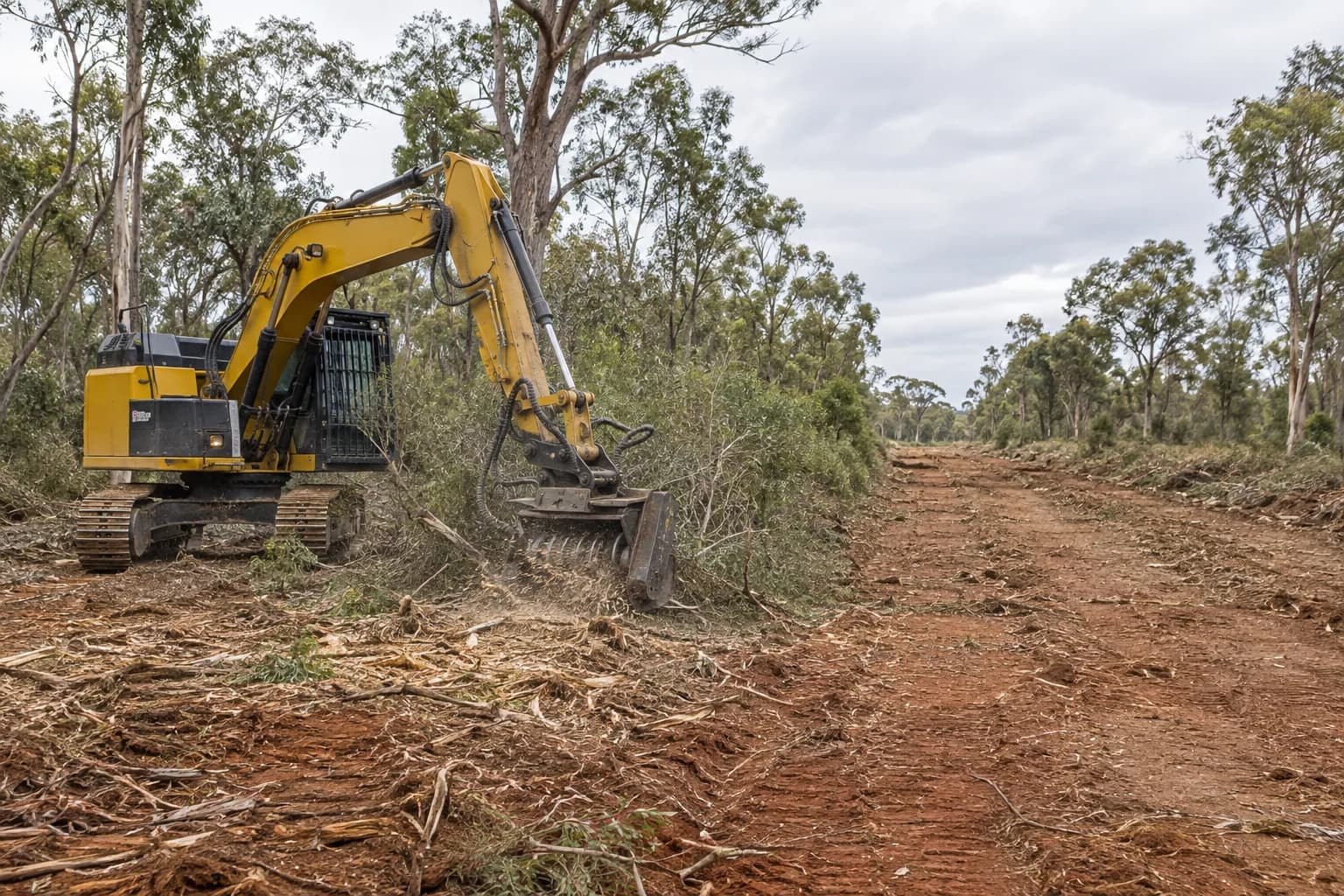 I1Industry profileCivil constructionPlan clearing attachments for civil sites around staged access, material handling, mobilisation and the finish required by the next trade.Open industry guide →
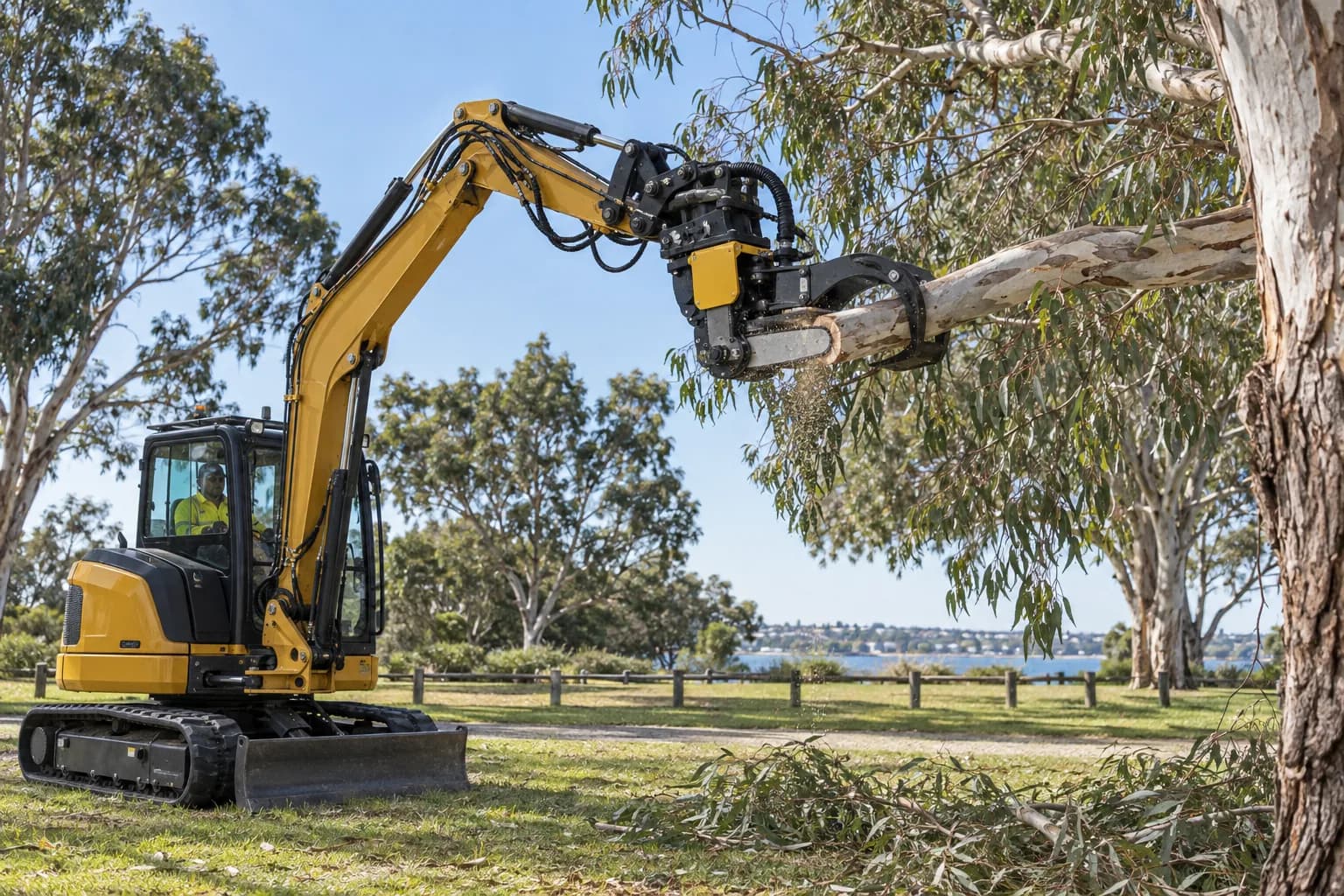 I2Industry profileArboristsChoose mechanised tree attachments for controlled cutting, pruning and material handling while reducing exposure beneath suspended sections.Open industry guide →
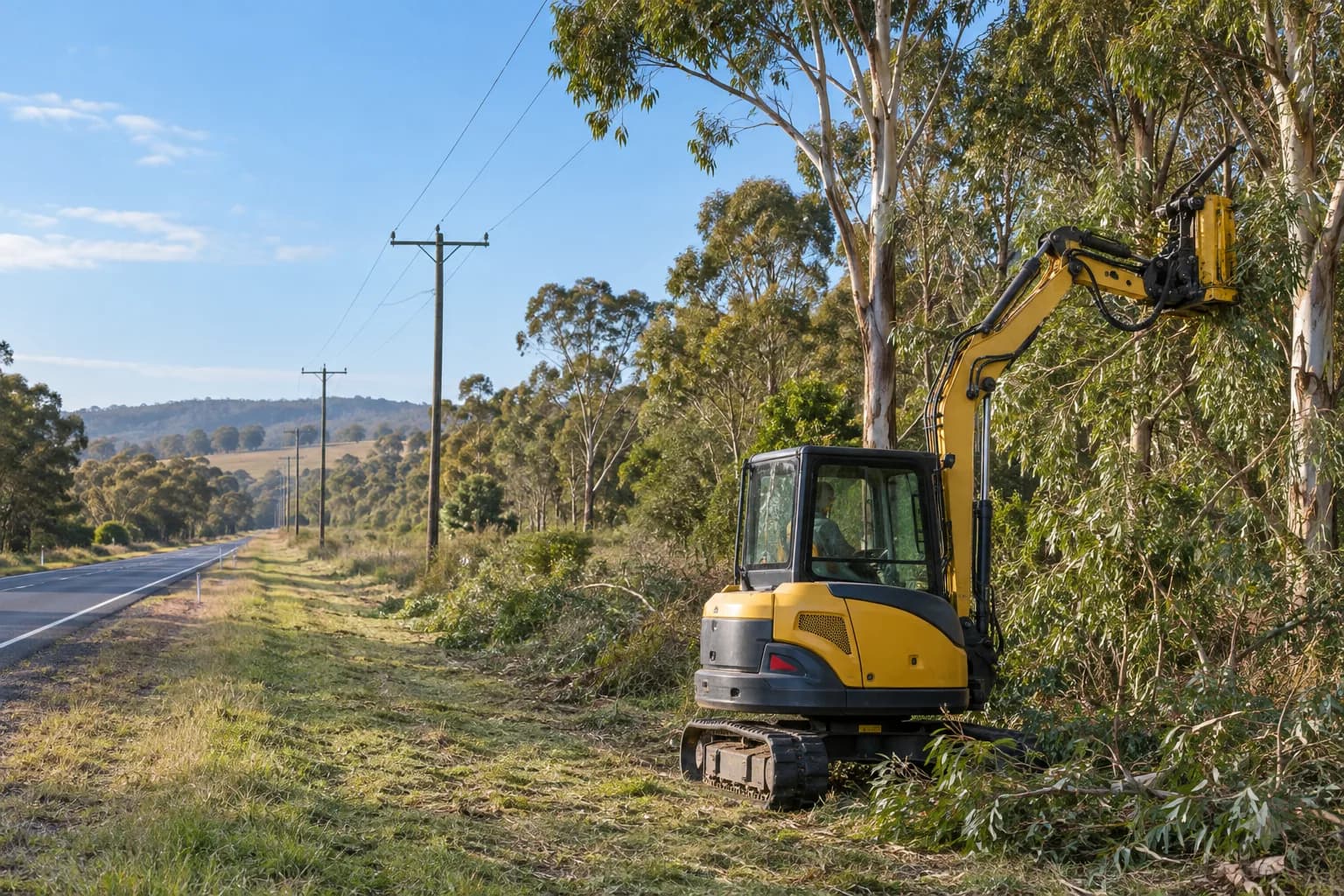 I3Industry profileCouncilsSpecify versatile forestry attachments for council vegetation programs, dispersed sites, public interfaces and transparent whole-of-life procurement.Open industry guide →
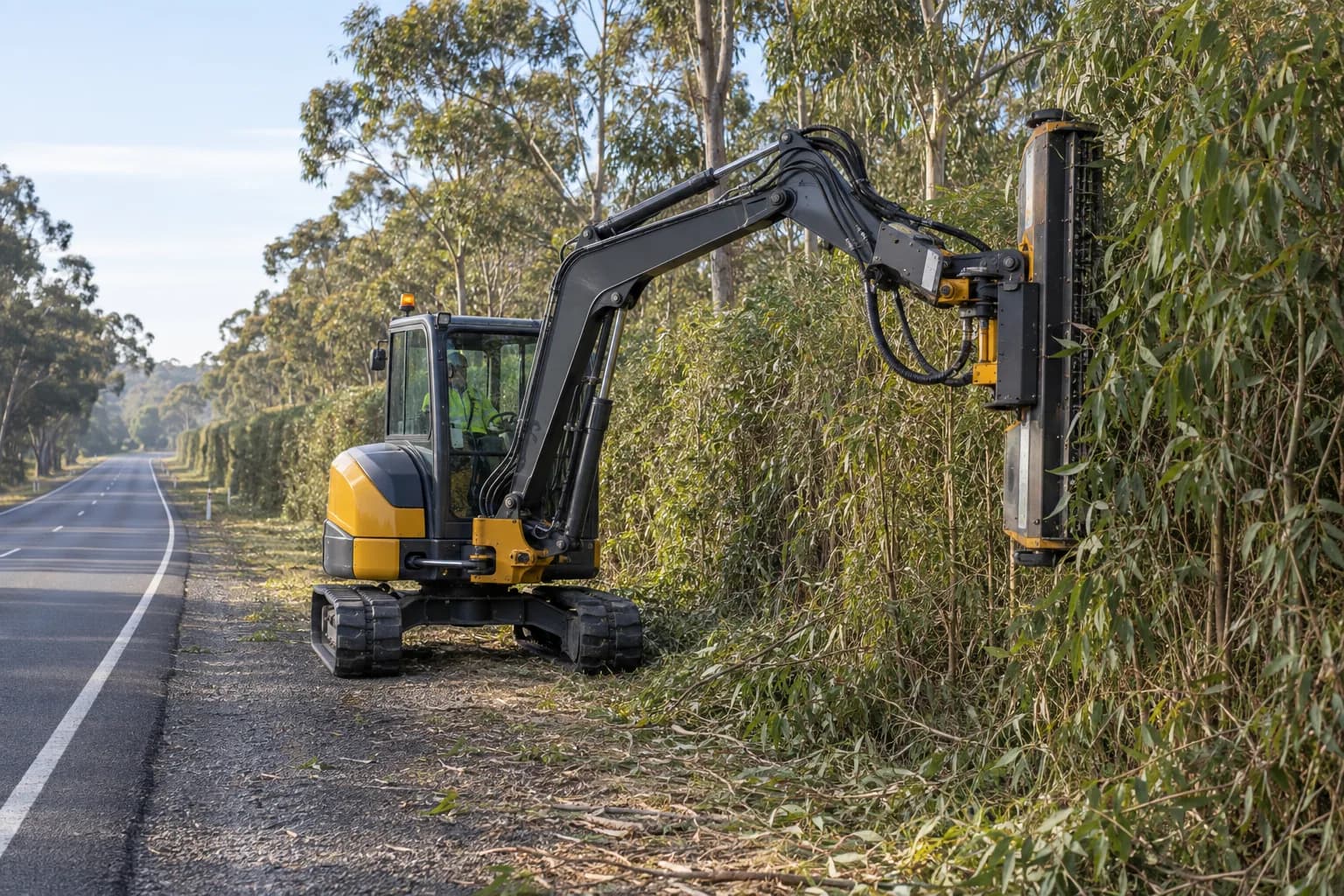 I4Industry profileUtilitiesConfigure pruning, controlled cutting and material handling for repeat corridor programs where access windows and exclusion zones drive production.Open industry guide →
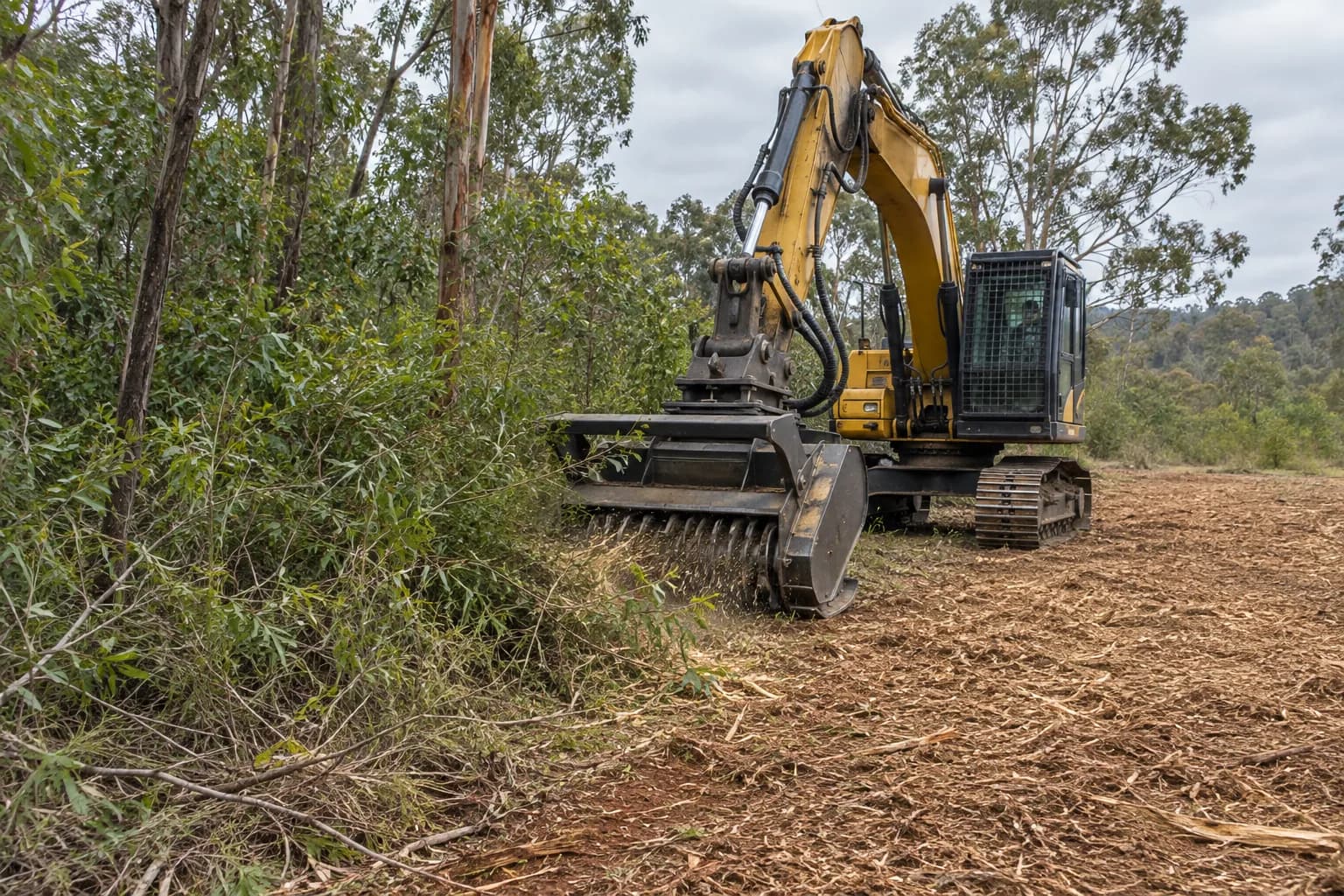 I5Industry profileMining and energySelect heavy-duty forestry attachments for remote infrastructure clearing where mobilisation, carrier protection and support resilience shape the rate.Open industry guide →
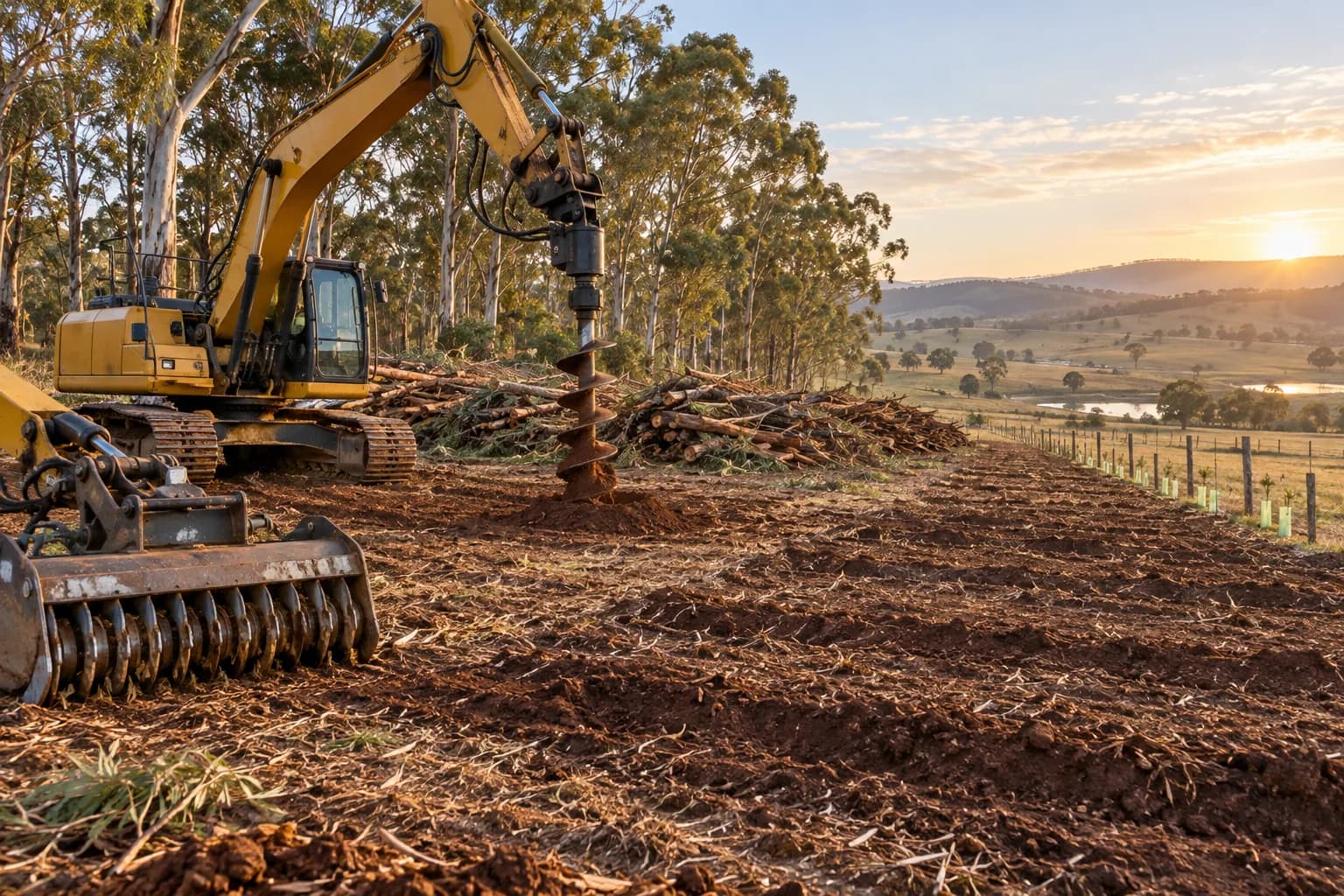 I6Industry profileAgriculturePlan farm forestry attachments around selective clearing, timber recovery, soil protection and the productive use required after vegetation removal.Open industry guide →
A common procurement method
Provide representative material, terrain, access, retained assets, required finish and annual hours. State the production unit used for acceptance and tendering so supplier assumptions can be tested against the service actually sold.
Provide make, model, configuration, lift chart, hitch, auxiliary flow, pressure, return and case drain. Require the ordered attachment mass and a written carrier assessment rather than a tonne-class statement.
Itemise installation, guarding, controls, commissioning, training, freight, initial wear stock, warranty and field response. Compare delivered-and-working cost with downtime exposure rather than choosing the lowest loose-head price.
Keep the completed brief, supplier response and commissioning measurements with the machine record. Add production, fuel, wear and downtime by work type after deployment. Those results turn the next purchase from a fresh sales exercise into an evidence-based fleet decision. They also provide estimators with realistic rates for new material, site and mobilisation conditions instead of reusing one headline number across unrelated contracts.
If the industry profile identifies the commercial setting, the application guides define the operating sequence and the complete buyer’s guide covers the attachment categories, hydraulics and carrier match. Use all three layers before requesting comparable quotations.
The final decision should remain traceable. Record why a category was shortlisted, the carrier data supplied, every qualification in the quotation and the production assumptions used in the ownership model. Commission against representative work, then compare actual output, wear, fuel and downtime with that baseline. A clear record protects the procurement decision and gives the next estimator or fleet manager a stronger starting point.