Use the access window
Possession, traffic control and isolation time make completed corridor distance the useful production measure.
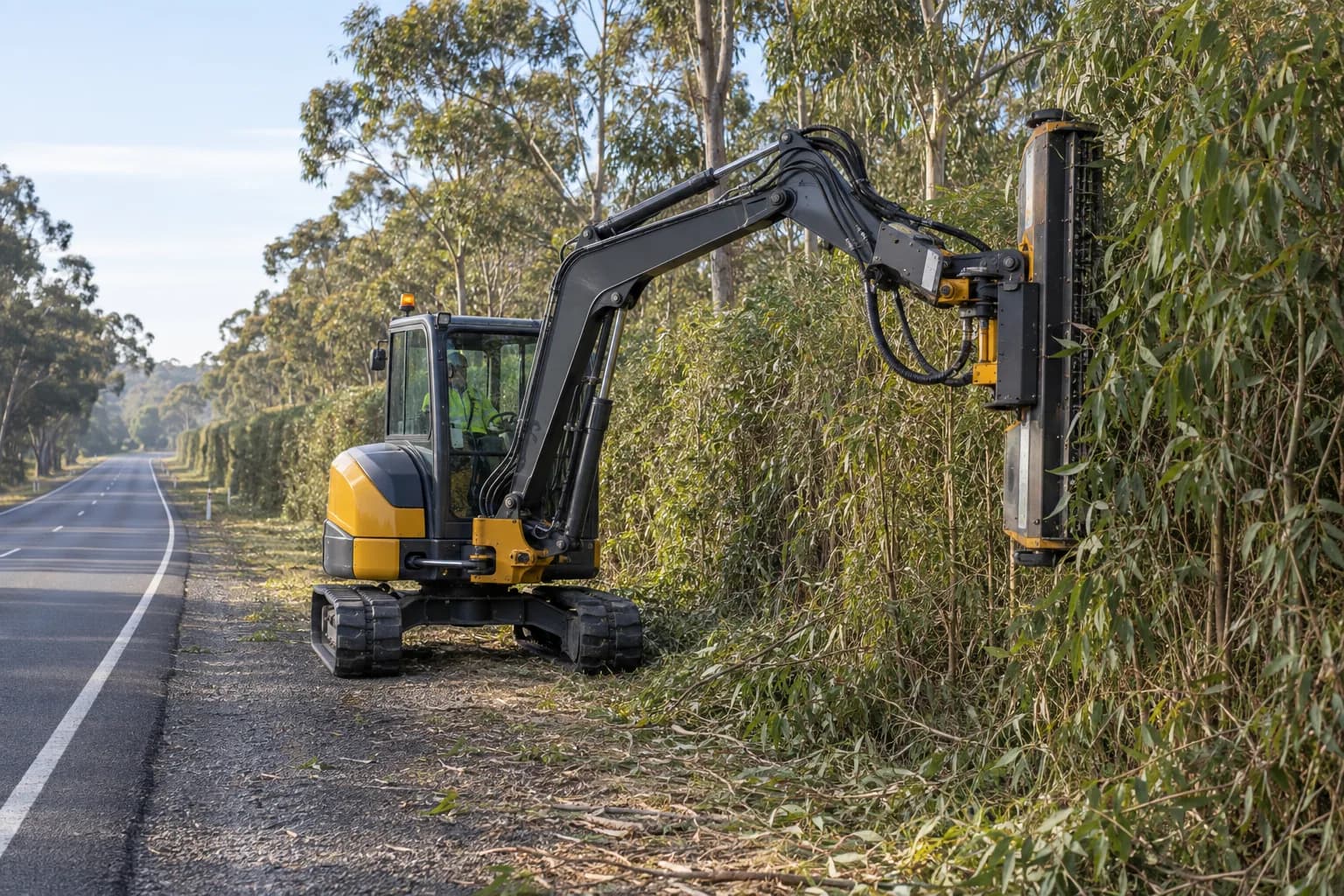
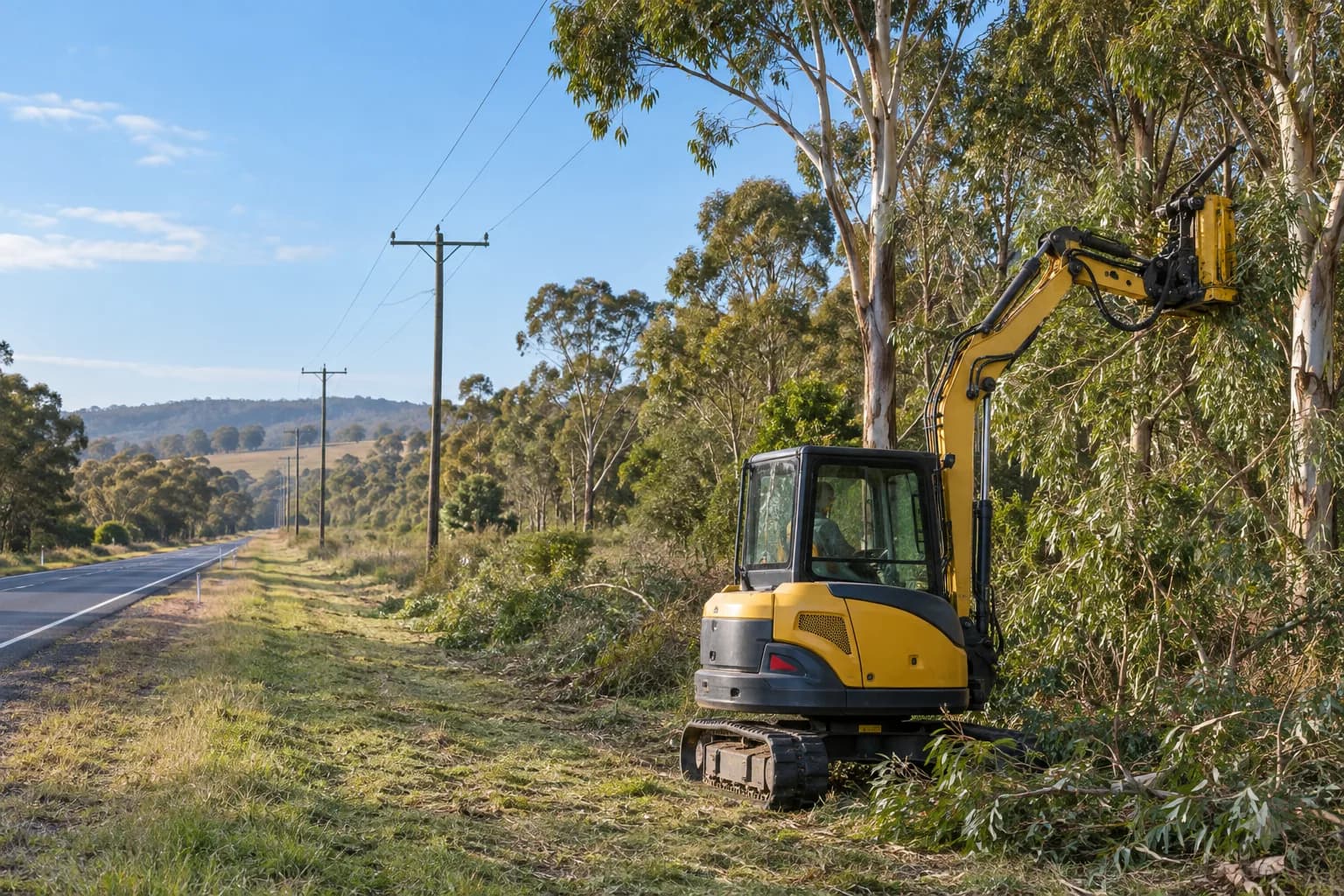
I4 · Power · rail · road · pipeline corridors
Configure pruning, controlled cutting and material handling for repeat corridor programs where access windows and exclusion zones drive production.
The commercial outcome
Possession, traffic control and isolation time make completed corridor distance the useful production measure.
Carrier stability, retained-section mass and the downstream material stream determine the method.
Inspection, cut quality and documented controls matter across recurring multi-site programs.
Begin with the required clearance, retained vegetation, cut quality, access side and the asset owner’s procedure. Map conductor, rail, road, fence, pipeline and structure offsets against the carrier position available on site. Reach alone is not a machine envelope: confirm lift capacity at radius with attachment and retained material included, and identify the sectors where slope or track orientation reduces stability.
Choose the cutting method by the required control. Mechanical pruners suit repeat profile work when material can fall into a managed zone. Grapple saws hold sections through the cut when placement matters. Tree shears suit whole-stem removal where the scope permits it. Mulchers treat accessible regrowth and floor material but introduce debris, continuous hydraulic load and a different residual finish. The contract condition decides among them.
Corridor crews often work inside possessions, isolations or traffic-control windows that cost more than the cutting machine. Measure cleared and inspected metres per available window, not limbs per minute. Include setup, communication checks, carrier repositioning, material removal and reopening inspection. A slower head that reduces manual handling or produces a cleaner release can outperform a faster attachment whose debris stream delays the handback.
Balance the fleet around that measure. Identify where branches, logs and mulch can be placed, which machine follows the cutter and how transport enters without blocking the work face. For remote sections, carry the wear and hose items that can stop the attachment. A missed courier or unavailable chain component can waste an entire possession, so parts planning is a production control rather than a workshop detail.
Specify attachment functions, hydraulic circuits, controls, guarding, cameras, communication and emergency recovery in the work method. Train operators on the approved carrier and configuration. Record representative section sizes, working radii and conditions during commissioning so planners understand where the method is productive and where another machine or manual technique remains necessary.
After each program, retain corridor distance, access hours, fuel, wear, defects, downtime and rejected work. Separate delays caused by access, material handling and the attachment itself. This evidence improves tender rates and supports a defensible decision when changing head size, carrier or crew. It also prevents one exceptional open corridor from becoming the assumed production rate for constrained urban, rail or transmission work.
Validate the method on corridor sections that represent the real program: open access, constrained urban edges, slopes, crossings and locations with difficult debris handling. Record available access-window minutes, productive cutting, carrier moves, ground support, material removal, inspection, defects and the exact distance handed back. Note the working radius and section size where cycle time or stability changes materially. Production forecasts should use cleared and accepted metres per possession or traffic-control shift, supported by a range rather than one best result. Retain photographs and inspection outcomes with those records so future tenders can distinguish a change in vegetation, access or clearance standard from an attachment-performance problem. Record weather and ground condition as well, because access speed and safe carrier position can change even when the vegetation specification remains identical.
Continue the decision
Other industries
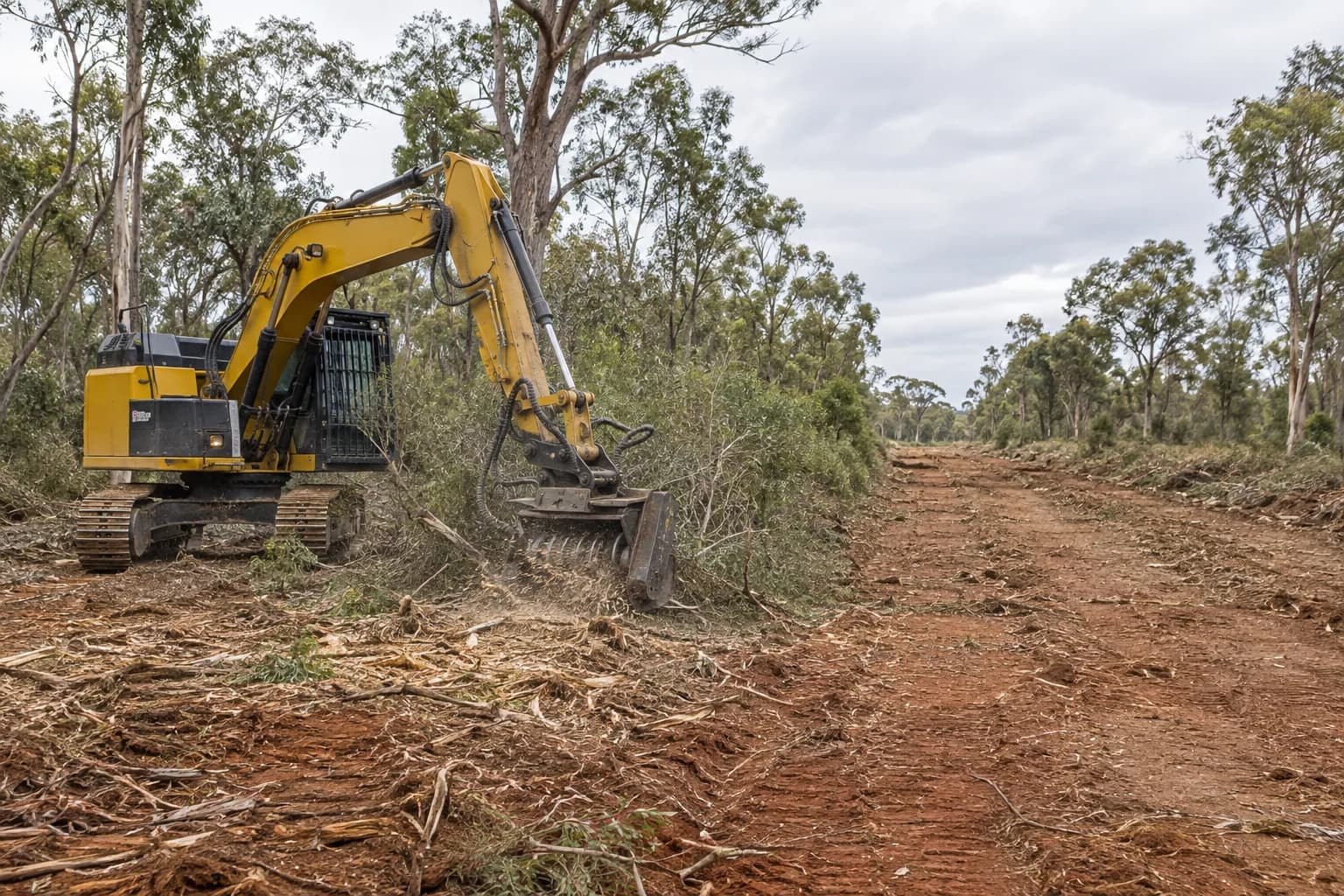 I1Industry profileCivil constructionOpen industry guide →
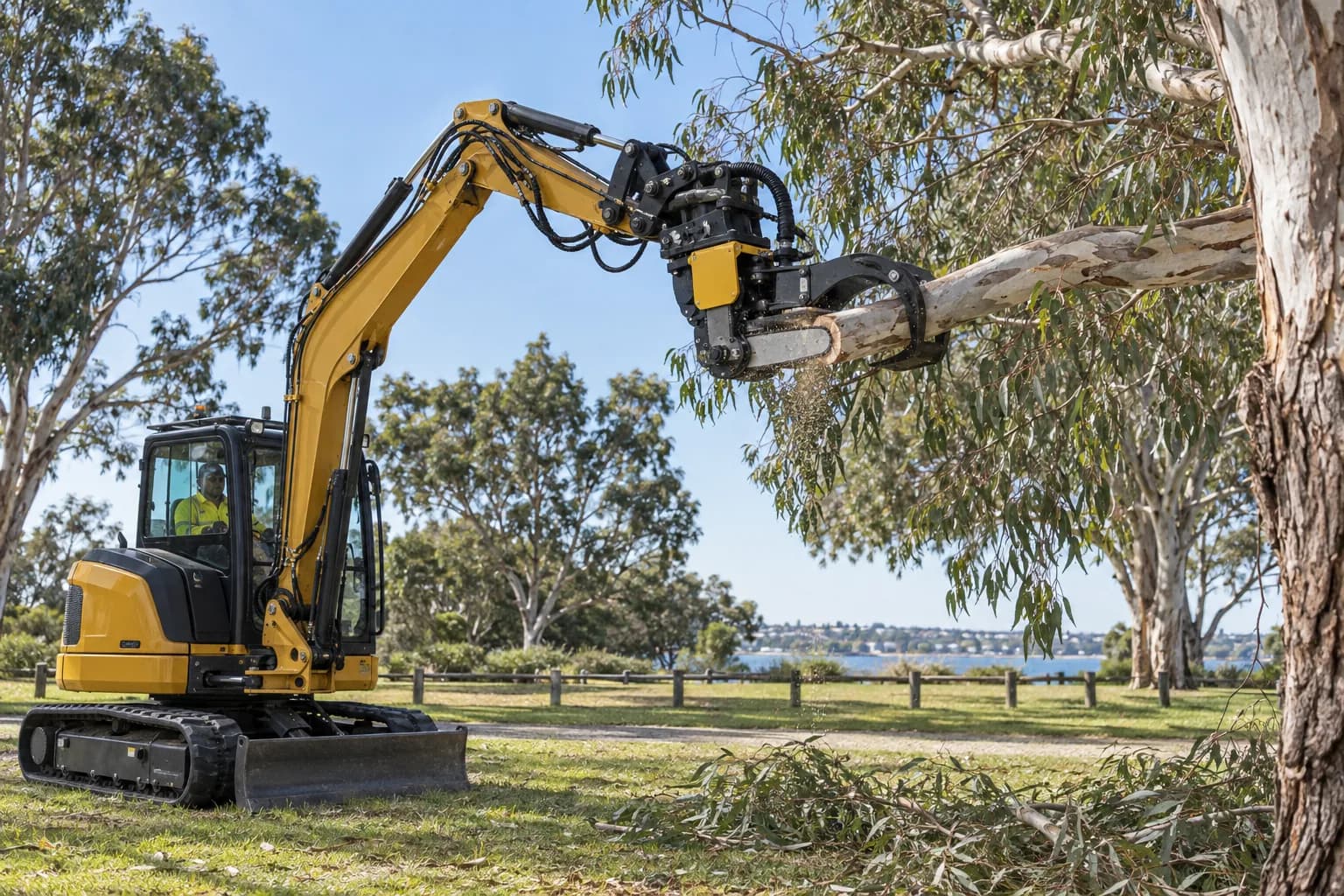 I2Industry profileArboristsOpen industry guide →
 I3Industry profileCouncilsOpen industry guide →
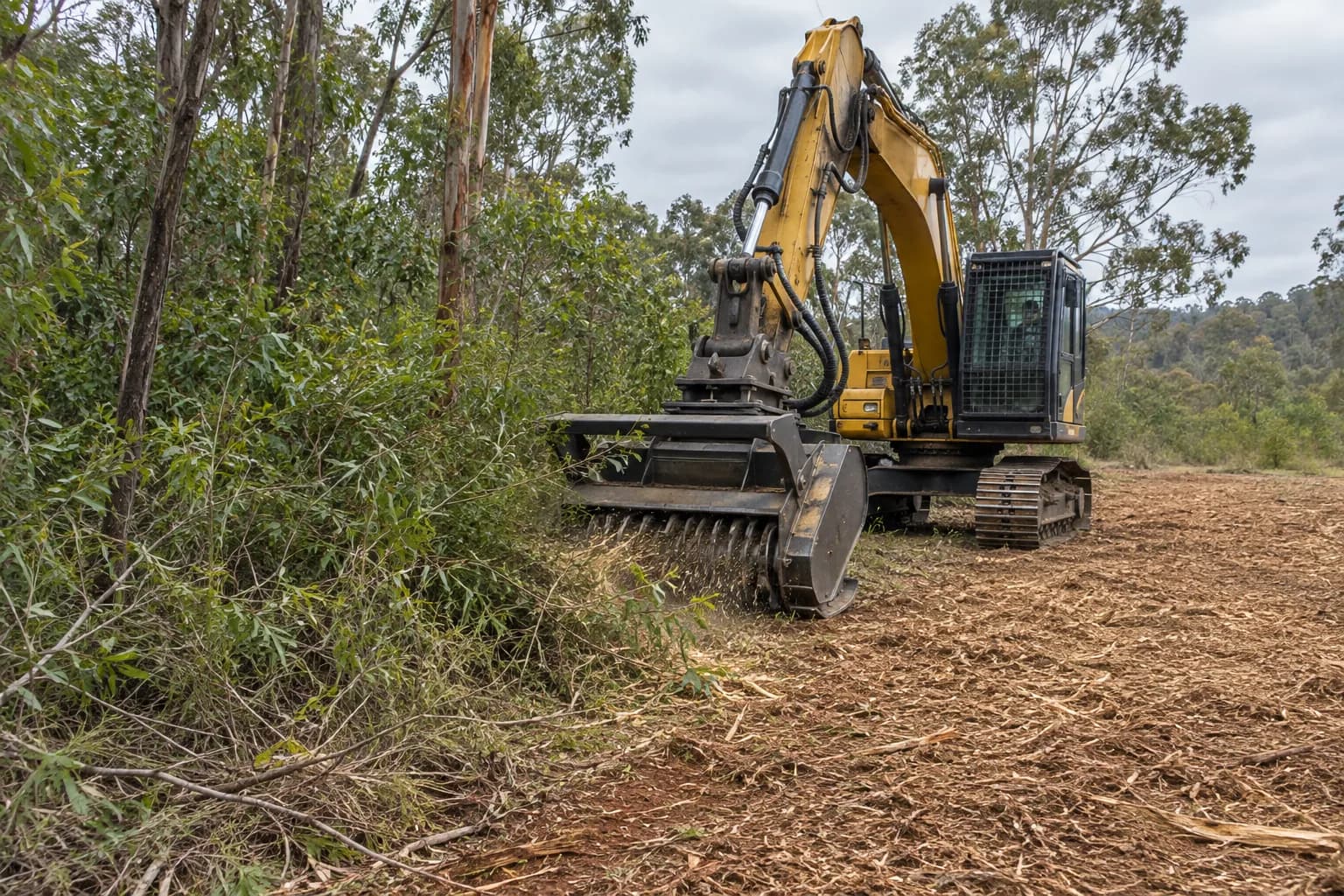 I5Industry profileMining and energyOpen industry guide →
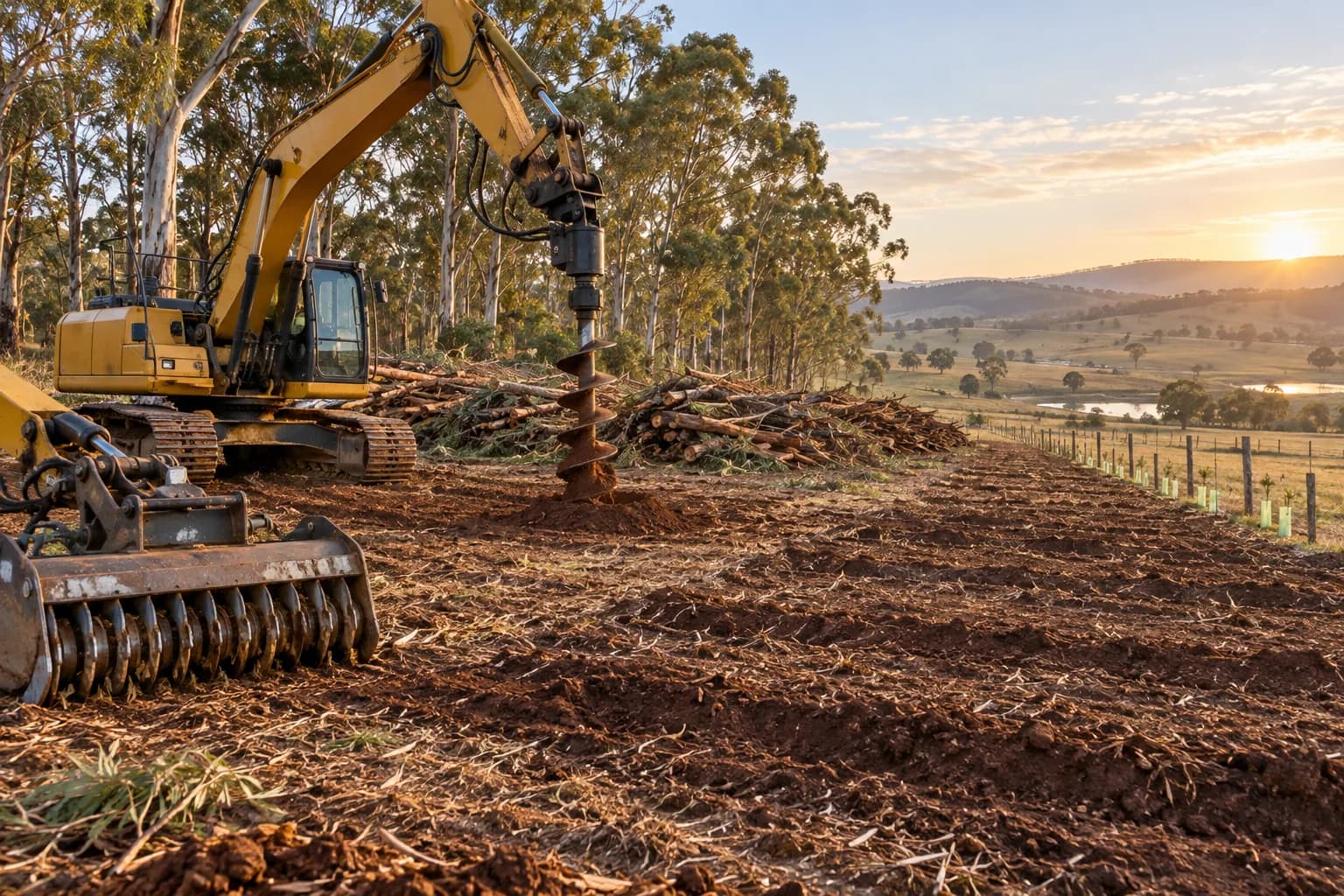 I6Industry profileAgricultureOpen industry guide →