Calculator
Pricing mulching work by the hectare
Tender rate per hectare
$1,133
Your cost per hectare
$944
Break-even, direct only
$700
| Productivity | Hours on site | Your cost / ha | Tender rate / ha | Margin held |
|---|---|---|---|---|
| 0.17 ha/hr | 68.6 hr | $1,770 | $1,133 | -56% |
| 0.26 ha/hr | 45.7 hr | $1,219 | $1,133 | -8% |
| 0.35 ha/hrYOURS | 34.3 hr | $944 | $1,133 | 17% |
| 0.44 ha/hr | 27.4 hr | $779 | $1,133 | 31% |
Read the productivity claim honestly
Halve the hectares-per-hour figure and watch the tender rate move. That sensitivity is the whole argument for measuring your own output on your own material before you price a job, rather than pricing from a brochure figure and discovering the difference on site.
Where hectare pricing goes wrong
- 01
Brochure hectares
Published productivity is a best case: light material, flat ground, an experienced operator and no interruptions. Measure your own output on your own material before you commit to a rate, because the difference between 0.5 and 0.25 hectares an hour doubles your cost base.
- 02
Dig-rate fuel
Mulching is continuous load on a machine designed for intermittent load. Fuel burn, cooling demand and service intervals all move. Costing a mulching hour at your excavation hourly rate understates it every time.
- 03
Teeth treated as a spare
In abrasive or stony ground, teeth are a monthly budget line, not an occasional order. Put a real hourly figure in above — including the downtime to change them — rather than absorbing it in overhead.
- 04
Mobilisation spread thin
Float on, float off and set-up are fixed per job, so they hit small jobs hardest. A twelve hectare job carries mobilisation comfortably; a two hectare job does not, and pricing both at the same per-hectare rate loses money on one of them.
Talk to a specialist
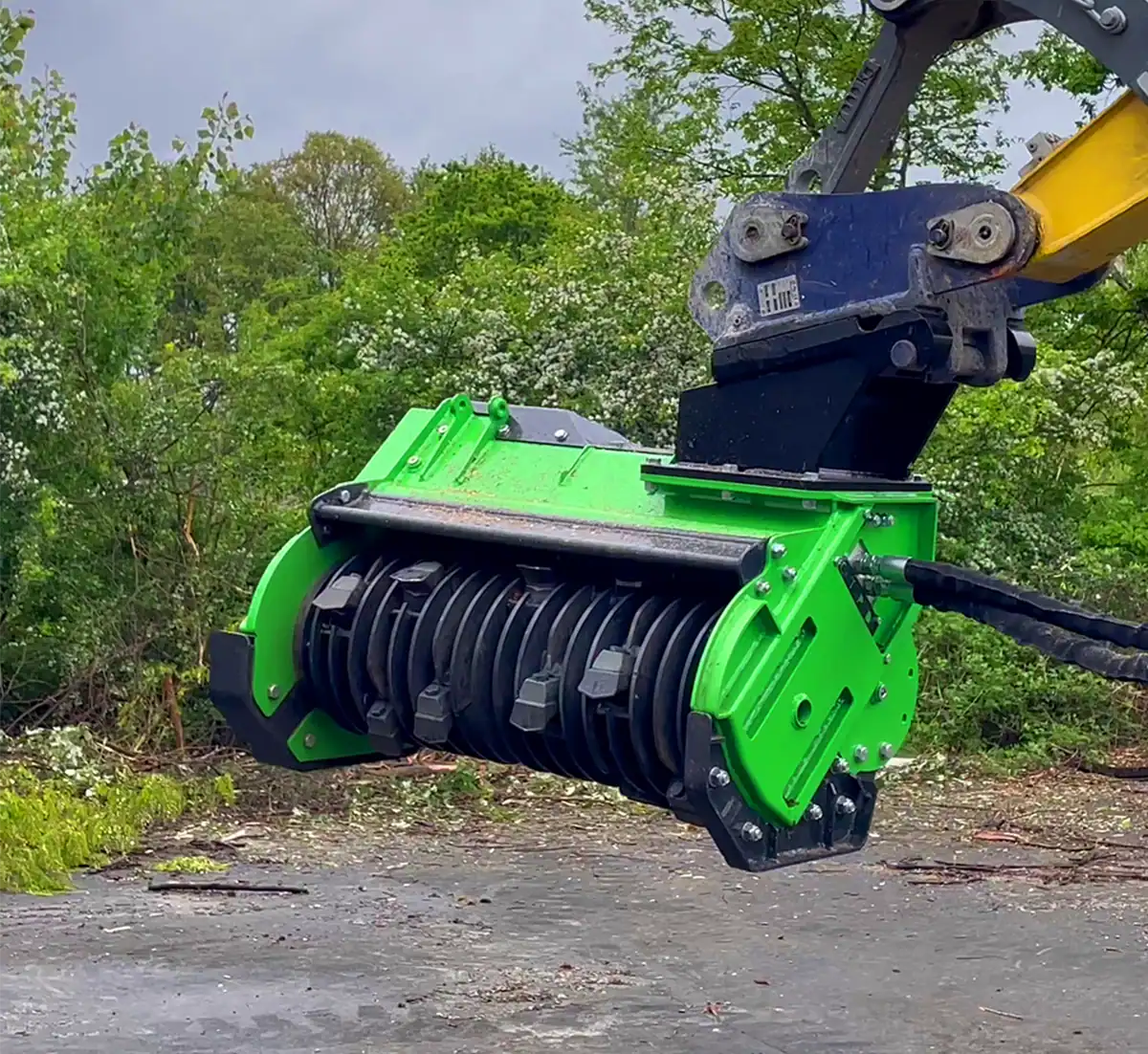
Rotor choice is the decision, not the model number. Tell us the material you are clearing and we will tell you which rotor suits it.
Request a quote →How the calculation works
Direct hourly cost is the sum of carrier, operator, fuel, teeth and attachment capital. Multiply by the hours the job takes at your productivity and you have the direct cost for the whole job. Mobilisation is added as a fixed amount because it does not scale with area, then overhead as a percentage, then margin.
The tender rate per hectare is the total divided by job size. The break-even figure below it strips out mobilisation, overhead and margin entirely, so it tells you the absolute floor at which the machine and operator are paid for and nothing else is.
The sensitivity table is the most useful part of the page. It holds your quoted rate fixed and varies productivity, which is what actually happens on site: you quote at one figure and the material turns out to be heavier than the walkover suggested. If your margin goes negative at 0.75× productivity, the rate is too thin regardless of how the headline number looks.
Getting honest inputs
Before you quote from this
- Hectares per hour measured on comparable material
- Site walkover confirming material type and density
- Terrain and slope, which change productivity sharply
- Fuel burn under continuous mulching load, not dig load
- Teeth cost per hour from your own records
- Mobilisation quoted for this specific site
- Whether mulch depth is specified in the contract
- Whether the rate is per treated hectare or per titled hectare