Skip to content
Machinery SpecialistForestry Attachment Guide

Start with the work

One carrier. Different jobs. A deliberate attachment sequence.

Brochures organise machinery by product. Contractors make money by outcome. These field guides begin with the site, the specification and the material left behind.

The complete workflow

The attachment is one station in a production line

A profitable method connects standing vegetation to the specified finish. Cutting faster has no value when handling, transport or ground preparation becomes the next queue.

Start by writing the handover condition in plain language. Does the client expect recoverable logs, material processed in place, a clear corridor, a pruned canopy or ground ready for another trade? A tree shear, mulcher, grapple saw and forestry grab can all work on the same vegetation, but each creates a different material stream and a different requirement for the machine behind it.

Then quantify the material. Record diameter bands, density, species, moisture, terrain and obstacles across representative sections of the site. The largest stem proves whether the attachment can finish the job; the median stem and the number encountered per hectare determine production. A supplier demonstration in clean, evenly spaced material is useful only when those conditions resemble the contract.

Carrier selection is more than a tonne class. Check the lift chart at working radius with the hitch, bracket, rotator, attachment and retained section included. Confirm usable auxiliary flow at working pressure, return-line limits, circuit functions and cooling capacity. Continuous mulching, repeated saw cycles and controlled handling place very different demands on the same excavator.

Finally, measure a completed unit rather than attachment cycles. Use hectares handed over, corridor metres reopened, stumps finished or tonnes sorted and loaded. Include travel, attachment changes, cleaning, wear-part service, refuelling and mobilisation. Those numbers reveal whether the next investment should increase cutting capacity, improve handling or reduce the time spent moving and supporting the carrier.

Choose the operating environment

Plan the whole job, not just the first cut

Each guide connects job conditions to attachment type, carrier constraints, material handling and the next productive step.

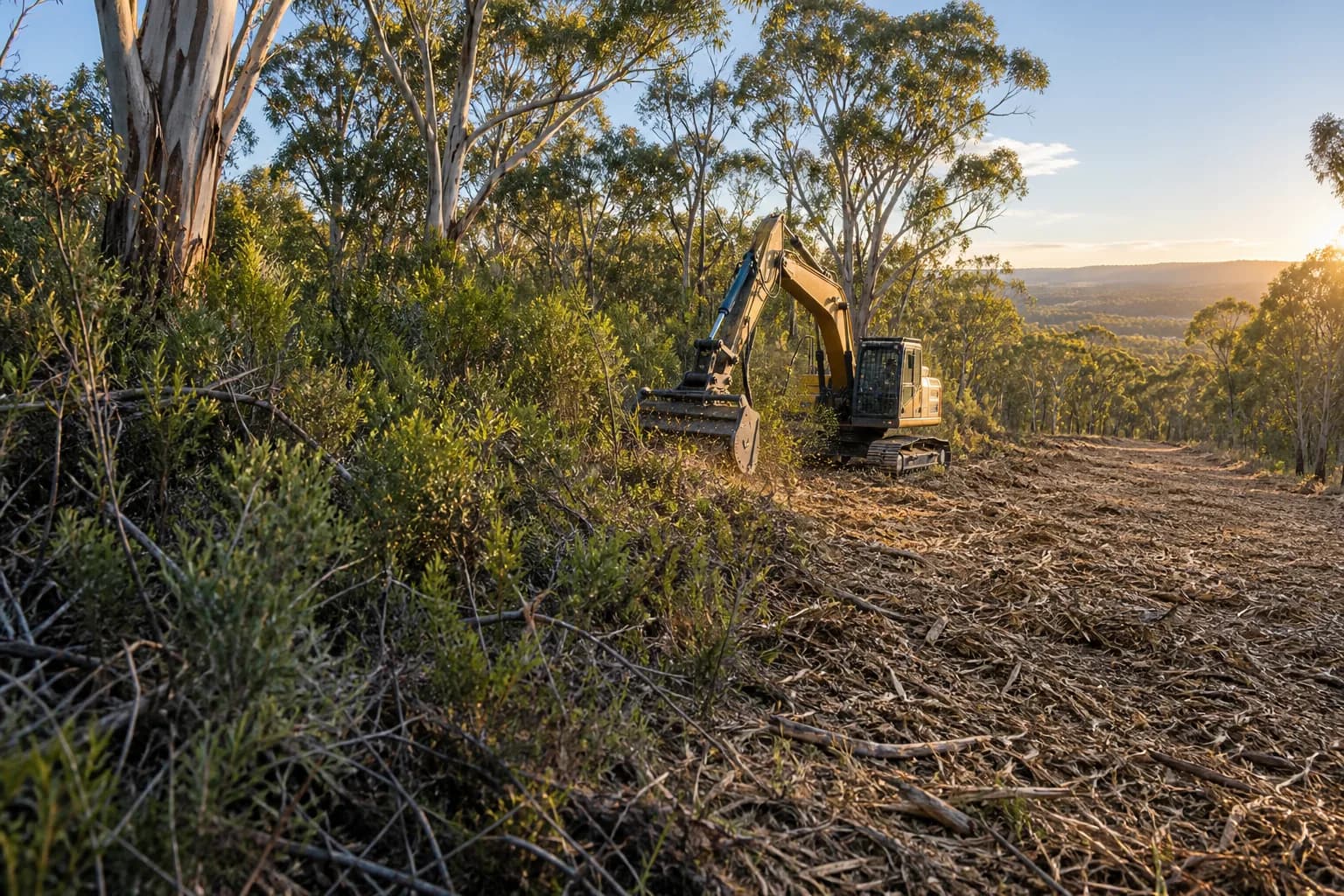
Tracked excavator clearing scrub beside a formed access corridor in dry Australian eucalyptus woodlandA1Field applicationLand clearingChoose the attachment around the finish the contract requires: recoverable timber, in-place mulch, controlled felling or a site ready for the next trade.Plan the job →
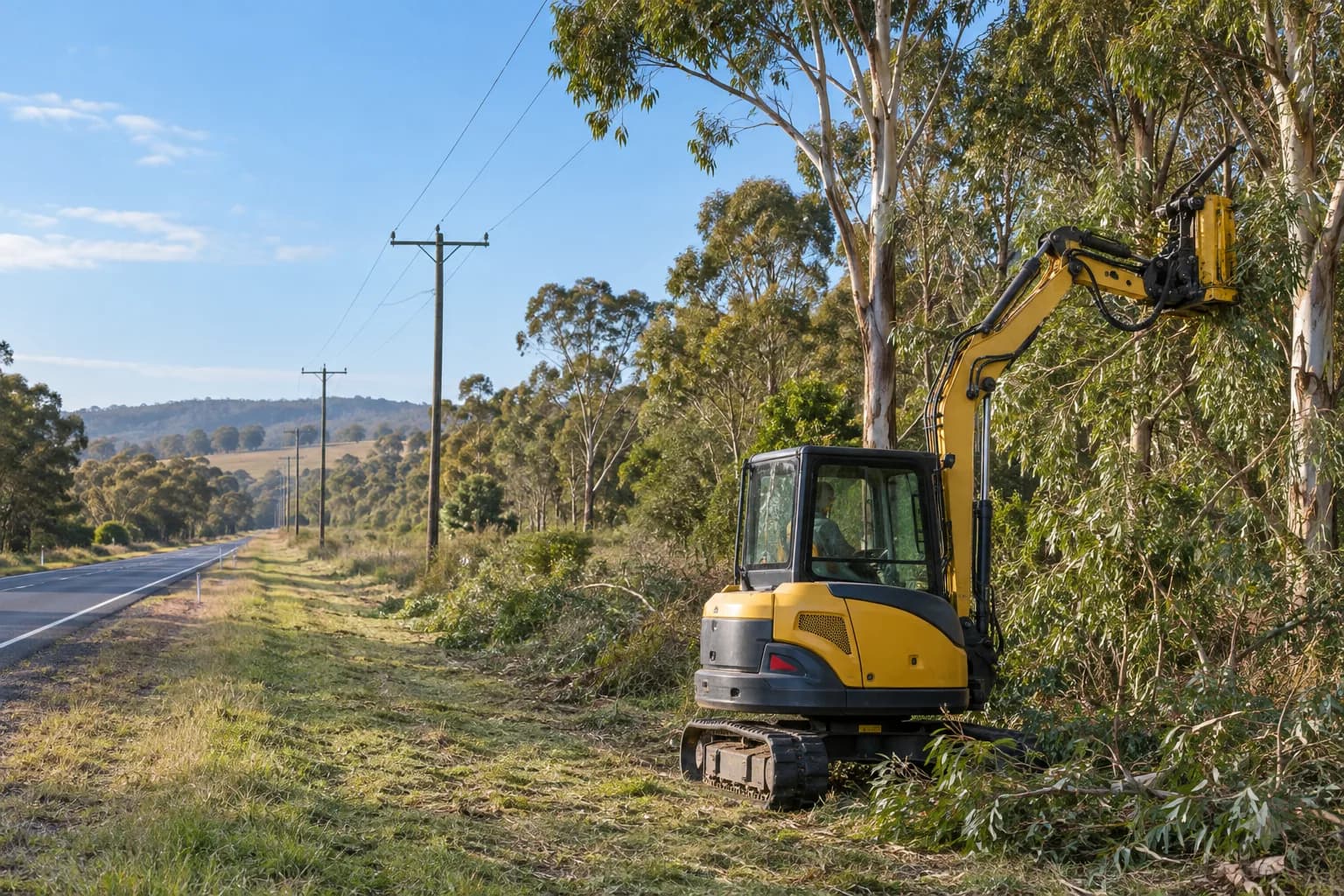
Compact excavator mechanically pruning eucalyptus regrowth along a regional Australian roadside power corridorA2Field applicationUtility vegetationMechanised pruning and controlled cutting for repeat corridor work where reach, cut quality and exclusion zones matter more than raw clearing speed.Plan the job →
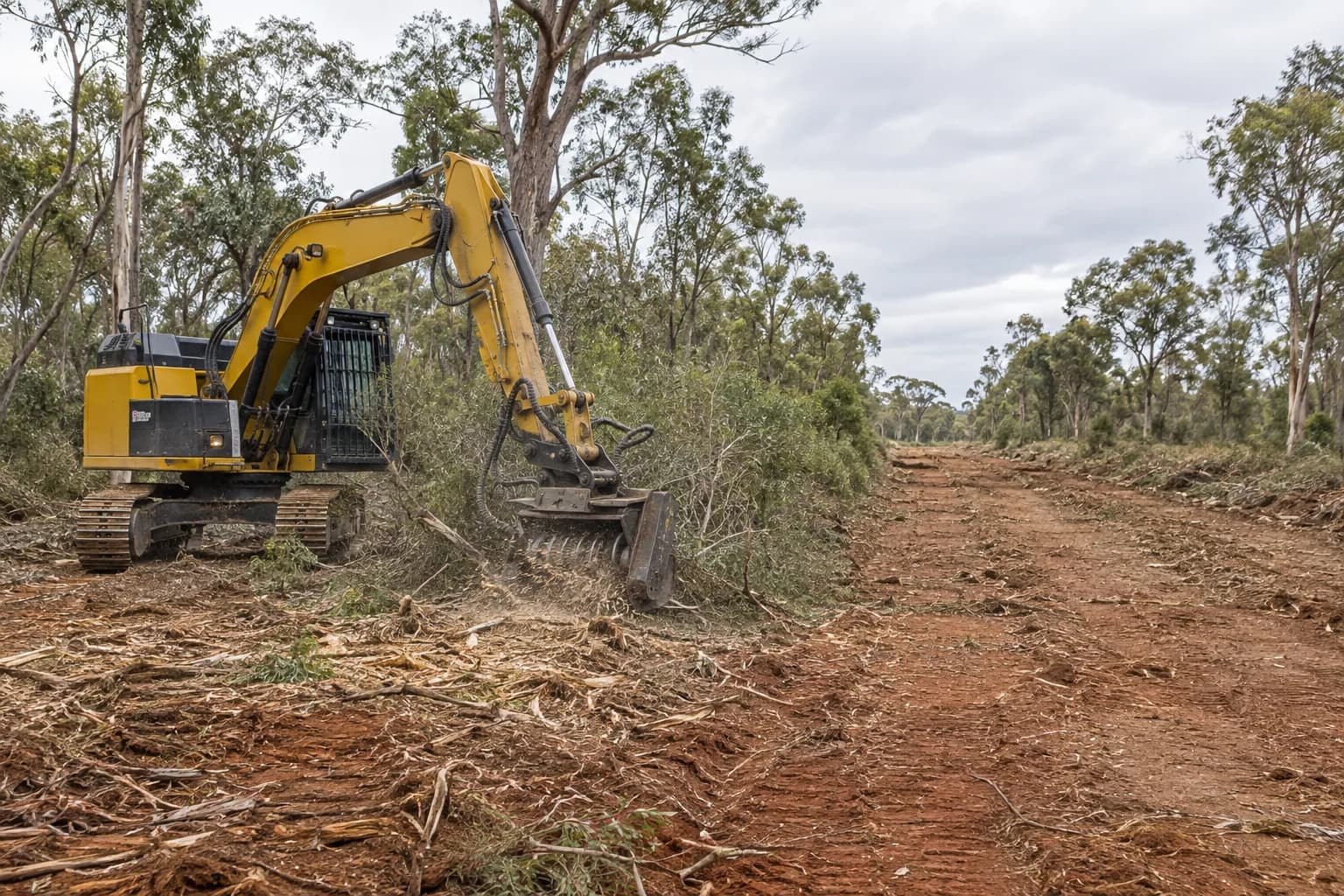
Excavator-mounted mulcher creating a low-fuel strip through Australian eucalyptus bushland in warm afternoon lightA3Field applicationFuel reductionSelect machinery for treated hectares, terrain and the required residual fuel profile—not for the most dramatic single pass shown in a brochure.Plan the job →
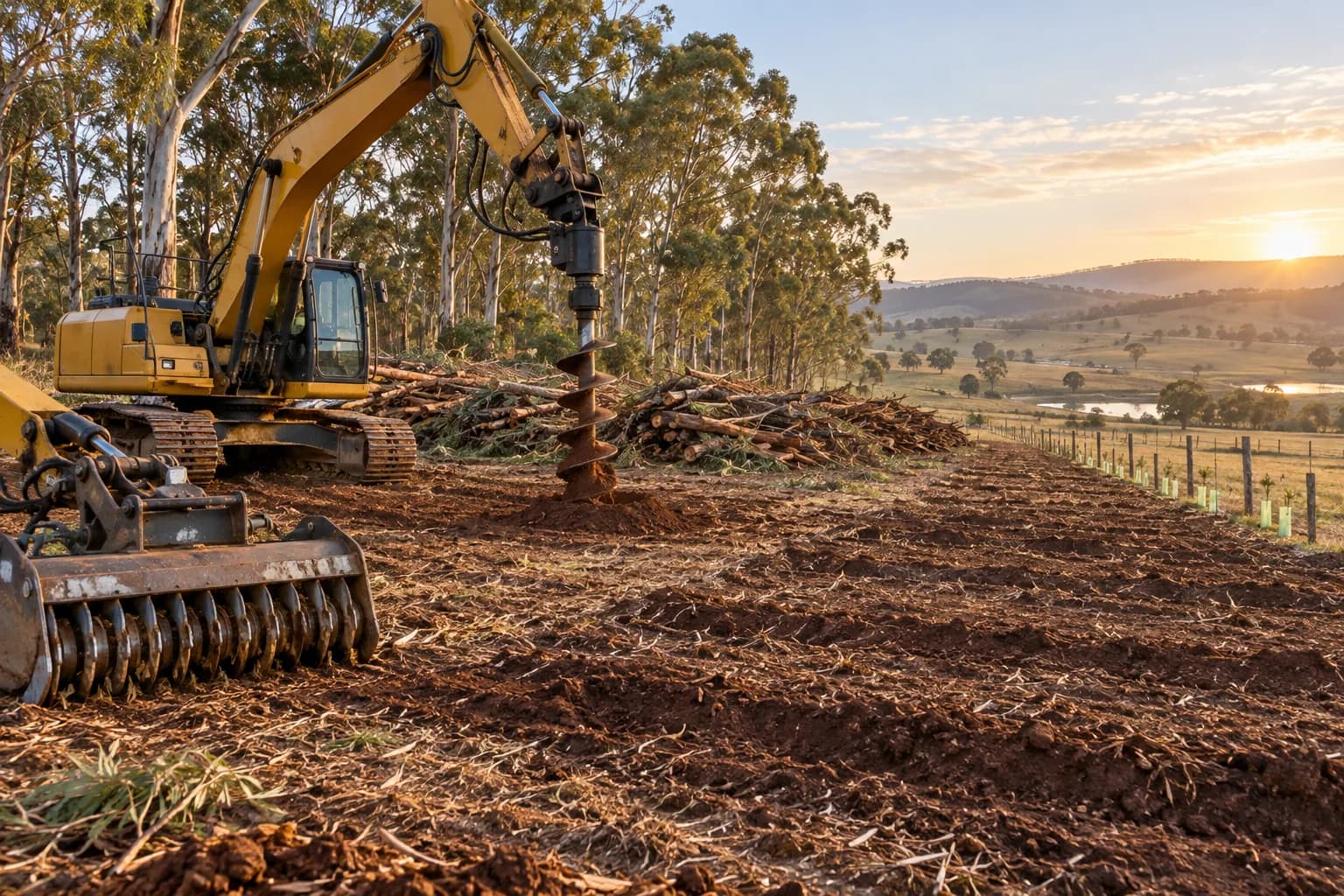
Excavator with auger and soil preparation attachments rehabilitating cleared ground on a rolling Australian farmA4Field applicationFarm rehabilitationCarry the job beyond vegetation removal: handle timber, prepare access, drill, compact and leave productive ground rather than an expensive pile of debris.Plan the job →

Use the application guides to prepare a common request for quotation before approaching suppliers. The same carrier data, site sample, required finish and annual-hour estimate should go to every respondent. Require each supplier to return the complete installed mass, hydraulic schedule, circuit functions, guarding, delivered price, commissioning scope, wear-part list and support assumptions in writing. That turns four attractive but incompatible offers into a comparison of working systems.

Keep the site and machine evidence with the purchase file. Photos of representative vegetation, lift-chart pages, measured flow results and the accepted finish protect the decision when staff change or performance is questioned later. After commissioning, add real cycle time, fuel, wear and downtime against the same production unit used in the tender. The guide then becomes a feedback loop: field evidence improves the next rate, method and equipment choice instead of every project beginning from another brochure claim. Record the conditions beside every result so the number remains transferable.
Before requesting prices

Make every supplier quote the same working system

Carrier schedule

Provide make, model, serial range, hitch, boom configuration, lift data, measured auxiliary flow, pressure, return arrangement and fitted case drain. Ask for attachment mass in the exact ordered configuration and the supplier’s written assessment of the pairing.

Site and outcome

Describe representative material, access, slope, contamination, retained assets and the finish used for acceptance. State expected annual hours and the production unit used in the tender so the recommendation reflects commercial duty rather than occasional capability.

Delivered package

Require bracket, hoses, couplers, controls, guarding, commissioning, training, freight, warranty exclusions and an initial wear-parts kit to be itemised. Compare delivered-and-working totals, regional parts support and the assumptions behind each recommendation.