Start with the finish
A mulcher, shear and grab can all work on the same block, but they leave three different sites behind. The handover specification decides the sequence.
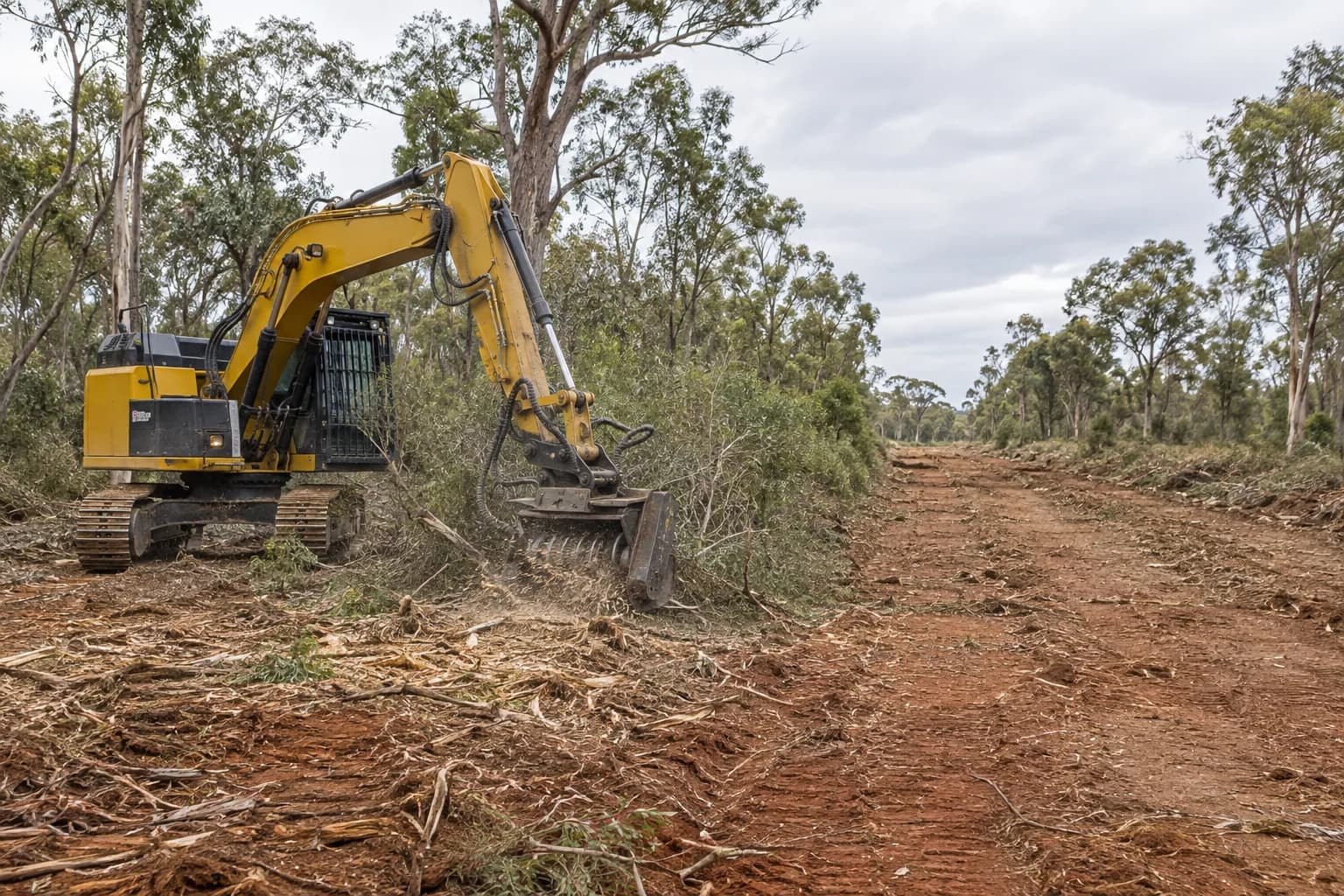
A1 · Civil and development
Choose the attachment around the finish the contract requires: recoverable timber, in-place mulch, controlled felling or a site ready for the next trade.
The outcome
A mulcher, shear and grab can all work on the same block, but they leave three different sites behind. The handover specification decides the sequence.
First price the cutting. Then price what happens to every tonne after it is down: stack, chip, haul, burn where permitted, or leave as mulch.
Continuous mulching load, side loading and debris exposure change the cooling, guarding and service requirements of a standard excavator.
A clearing scope should describe the condition of the site at handover, not merely the vegetation that must disappear. A corridor ready for drainage crews is different from a block left with recoverable logs, habitat piles or mulch. That distinction determines whether the primary tool should fell, process or handle. It also exposes the secondary work that is easy to omit from a quotation: stacking, loading, stump treatment, haulage, erosion control and access restoration.
Tree shears suit controlled whole-stem removal where placement and timber recovery matter. Mulchers reduce vegetation in place and can remove a handling step, but the resulting particle size and depth must satisfy the specification. Grapples earn their keep after cutting by sorting and loading. Tillage and compaction tools belong in the sequence when the same carrier must leave access, planting holes or stable ground for the next trade.
Measure stems by diameter band and density rather than recording only the largest tree on site. The maximum diameter establishes whether a tool can complete the work; the median diameter and stems per hectare determine production. Then follow every stem after it is cut. If one excavator can fell faster than a loader can remove material, buying a larger shear will add waiting time rather than completed hectares.
The useful production number is a finished unit: metres of corridor handed over, hectares cleared to specification, or tonnes sorted and loaded. Record travel, attachment changes, refuelling, tooth or blade service and debris clean-down separately from productive time. Those observations show whether the next investment belongs on the cutting machine, the material-handling side or transport rather than relying on a demonstration measured in ideal conditions.
Carrier compatibility begins with operating weight but finishes with the lift chart, measured auxiliary flow, working pressure, return arrangement and duty cycle. A head may sit inside the advertised tonne class and still overload the machine at working radius or create more continuous hydraulic heat than its cooling package can reject. Include the hitch, bracket, rotator and retained material when checking mass, because the bare attachment figure is not what the excavator carries.
Forestry guarding is also a purchasing line, not an optional accessory added after delivery. Protect the cab, belly, hoses, cooling pack and exposed electrical components for the debris path created by the chosen method. Confirm how couplers and case drain will be installed, which relief settings are required, and who commissions the package. A defensible quote names the complete working configuration rather than a head supplied loose at the yard gate.
The quotation brief
Issue every supplier with the same clearing brief: mapped work area, diameter distribution, stems per hectare, required finish, material destination, access constraints and the carrier schedule. Ask each respondent to state the proposed attachment, ordered mass, hydraulic configuration, guarding, production assumptions, wear allowance, freight, commissioning and support response. A price without those assumptions cannot be compared. For staged civil work, identify each mobilisation and the date the next trade needs access, because clearing output is valuable only when the completed area is released in the sequence the project requires.
Attachment sequence
Other operating environments
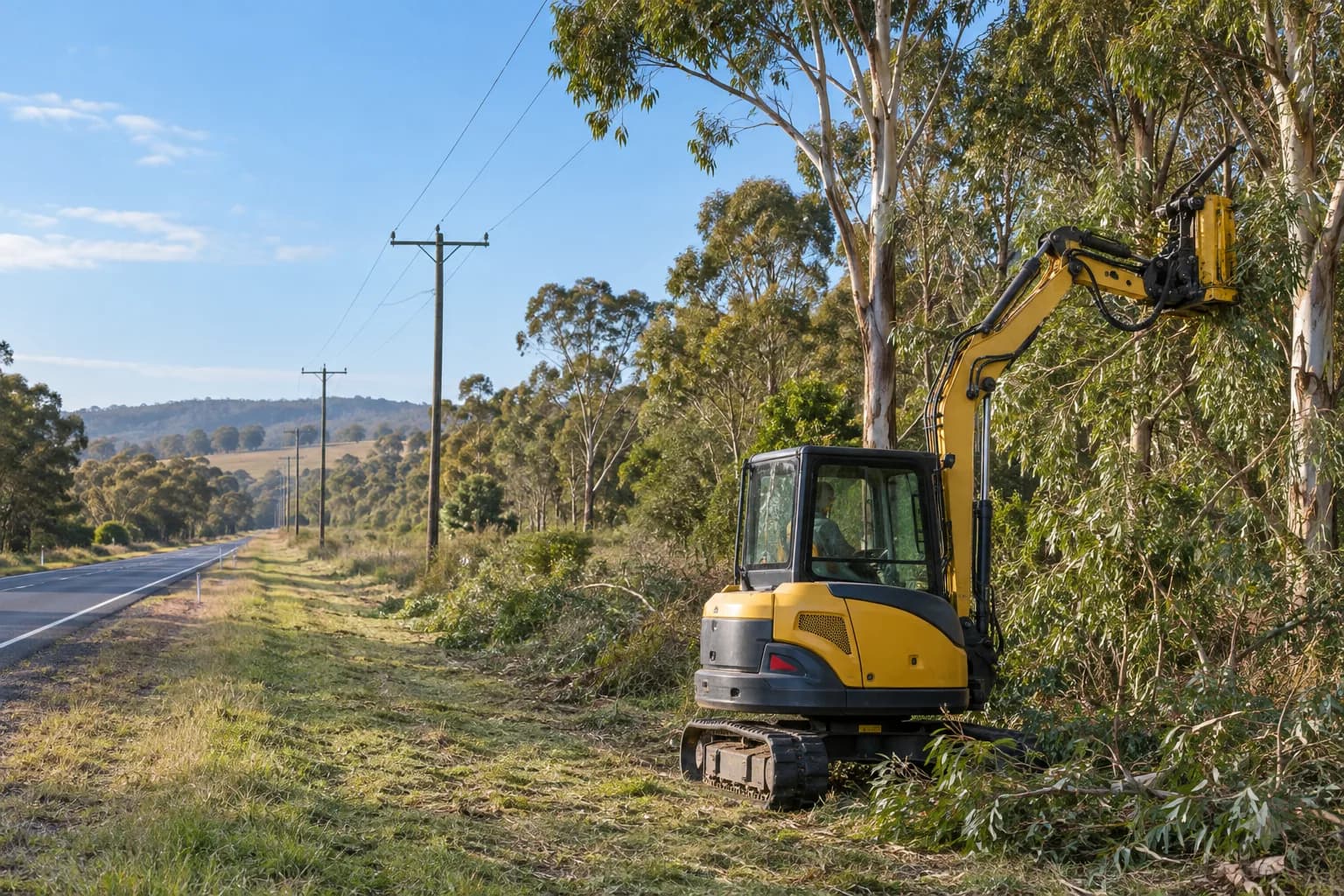 A2Field applicationUtility vegetationPlan the job →
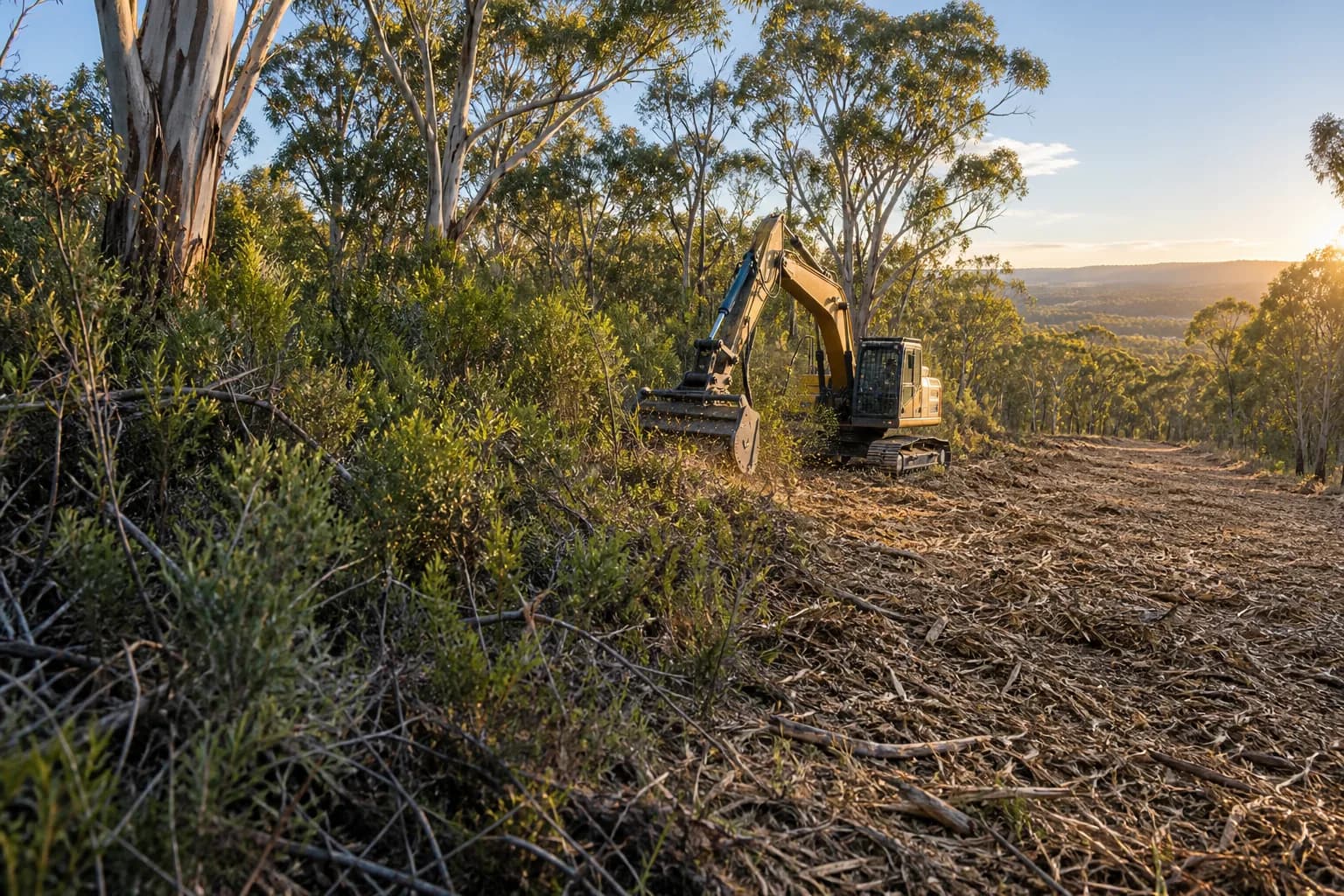 A3Field applicationFuel reductionPlan the job →
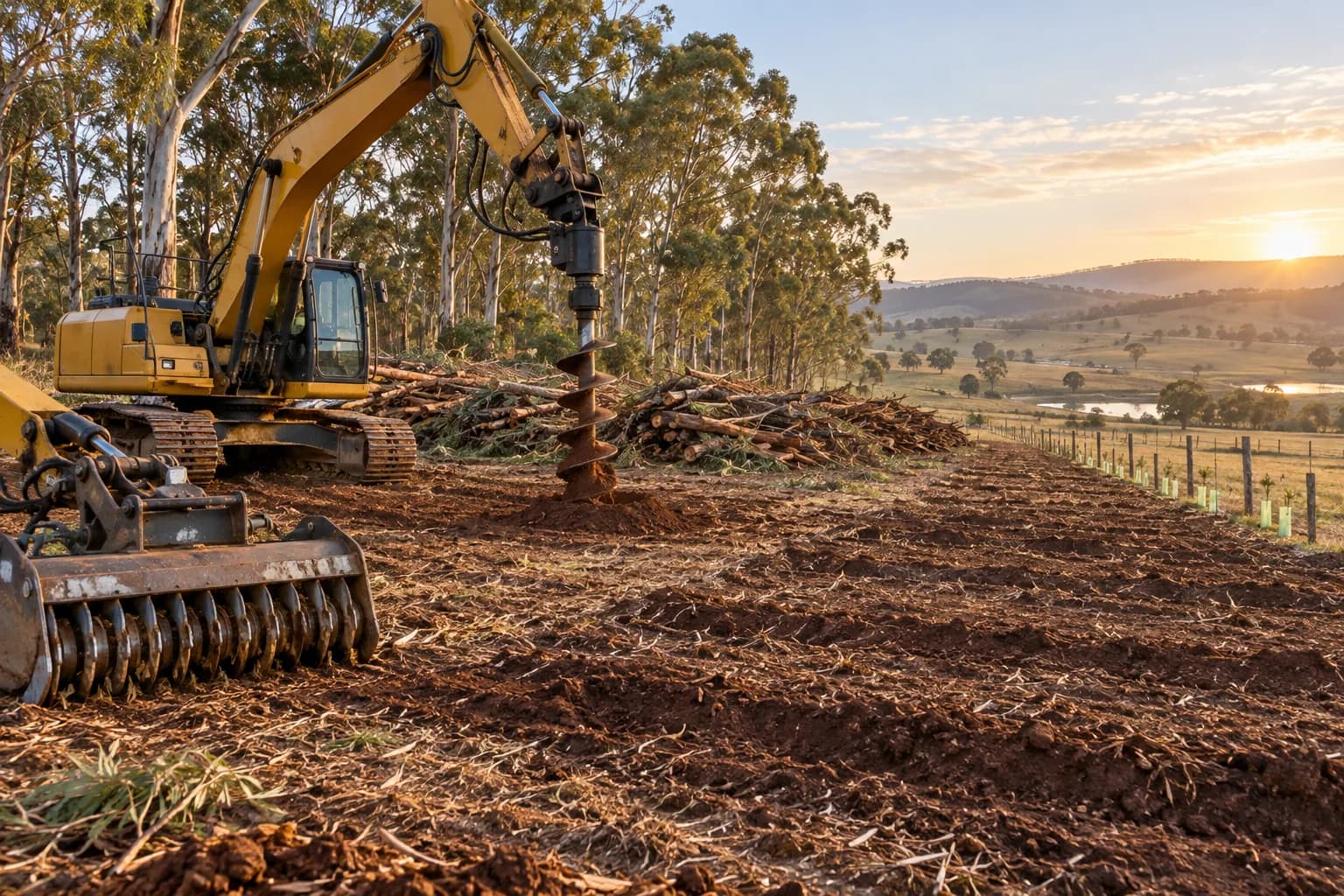 A4Field applicationFarm rehabilitationPlan the job →