Skip to content
Machinery SpecialistForestry Attachment Guide

Field operations

Keep the attachment productive after the purchase.

Inspection, material behaviour, transport and changeover determine whether a correctly selected forestry attachment delivers repeatable work. These guides turn those operating details into documented systems.

The operating layer

Selection creates capability. Discipline preserves it.

The guide library now follows the machine into the field: what to inspect, how Australian hardwood changes the operating envelope, and how to move and change attachments without turning mobilisation into damage or downtime.

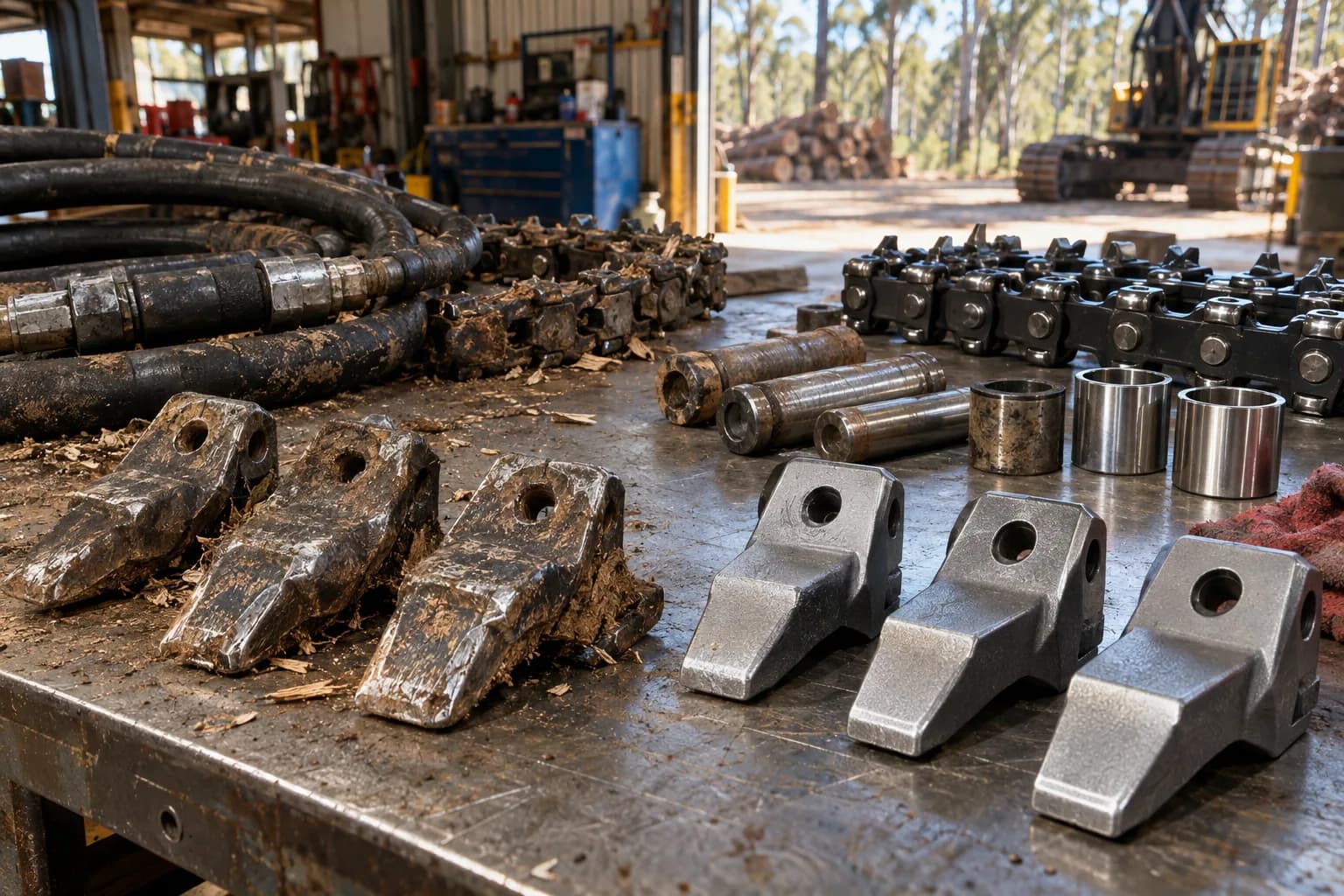
Forestry attachment service parts and tools prepared on a maintenance workbench

Daily inspection and maintenance

Inspect from the load path outward before the first cycle, then repeat a focused check after warm-up and at shutdown. Clean enough to see cracks and leaks, measure wear against limits, and record changes before a small defect becomes a stopped machine. Give every defect a clear status: safe to monitor, repair before the next shift, or isolate immediately. Record the person responsible and the follow-up date so a verbal observation cannot disappear between crews. Trend repeated findings by attachment hours and work type so planned maintenance responds before the same defect becomes a recurring stoppage. Photograph developing conditions from the same angle and include a scale so the next inspection can identify genuine movement rather than relying on memory.

Read operations guide →
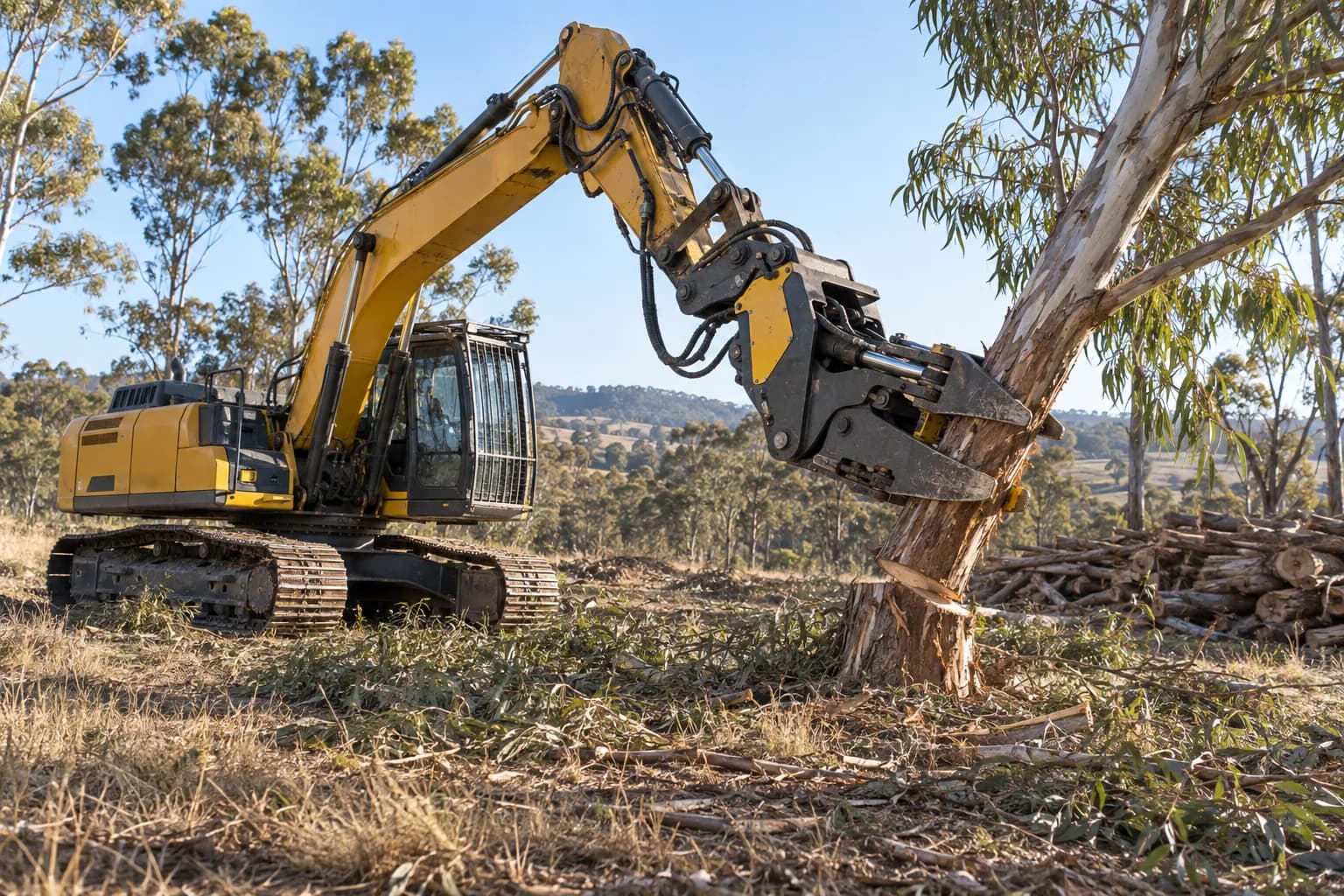
Tree shear handling dense eucalyptus timber in Australian woodland

Australian hardwood operating guide

Treat published maximums as favourable-material limits. Dense, fibrous, buttressed or dry hardwood can increase cutting force, retained mass, heat and wear at the same visible diameter. Sample representative material, begin below the maximum and build an operating envelope from measured results. Keep species, moisture, stem form and section length with the production record. Diameter alone cannot explain why cycle time, carrier stability or consumable use changed between sites. Preserve representative photographs and measured sections so later operators can recognise the material class behind each limit and production rate.

Read operations guide →
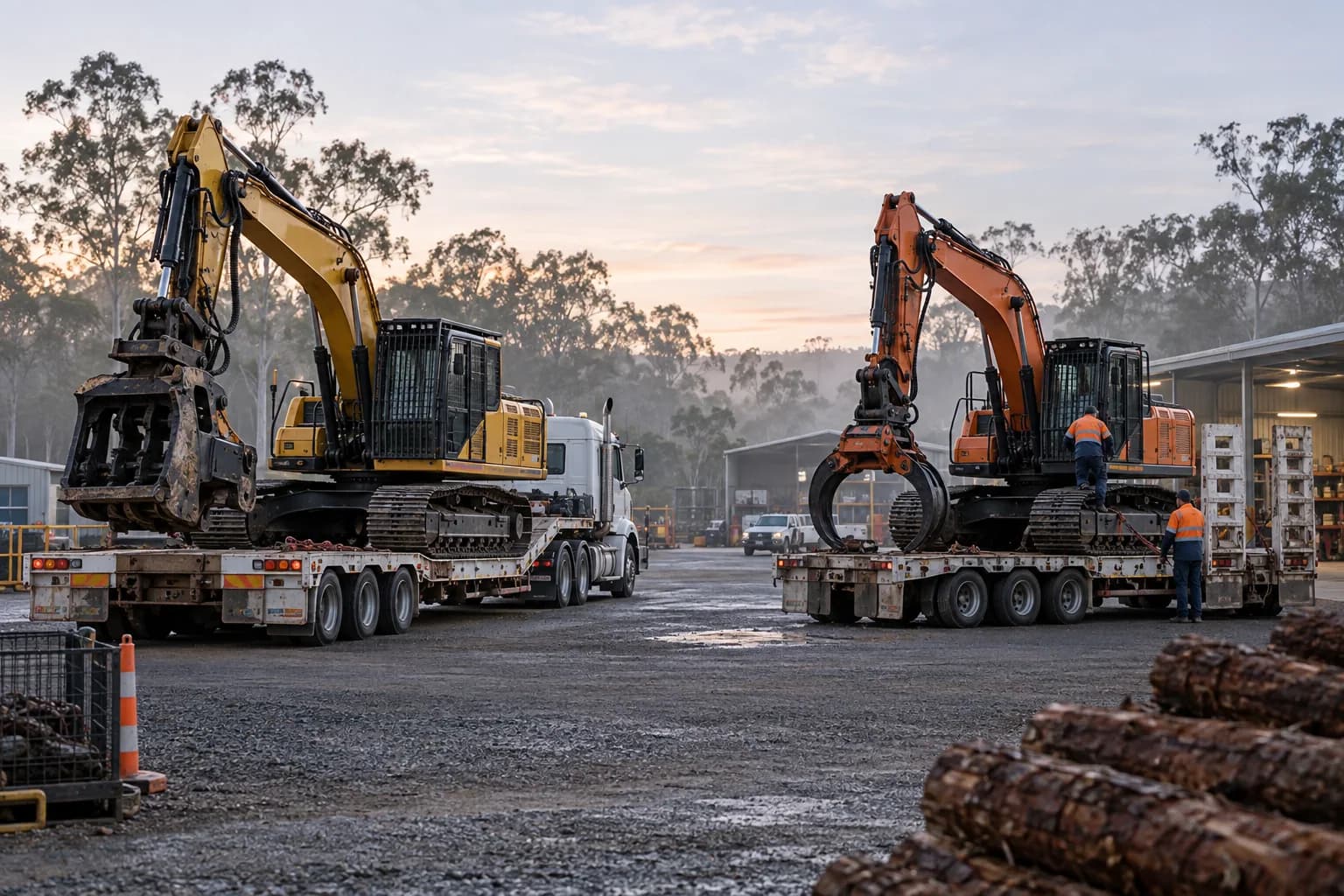
Excavators and forestry attachments arranged for transport and fleet deployment

Transport, storage and changeover

Design the attachment as a transportable system: approved resting stand, rated lifting and restraint points, protected hoses and couplers, documented mass and dimensions, and a repeatable changeover sequence. Mobilisation is part of production, not time outside the job. Time the normal crew through loading, connection, testing, disconnection and storage during commissioning. That result belongs in the estimate and reveals where a stand, label, hose park or lifting aid will return its cost. Review the method after any carrier, hitch, rotator, hose or transport change because the safe sequence and dimensions may no longer match.

Read operations guide →

Build one machine record across the lifecycle

Start with the quotation assumptions and commissioning baseline. Add daily defects, productive hours, wear consumption, hydraulic temperature, parts used and completed production. Keep transport configuration, changeover method and operator limits with the same carrier and attachment serial numbers. This converts separate forms into one history that supports maintenance and estimating.

Inspection protects the next cycle. Material records improve the operating envelope. Transport and storage records protect the next mobilisation. Together they reveal whether lost output comes from wear, setup, heat, material, logistics or the original match. That is more actionable than a general report that the attachment feels slower.

Use these guides alongside the step-by-step tutorials, wear-parts guide and diagnostic guide. The manufacturer’s manual and site-specific safety system remain controlling requirements.

A repeatable operating system

Brief, observe, review and improve

Before the work

Brief the expected material, access, finished output, attachment limits, stop conditions and exception method. Confirm inspection, parts, transport and support arrangements for the actual work front. A general induction does not replace a job-specific operating envelope.

During the shift

Record productive time, completed units, wear, fuel, temperature, faults and causes of delay. Note material or ground changes. Small consistent records let the supervisor identify whether output moved because of technique, site conditions, maintenance or machine setup.

At shutdown

Clean for inspection, report defects, restore field stock and leave the attachment in its approved stored or transport position. Assign repair actions before the next mobilisation rather than handing an undocumented problem to another operator.

After the job

Compare actual production and cost with the tender assumption. Update wear allowances, operator limits, parts stock and future rates. The review closes the loop between buying advice and profitable field performance.

The three operations guides divide the system by failure point: daily condition, material behaviour and mobilisation. They should be read together for crews that change heads frequently or work across varied Australian vegetation. Return to this hub whenever the machine, attachment, operator, work type or support distance changes.