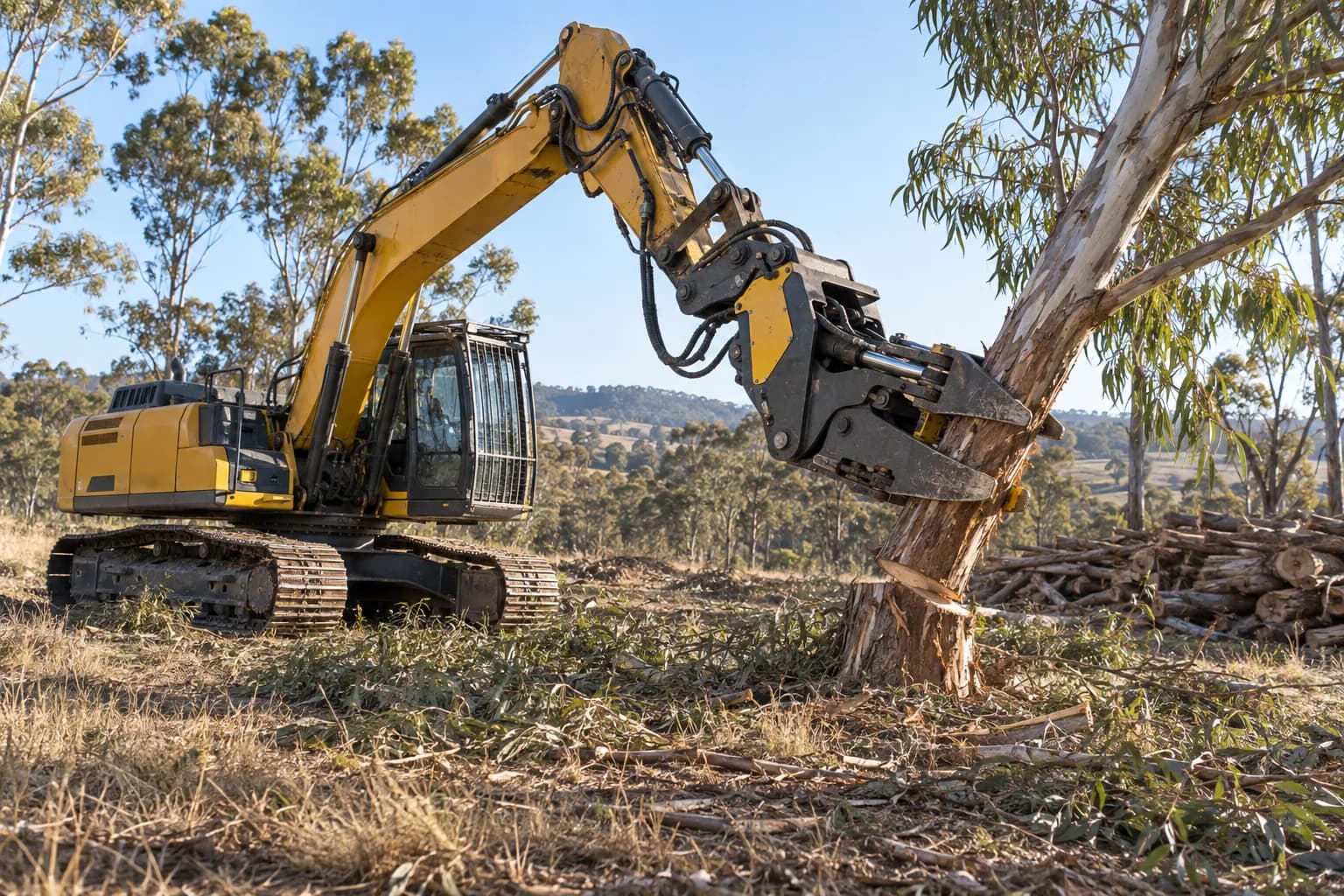
Operating principle
Treat published maximums as favourable-material limits. Dense, fibrous, buttressed or dry hardwood can increase cutting force, retained mass, heat and wear at the same visible diameter. Sample representative material, begin below the maximum and build an operating envelope from measured results. Keep species, moisture, stem form and section length with the production record. Diameter alone cannot explain why cycle time, carrier stability or consumable use changed between sites. Preserve representative photographs and measured sections so later operators can recognise the material class behind each limit and production rate.
Diameter is not a complete material specification
Species, density, moisture, fibre direction, buttress, branching, decay and growth stress change how a stem cuts and how much it weighs. A smooth plantation stem and an irregular dry eucalyptus trunk with the same measured diameter do not impose the same blade, saw, grip or carrier load.
Record representative diameter range and form rather than the largest photograph on site. Where timber is retained after cutting, estimate section mass using conservative density and include length. The carrier must hold and place the actual section at radius, not merely support the attachment before the cut.
Control feed instead of forcing the tool
Allow saw, blade, tooth or rotor speed to do the work at the intended hydraulic setting. Excessive feed can stall a motor, deflect a saw bar, spread a shear jaw or turn a mulcher tooth into a lever against the holder. If production drops, inspect sharpness, grip, pressure, return restriction and technique before increasing a machine setting.
Approach irregular stems so the cutting system engages predictable material and the grip remains stable through separation. Avoid using the attachment as a pry bar outside its designed load path. Repositioning the carrier or taking a smaller section often costs less than repairing jaw alignment, bracket cracks or rotator damage.
Watch heat and wear as production variables
Hard material increases time under pressure and reduces cooling recovery between cycles. Monitor hydraulic temperature, engine load, return pressure and the change in cycle time across the shift. A system that performs for ten minutes may still exceed its thermal envelope during continuous summer work.
Inspect edges, teeth, chains, holders and fasteners more often while establishing the method. Track parts per productive hour or completed unit by species and ground condition. That record is more useful than a single universal wear allowance and lets estimators price hardwood, dry material and contaminated sites separately.
Set documented limits operators can recognise
Translate engineering limits into field controls: maximum normal diameter by material class, maximum section length at reach bands, prohibited grip positions, temperature stop points and conditions that require a different method. Put the limits with the carrier rather than relying on one experienced operator’s memory.
Review the envelope after representative work and whenever the head, carrier, coupler, rotator or counterweight changes. Keep an exception method for buttressed, leaning, decayed or oversize trees. Production pressure is least dangerous when the crew already knows which machine or manual method takes over outside the repeatable envelope.
Measure whether the operating system is working
Choose a small set of records that the crew can collect consistently: productive attachment hours, paid shift hours, completed units, fuel, wear parts, faults, delays and any temperature or pressure observation relevant to the head. Add the material and site condition needed to interpret the result. A number without context can make a hard site look like a machine fault or hide a deteriorating setup behind easier material.
Review the record at the end of the first shift, first week and each meaningful change in work. Compare with commissioning and previous jobs, then assign actions with an owner and date. The purpose is not paperwork volume; it is early evidence. Small changes in play, hose contact, cycle time, heat or consumable use are cheaper to investigate before they become structural repair, motor damage or a missed project window.
Keep this guide with the rest of the operations library and the carrier record so another operator or fitter can repeat the same method.
Related procedures
Tree shear guide
Match grip, cut and carrier to the stem.
Grapple saw guide
Control section mass and reach through the cut.
Size the attachment
Build retained material into the lift assessment.