Skip to content
Machinery SpecialistForestry Attachment Guide
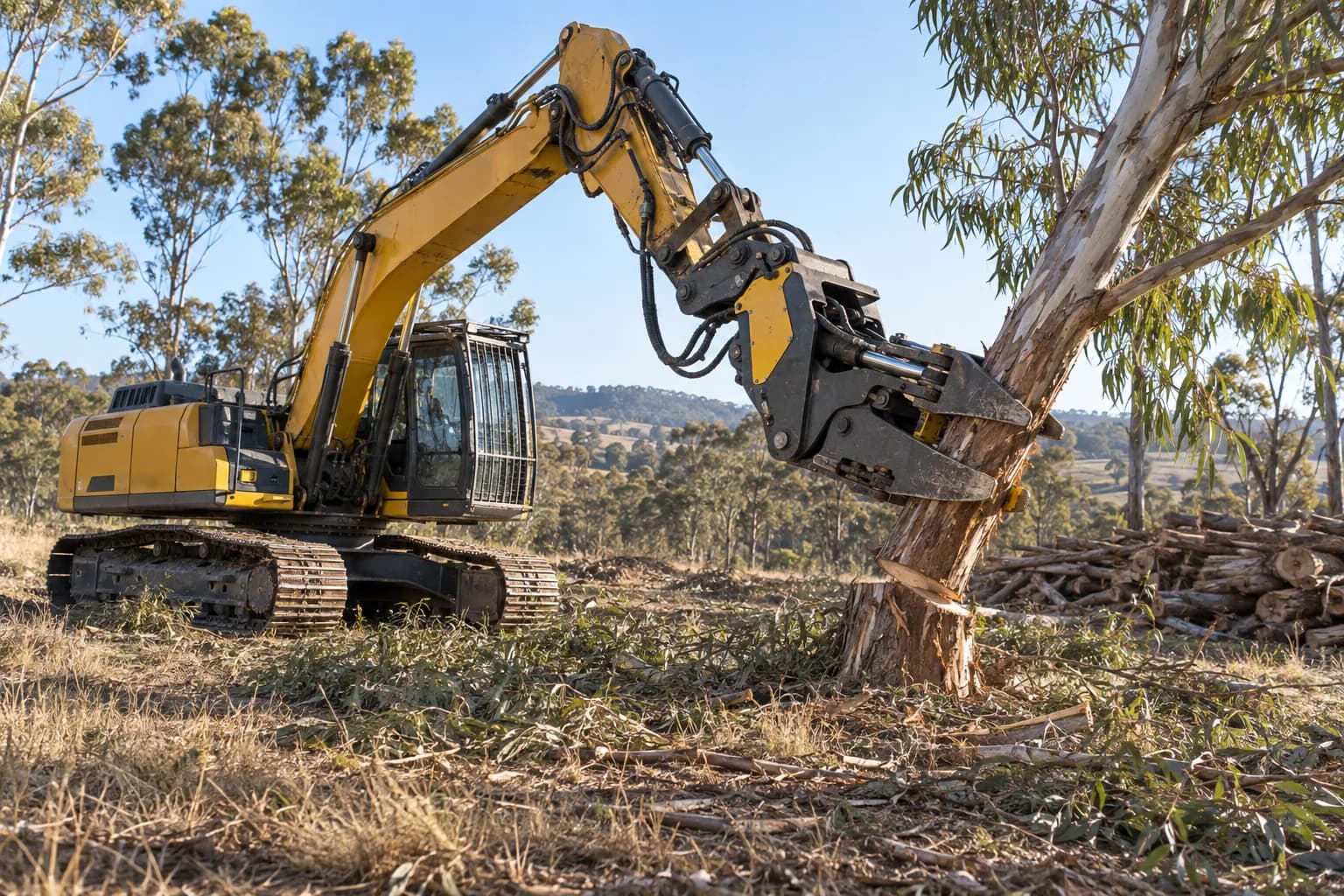
Forestry excavator holding a cut tree section with an attachment at working radius

T03 · Carrier matching · lift and stability

How to size a forestry attachment to an excavator

The short answer

Treat published carrier tonnes as an initial filter. The final match requires attachment mass with bracket and rotator, excavator lift capacity at the actual radius and sector, usable hydraulic flow and pressure, transport configuration, guarding, and the maximum material the head will retain.

Procedure

Complete the work in this order

  1. 01

    Define the heaviest working condition

    State maximum representative stem or section size, density, working radius, slope, reach direction and whether the attachment holds material after cutting. A head that is stable beside the tracks may not be stable over the side at full reach.

  2. 02

    Build the installed mass

    Add the attachment, hitch, bracket, rotator, pins, hoses, options and any retained material. Use ordered—not catalogue-minimum—mass. Compare that complete load with the lift chart for the boom, arm, blade and counterweight configuration actually fitted.

  3. 03

    Check hydraulic compatibility

    Match measured flow at working pressure, return limits, drain requirement, circuit direction and simultaneous functions. Confirm sustained cooling for grinders and mulchers. A suitable lift result does not compensate for a circuit that cannot power or control the head.

  4. 04

    Review machine protection

    Assess cab, windscreen, roof, belly, hose, cooler and lighting protection against the debris path. Include visibility and cameras. Forestry duty changes the risk profile of a standard excavator even when attachment mass and hydraulics are acceptable.

  5. 05

    Prove it on representative work

    Commission the complete system on realistic material, at the intended radius and operating temperature. Record stability, cycle time, pressure, oil temperature and control behaviour. Set a documented operating envelope rather than leaving limits to operator memory.

Why tonne-class matching fails

A carrier range such as ‘13 to 20 tonnes’ hides boom length, undercarriage, counterweight, hitch, blade, lift sector and hydraulic option. Two excavators with the same operating mass can carry very different loads at six metres. Carrier tonnes remain useful for shortlisting, but they cannot approve an installed combination.

The risk grows when the attachment retains material. A shear holding a hardwood stem or a grapple saw holding a section adds load after the cut, often at an unfavourable radius. Estimate retained mass conservatively and define limits the operator can recognise in the field, such as diameter, length and reach position.

Match transport and utilisation as well

A technically compatible head can make the carrier impractical to move. Calculate transport mass and dimensions with guarding, coupler, counterweight and the attachment carried in its approved position. Check whether the combination changes float, permit, escort or unloading requirements across the sites you actually serve.

The best match is the system that completes profitable work, not the largest head the machine can survive. A smaller attachment may cycle faster, preserve stability and keep the carrier useful for other civil or farm tasks. Compare completed units and mobilisation across the annual program before selecting by maximum capacity.

Common mistakes

Using attachment dry mass

The installed bracket, rotator, hitch and hoses can materially change the lift calculation.

Reading one lift-chart cell

Radius, height, sector and undercarriage configuration all change capacity.

Ignoring retained material

The cut section may weigh more than the attachment and moves the combined centre of gravity.

Treating guarding as optional

A compatible head can expose an unprotected carrier to debris it was not built to manage.

Continue the job

Carrier size guide

Shortlist categories by excavator class.

Measure hydraulic flow

Replace brochure assumptions with tested output.

Attachment costs

Include installation and carrier changes in the comparison.
More field procedures

Keep building the machine record

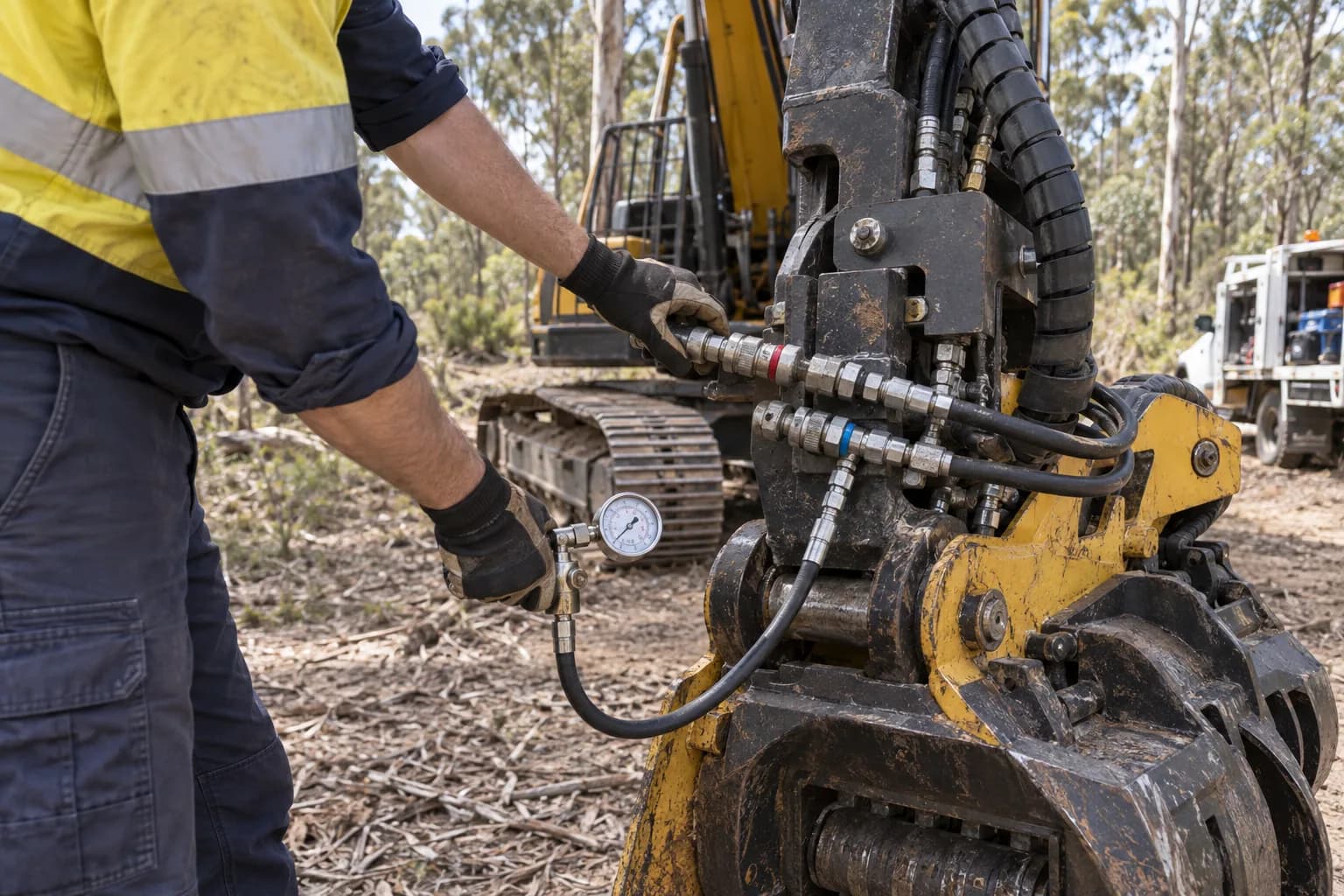
Technician checking hydraulic hoses and test equipment on an excavator attachment circuit
T01

Measure auxiliary flow

Use a calibrated flow meter and load valve at normal operating temperature, test the intended auxiliary circuit in both required directions, and record flow at the attachment manufacturer’s working pressure. The machine’s advertised pump output is not the number the attachment receives.

Open tutorial →
Excavator auxiliary hoses, couplers and hydraulic service points being inspected
T02

Identify the hydraulic circuit

Trace the hoses and controls rather than counting couplers. Confirm whether flow is one-way or reversible, whether a low-pressure case drain returns independently to tank, and whether two attachment functions can operate at the same time. Then verify the result against the machine manual and a functional test.

Open tutorial →
Forestry excavator holding a cut tree section with an attachment at working radius
T03

Size an attachment to a carrier

Treat published carrier tonnes as an initial filter. The final match requires attachment mass with bracket and rotator, excavator lift capacity at the actual radius and sector, usable hydraulic flow and pressure, transport configuration, guarding, and the maximum material the head will retain.

Open tutorial →
Forestry attachments and excavators prepared in a machinery yard for installation and commissioning
T04

Install and commission an attachment

Commission the ordered attachment as one installed system. Verify identity and mass, mechanical fit, hose routing, hydraulic settings, control logic, guarding and transport before loading it on representative material. Record baseline pressures, temperatures, cycle times and operator limits for future troubleshooting.

Open tutorial →
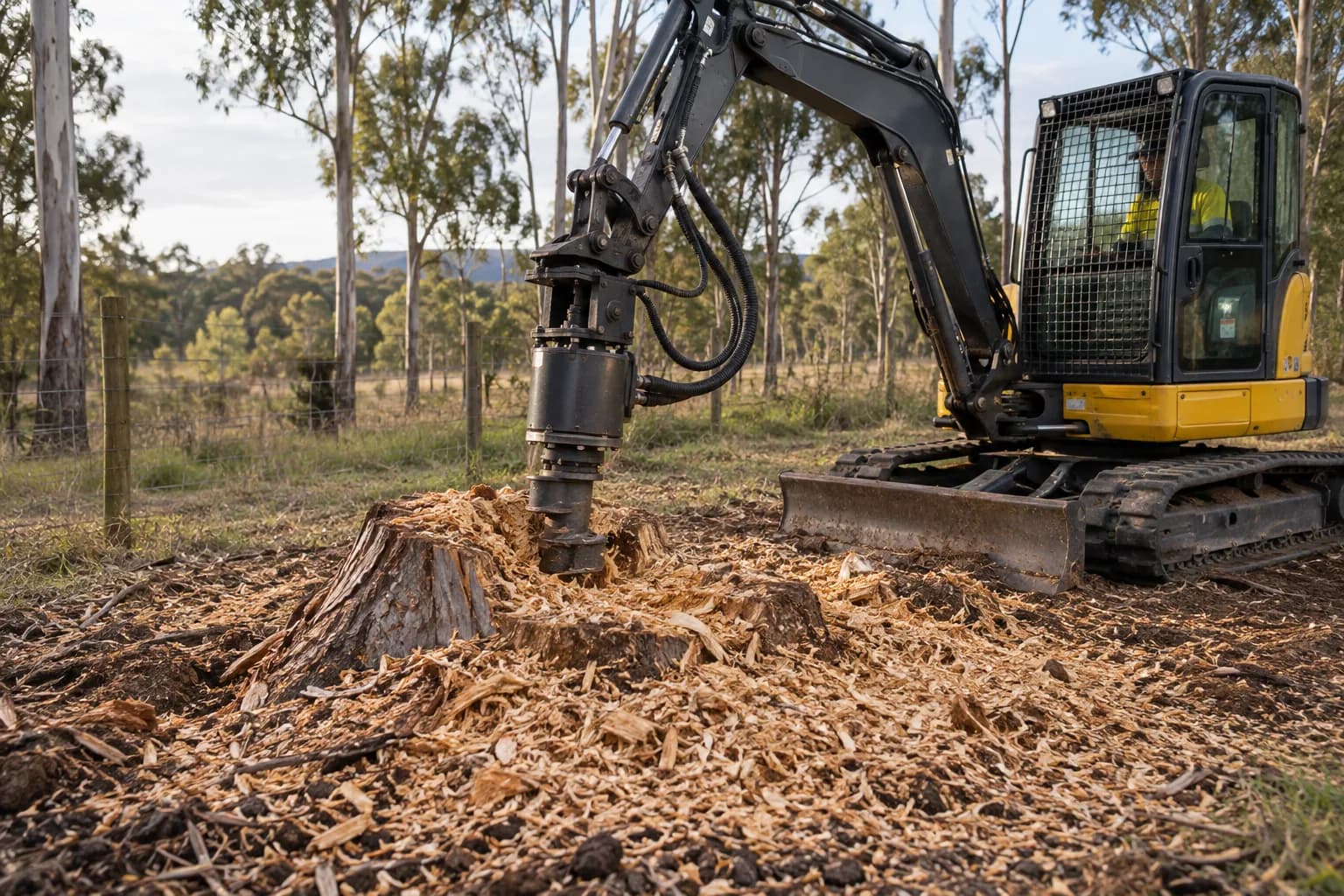
Excavator-mounted stump grinder with hydraulic supply, return and case-drain hoses visible
T05

Set up a case drain

Route the motor’s case-drain port through a dedicated, correctly sized, low-restriction line to the approved tank connection. Confirm the attachment manufacturer’s maximum drain pressure and measure it at working temperature. Never cap the port or tee it casually into a pressurised return.

Open tutorial →
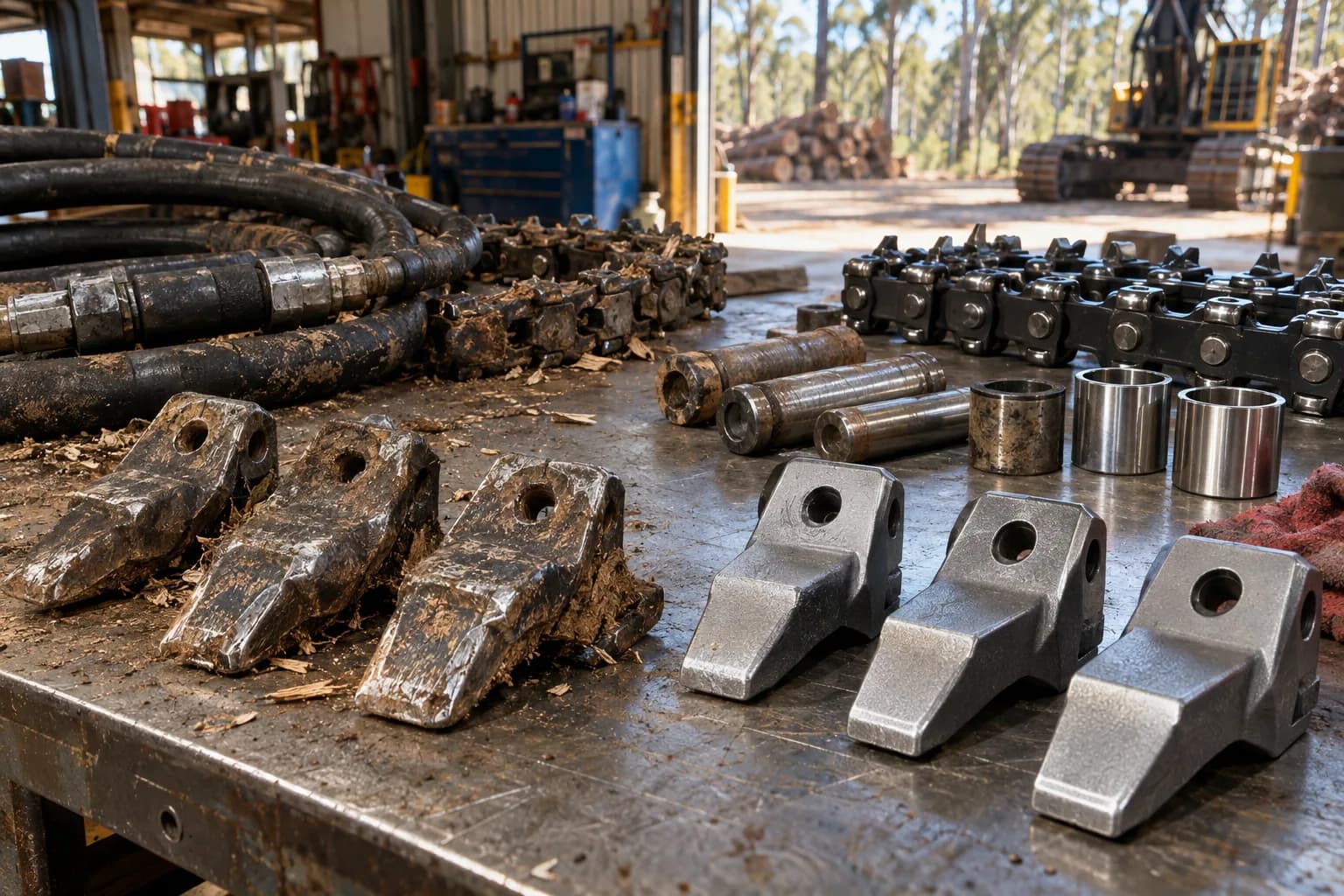
Forestry attachment wear parts, tools and components arranged on a workshop bench for inspection
T06

Inspect a used attachment

Identify the exact model and serial first, then inspect structure, pins, bearings, wear system, hydraulics, controls and supplied fitment as separate cost lines. Test the head hot on representative material and price every missing bracket, hose, controller and overdue wear item before comparing it with a complete new quotation.

Open tutorial →
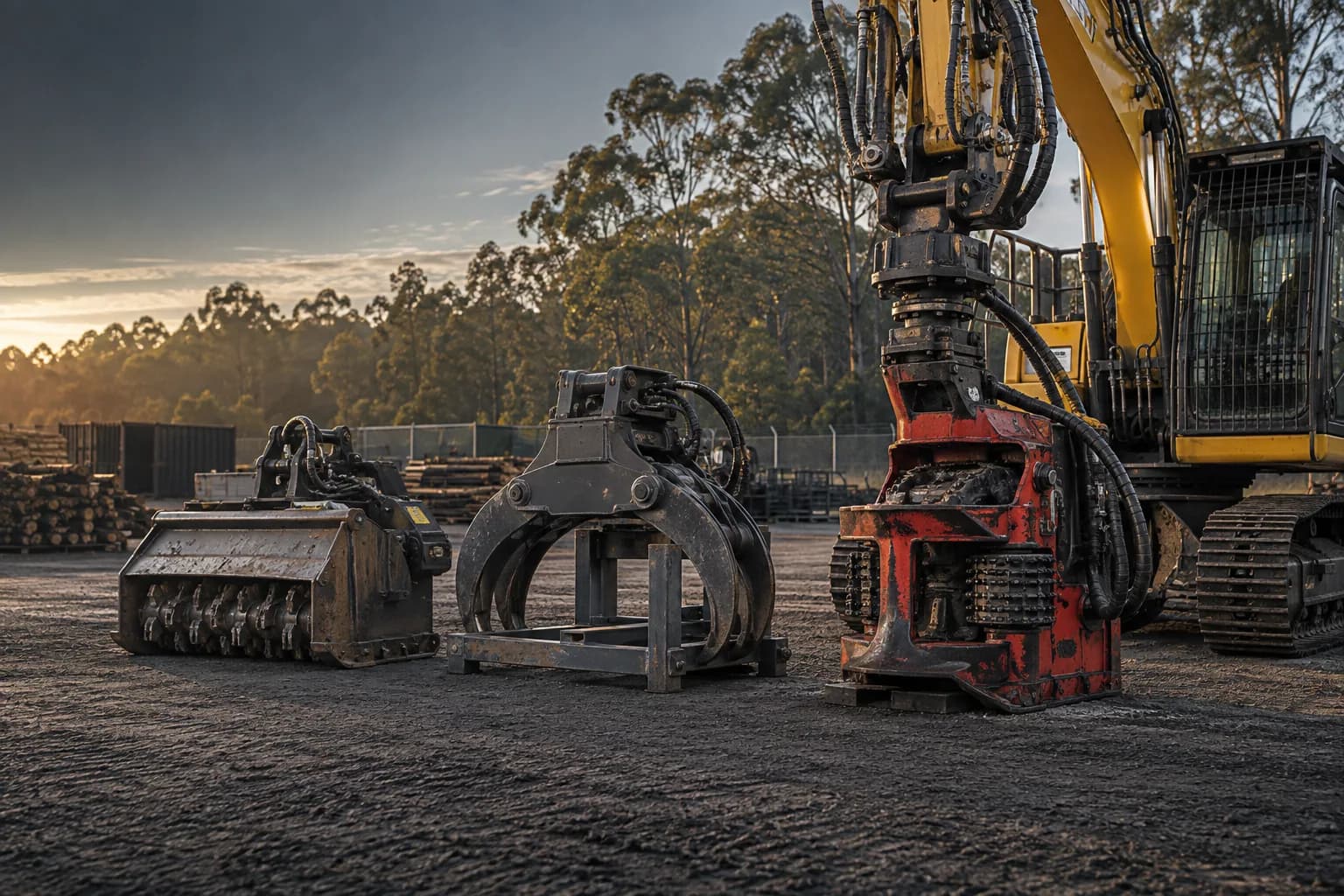
Forestry machinery fleet in an Australian equipment yard representing ownership and tender costs
T07

Calculate a tender rate

Choose the unit the client accepts, estimate completed units per productive hour from comparable work, calculate the full hourly cost of carrier, attachment and crew, then add mobilisation, wear variability, downtime, overhead, risk and margin explicitly. Do not turn a demonstration cycle into an all-in hectare or stump rate.

Open tutorial →
Forestry attachment wear parts, hand tools and service items organised on a workshop bench
T08

Build a wear-parts kit

Stock parts by failure consequence, consumption rate and replenishment lead time—not by what is cheapest. Carry enough teeth, blades, chains, hoses, couplers, fasteners and service tools to protect the next work period, with every item matched to the exact attachment serial range and a reorder point recorded.

Open tutorial →