The short answer
Identify the exact model and serial first, then inspect structure, pins, bearings, wear system, hydraulics, controls and supplied fitment as separate cost lines. Test the head hot on representative material and price every missing bracket, hose, controller and overdue wear item before comparing it with a complete new quotation.
Procedure
Complete the work in this order
- 01
Verify identity and ownership
Record make, model, serial, year, seller details and proof of ownership. Obtain manuals, original specification, service records and the carrier it ran on. Confirm the serial with the distributor and ask whether parts and technical documents remain available.
- 02
Inspect the load structure
Clean enough material away to see bracket welds, pin bosses, main frame, guards and high-stress transitions. Look for cracks, distortion, fresh paint, non-standard plating and elongated holes. Ask who performed repairs and whether engineering or weld records exist.
- 03
Measure wear rather than viewing it
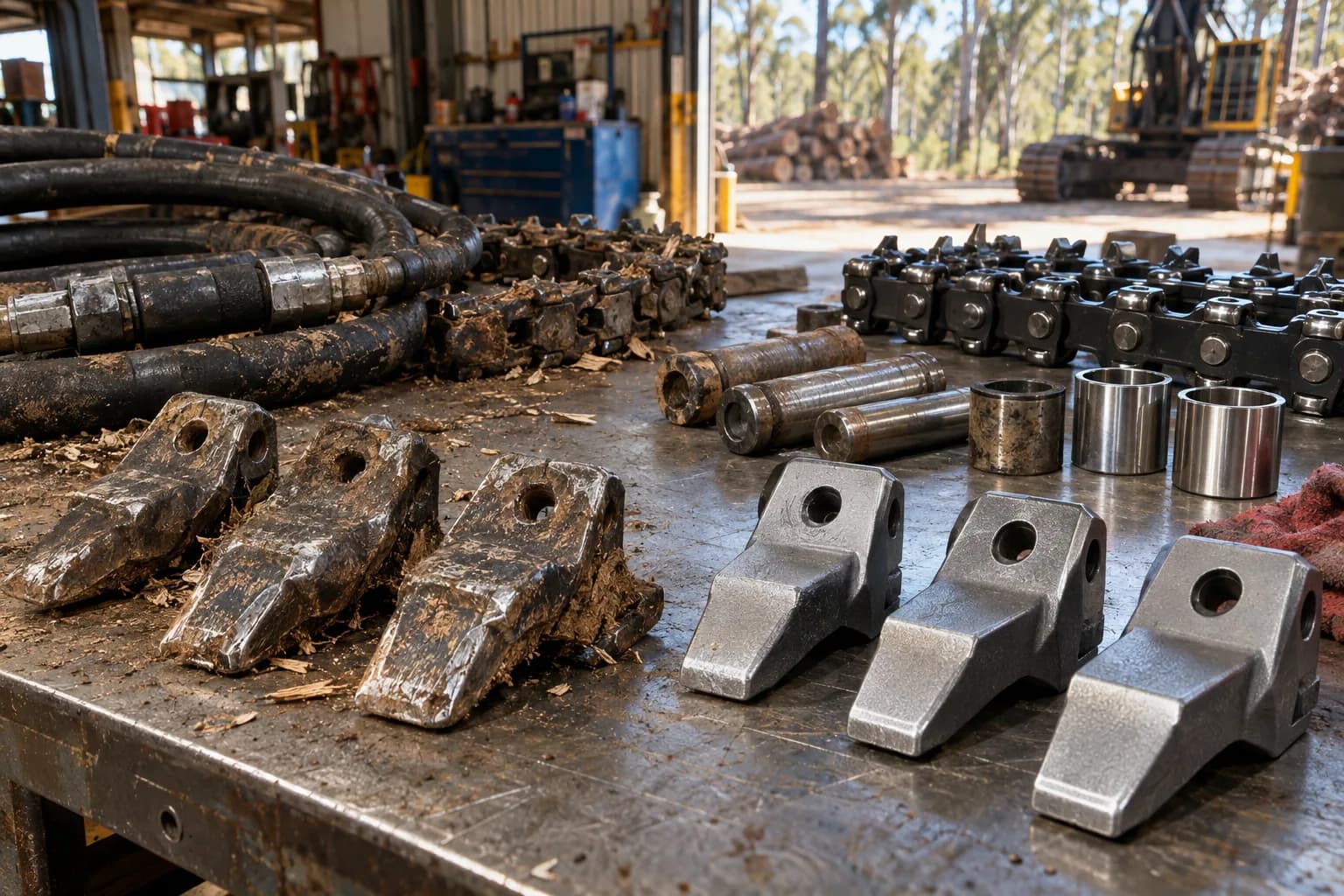
Compare teeth, blades, chains, bars, holders, bushes, pins and jaw edges with service limits. Measure play and remaining dimensions where possible. Build a priced list of immediate and near-term replacements instead of accepting ‘plenty of life’ as a condition report.
- 04
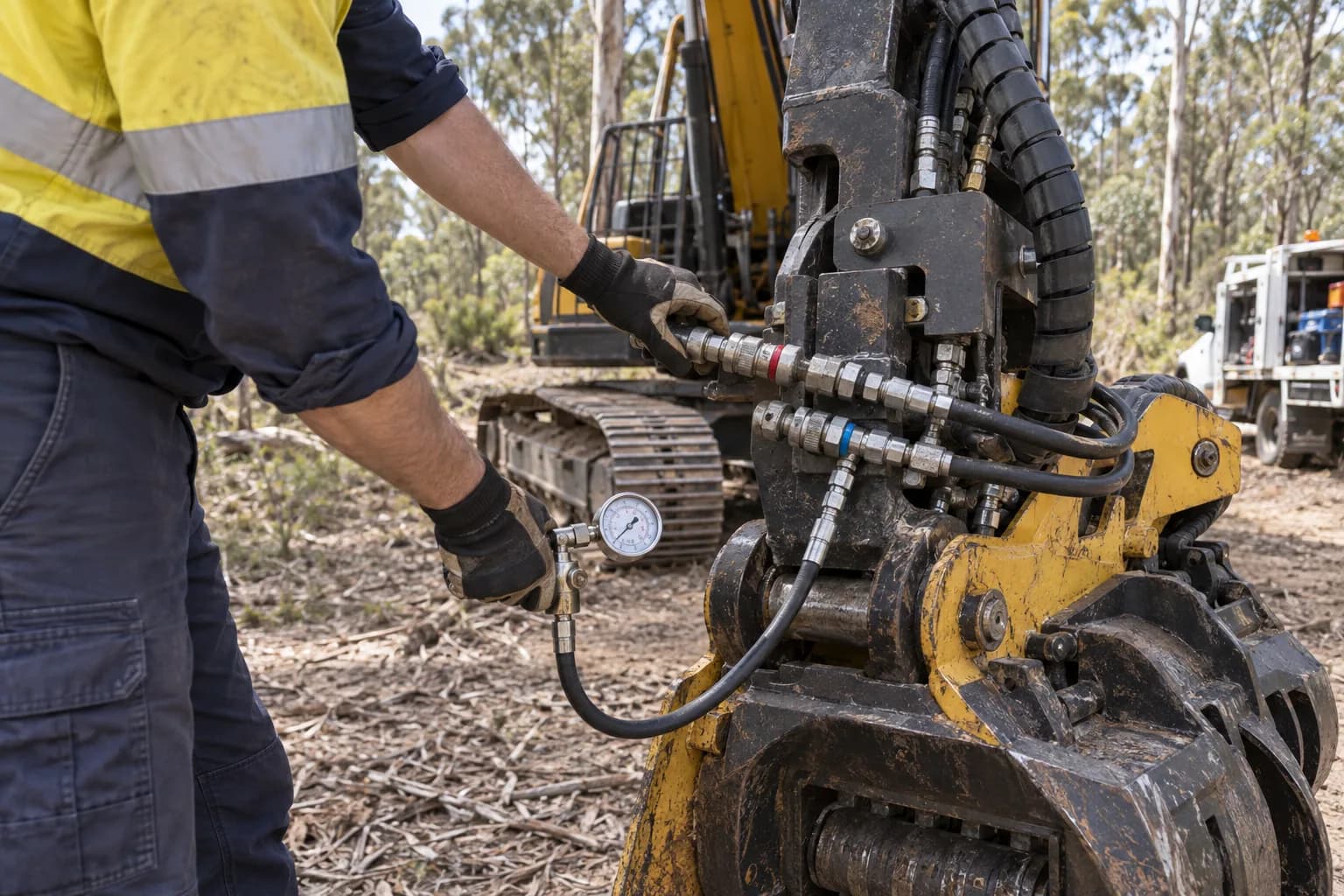
Test hydraulics and controls
Check hoses, couplers, cylinders, motor leakage, rotator play, valve blocks, wiring, sensors and controllers. Run every function from cold to operating temperature under realistic load. Record pressure, drain condition, unusual noise and whether functions can operate together.
- 05
Price the complete installed package
List bracket changes, hitch work, hoses, couplers, case drain, controller, wiring, guarding, freight, commissioning and tax. Add the first wear service and a contingency for hidden defects. Compare that delivered-and-working figure with a new package carrying warranty.
Read the machine’s previous job in its wear
Wear patterns reveal operation. Uneven rotor or blade wear may indicate imbalance, ground contact or damaged holders. Polished hose sections show movement against the boom. Distorted guards can indicate debris impact, while play concentrated on one side of a jaw can point to repeated side loading.
Ask what material, soil and annual hours the attachment saw, then see whether the condition supports the story. Meter hours on a carrier do not prove attachment hours, and fresh paint does not restore dimensions. Photographs from earlier ownership and parts invoices are more valuable than an unsupported estimate.
Know when inspection needs a specialist
Oil leakage, structural repairs, rotor vibration, unusual motor noise, electronic faults and unknown control systems justify an independent inspection. A specialist can pressure-test cylinders, measure case leakage, assess weld repair and confirm whether software or proprietary controls can be supported on the intended carrier.
Walk away when identity is unclear, critical parts are unavailable, major repairs cannot be documented or the seller will not permit a loaded test. A low purchase price cannot compensate for an attachment that cannot be fitted, supported or trusted under forestry loads.
Common mistakes
Valuing the bracket as universal
Machine-specific fitment can turn the supplied bracket into scrap rather than an asset.
Testing functions without load
Weak motors, slipping drives and heat problems may not appear while free-running.
Ignoring controllers and wiring
A missing proprietary control package can be expensive or impossible to replace.
Comparing purchase prices
The useful comparison is delivered, repaired, installed and working on your carrier.
Continue the job
Wear-parts guide
Identify the components that turn condition into operating cost.
Attachment costs
Compare used and new as complete installed systems.
Commission the attachment
Create a baseline after purchase and repair.