The short answer
Choose the unit the client accepts, estimate completed units per productive hour from comparable work, calculate the full hourly cost of carrier, attachment and crew, then add mobilisation, wear variability, downtime, overhead, risk and margin explicitly. Do not turn a demonstration cycle into an all-in hectare or stump rate.
Procedure
Complete the work in this order
- 01
Define the accepted unit
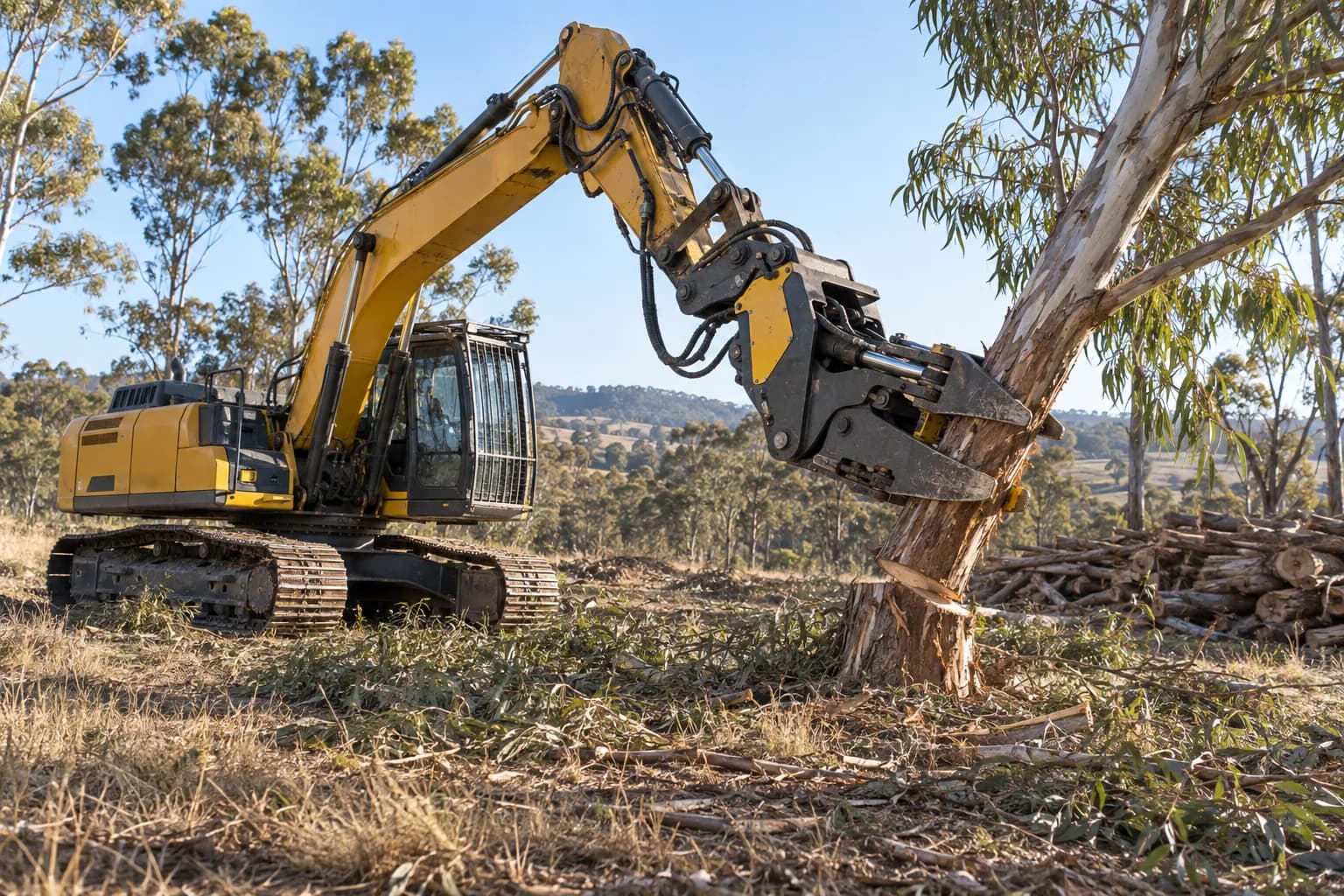
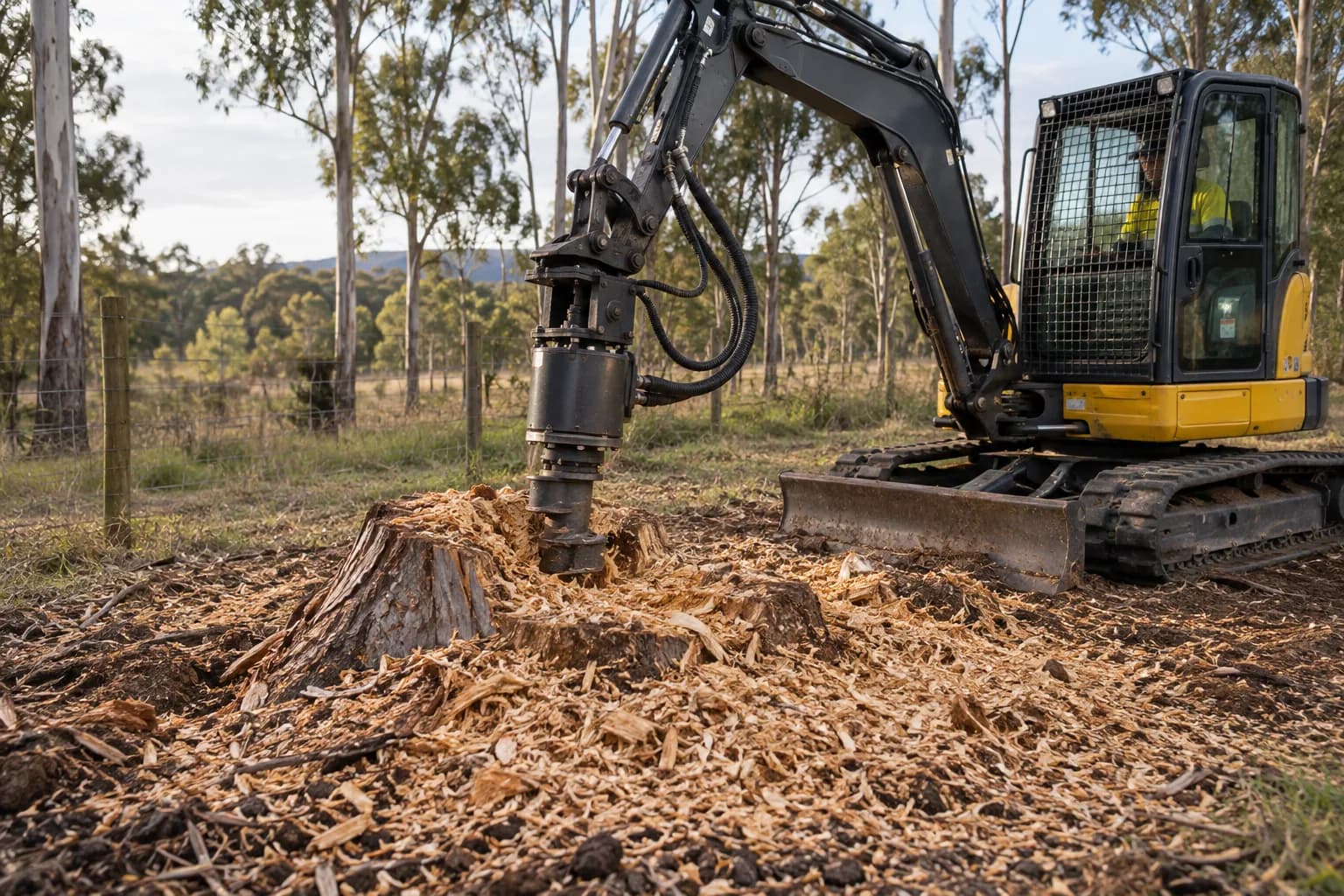
Use completed hectares, reopened corridor metres, finished stumps, controlled trees or processed tonnes—whatever the client measures after the required finish. Write inclusions for debris, stacking, disposal, clean-up and inspection so production is not counted before the scope is complete.
- 02
Set a production range
Use records from comparable vegetation, diameter, density, slope, access and finish. Separate productive attachment time from travel, setup, changeover, servicing, material handling and delays. Estimate low, expected and high output rather than one precise number.
- 03
Build the hourly system cost
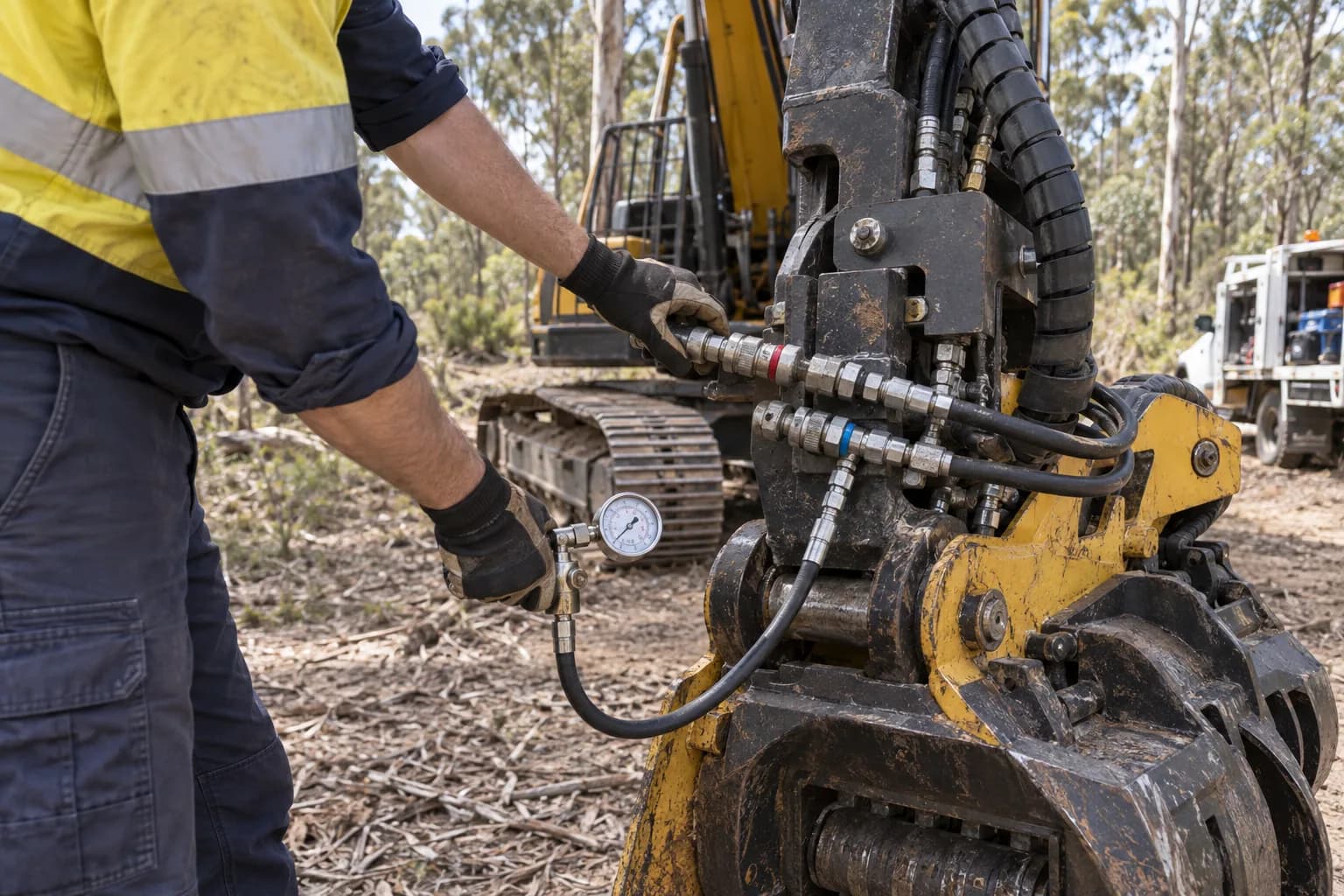
Include carrier ownership or hire, attachment capital, fuel, operator, supporting crew, transport equipment, routine service, insurance and supervision. Treat the carrier and attachment as one working system and include the plant that prevents the cutting head from waiting.
- 04
Add wear and mobilisation separately
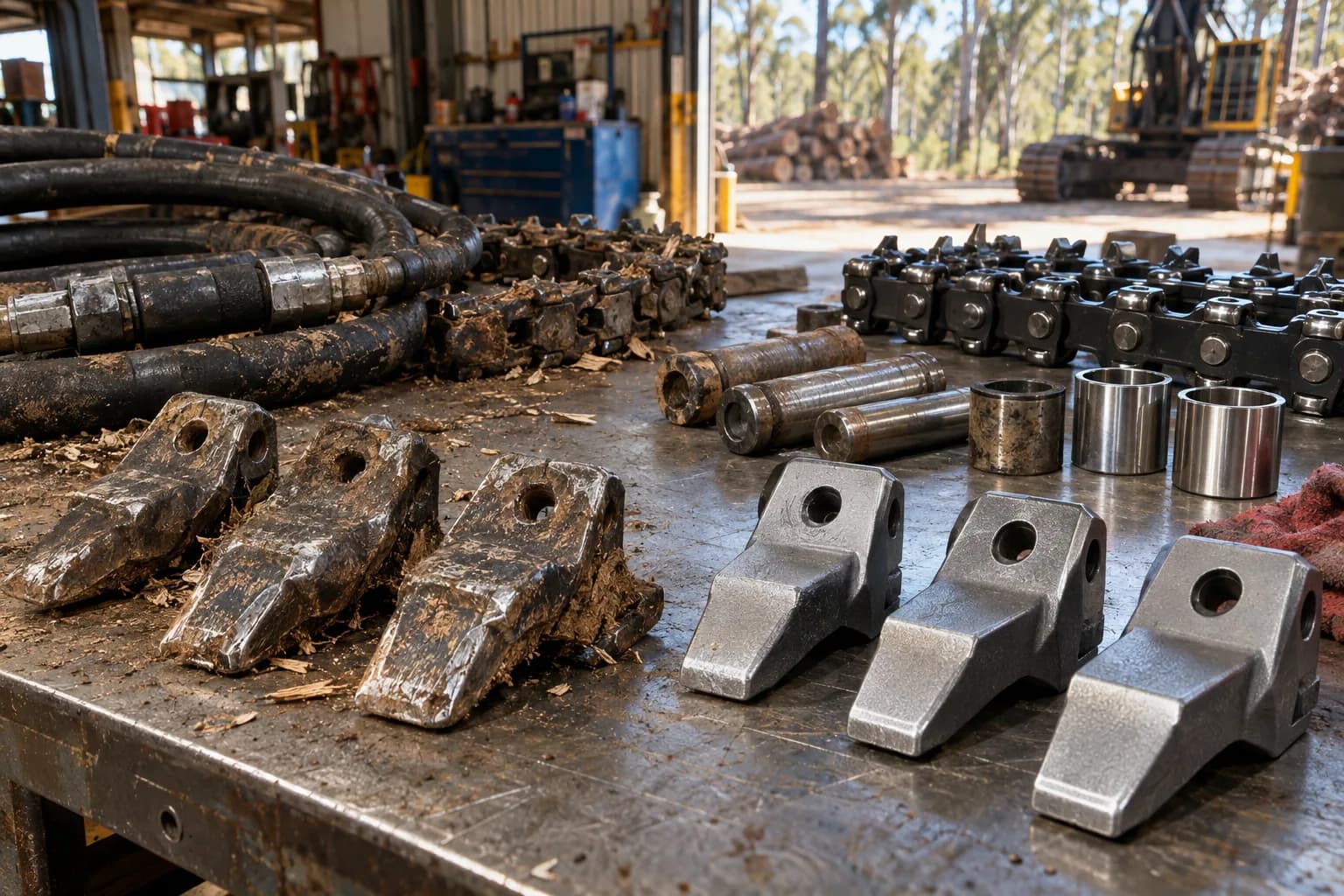
Price teeth, blades, chains, holders and hoses from realistic consumption in similar material. Add float, permits, travel, setup, wash-down, accommodation and minimum charges as visible lines. Do not hide fixed mobilisation inside an optimistic production rate.
- 05
Apply risk, overhead and margin
State assumptions and add contingency for unknown material, contamination, weather, access or client sequencing. Apply business overhead and required margin after direct costs. Test the result against the low-production case before submitting the commercial rate.
Separate productive hours from paid hours
A ten-hour shift rarely provides ten attachment hours. Pre-starts, travel, traffic control, exclusions, refuelling, tooth changes, hose repairs, attachment changes and material handling consume paid time. Estimate utilisation inside the shift and use it to spread daily cost across the units actually completed.
This distinction prevents a common error: dividing an hourly plant rate by the best observed production. The numerator must include the whole working system and the denominator must be accepted production across the same time period. Anything else produces a rate that fails as soon as the site behaves normally.
Use assumptions as commercial controls
List vegetation density, diameter range, terrain, access, contamination, material destination, working hours and client-supplied controls in the tender. Provide rates or a variation method for conditions outside that baseline. Clear assumptions make the price comparable and provide evidence when the work changes.
After award, record output, paid hours, wear and delays by work type. Compare actual gross margin with the estimate each week and update future rates. The aim is not to defend one perfect spreadsheet; it is to build a feedback loop in which every completed project improves the next production assumption.
Common mistakes
Using brochure production
Demonstration material and continuous open access rarely represent a tender site.
Hiding mobilisation
Small staged parcels then become structurally unprofitable even when the hourly method works.
Averaging wear across jobs
Rock, sand, wire and hardwood can move consumable cost dramatically.
Adding margin before risk
Contingency, overhead and profit solve different commercial problems and should remain visible.
Continue the job
Cost per hectare calculator
Model area-clearing production and margin.
Cost per stump calculator
Resolve grinding economics from real cycle data.
Ownership cost guide
Capture the cost lines behind the hourly system.