The short answer
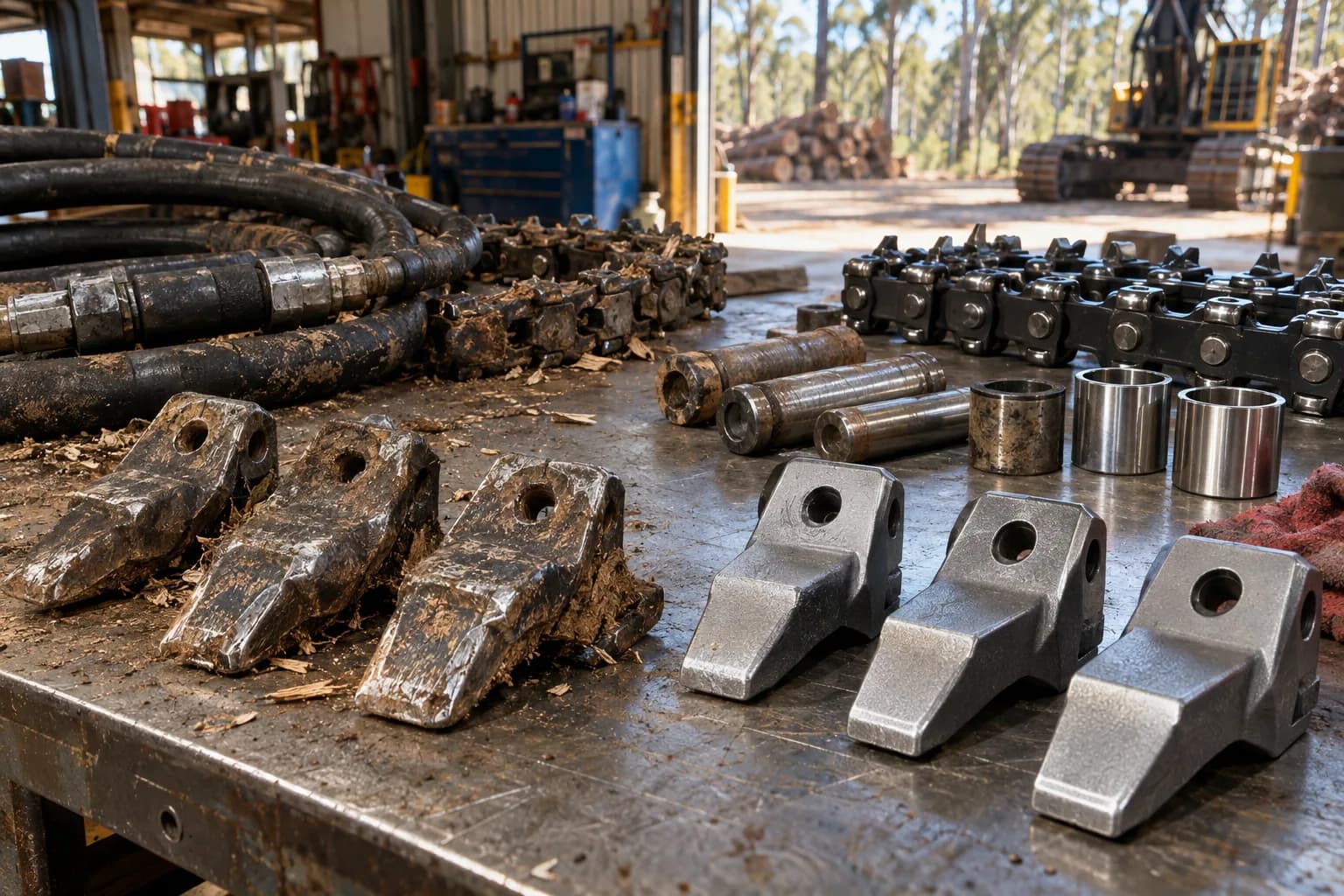
Stock parts by failure consequence, consumption rate and replenishment lead time—not by what is cheapest. Carry enough teeth, blades, chains, hoses, couplers, fasteners and service tools to protect the next work period, with every item matched to the exact attachment serial range and a reorder point recorded.
Procedure
Complete the work in this order
- 01
Map stoppage components
Walk through the attachment and list every item whose failure stops safe production: cutting parts, holders, drive components, hoses, couplers, seals, sensors, fasteners and specialised tools. Separate stop-work parts from items that can wait for planned service.
- 02
Use consumption and lead time
Review invoices and service records to calculate use per productive hour or completed unit. Ask the supplier what is held locally and what must be imported. Set stock to cover expected use across replenishment time plus a sensible variability allowance.
- 03
Build job-specific modules
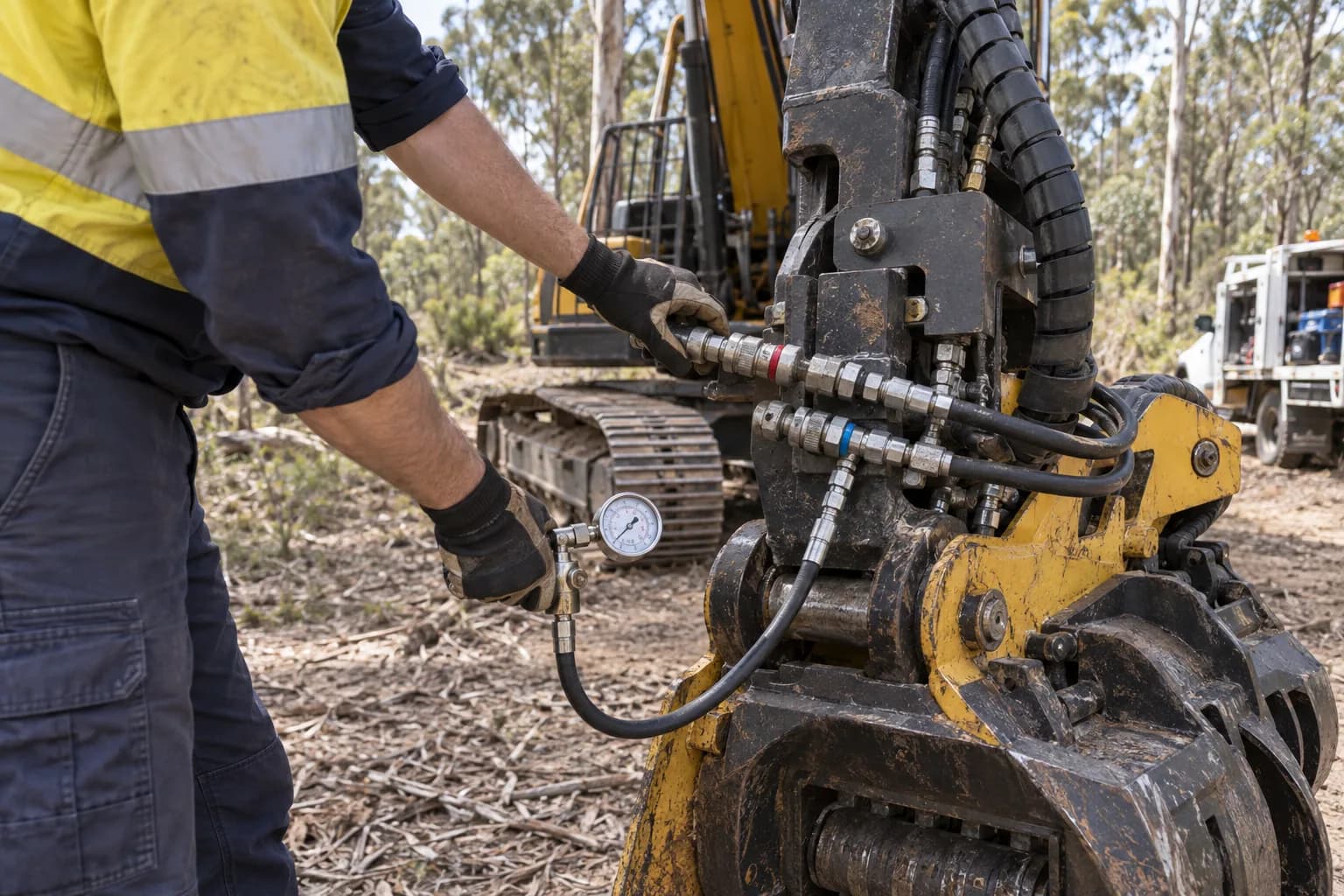
Create labelled kits for cutting system, hydraulics, fasteners and daily service rather than one mixed toolbox. Add only tools and lifting equipment the crew is trained and authorised to use. Include clean caps, plugs and containment for hydraulic work.
- 04
Record compatibility
Label each part with manufacturer number, description, attachment model and applicable serial range. Photograph distinctive items and store the same list digitally. Similar teeth, chains and seals can differ enough to waste a remote mobilisation.
- 05
Set inspection and reorder rules
Nominate minimum quantities, count the kit at pre-start or weekly intervals and record consumption against the job. Quarantine damaged or contaminated parts. Reorder when the minimum is reached, not when the last usable item is fitted.
Match inventory to where the machine works
A metropolitan contractor with same-day supplier access needs a different kit from a remote corridor crew. Calculate the cost of one stopped shift, including carrier, operator, support plant, traffic control or possession time. That consequence justifies stock more reliably than the purchase price of the part.
For remote work, include transport damage, contamination and the chance of several failures before replenishment arrives. For urban work, focus on high-consumption items and the parts a courier cannot deliver within the job window. Review the kit whenever the attachment, carrier or work material changes.
Keep repair capability inside safe limits
Carrying a part does not authorise the crew to fit it. Define which tasks operators can perform, which need a fitter and which require supplier or hydraulic specialist support. Include isolation, stored-energy, lifting and hot-work requirements in the maintenance plan.
A field kit should shorten a controlled repair, not encourage improvisation. Keep manuals, torque values, inspection limits and supplier contacts available offline. After any repair, record the fault, part, cause, hours, technician and follow-up inspection so repeated consumption becomes a maintenance signal rather than normalised downtime.
Common mistakes
Buying one of everything
Inventory grows without protecting the failures most likely to stop production.
No serial-range check
A part number from a similar model may fit poorly or not at all when the machine is remote.
Stock without tools
A spare that needs an unavailable puller, press or lifting device does not restore production.
No reorder point
The kit appears complete until the final part is used at the start of another job.
Continue the job
Wear-parts guide
Understand how wear systems change the operating budget.
Australian support guide
Evaluate local stock and field response before purchase.
Troubleshooting guide
Separate normal wear from setup and hydraulic faults.