Match the contract
Clearance distance, cut quality, traffic control and disposal rules determine the tool long before brochure capacity does.
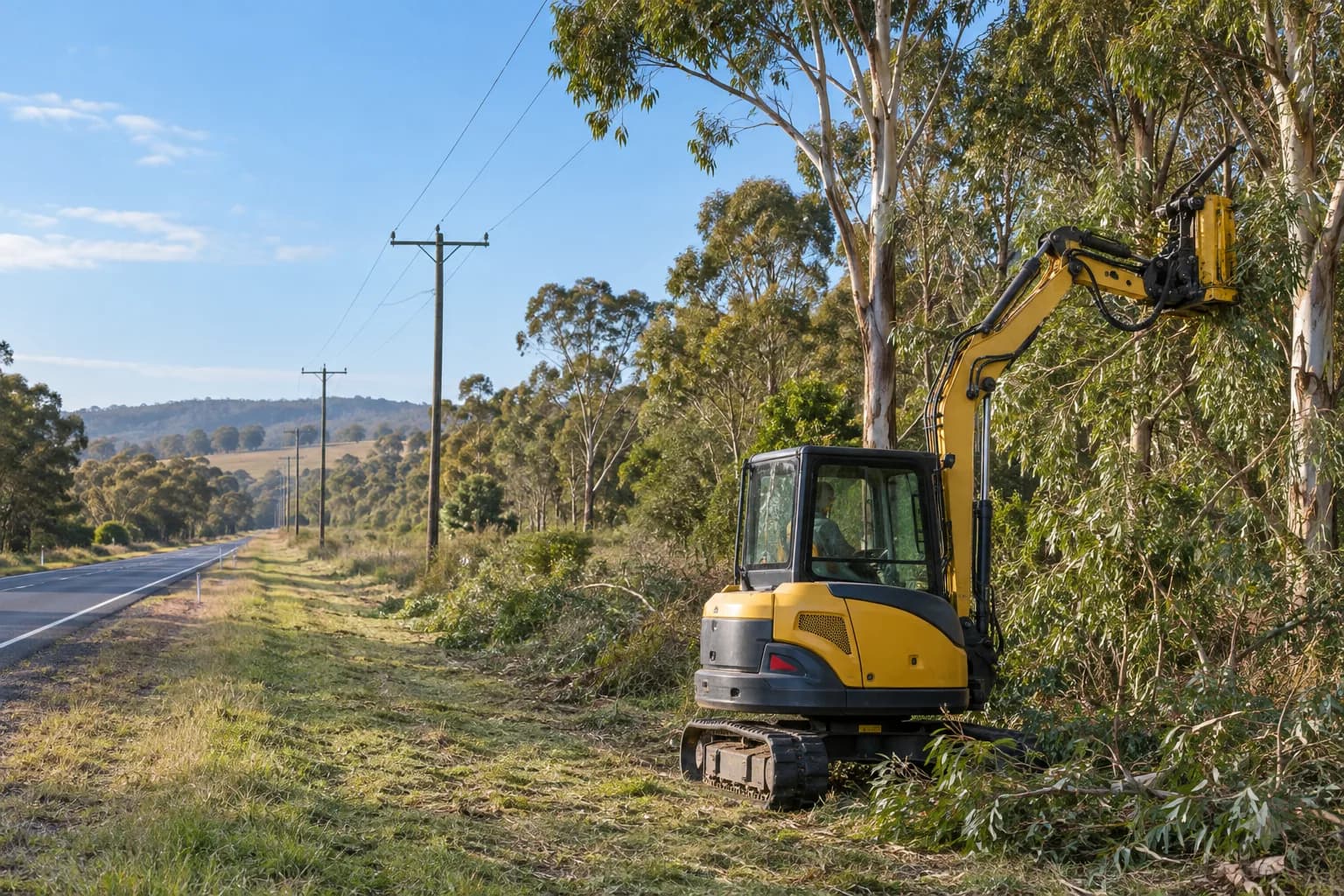
A2 · Road, rail and power corridors
Mechanised pruning and controlled cutting for repeat corridor work where reach, cut quality and exclusion zones matter more than raw clearing speed.
The outcome
Clearance distance, cut quality, traffic control and disposal rules determine the tool long before brochure capacity does.
A carrier may reach the limb but still lack stability at that radius. Read the lift chart with the attachment and retained section included.
A fast cutting head only moves the bottleneck if the crew can safely collect, process and remove the material behind it.
Utility vegetation work is governed by the clearance envelope, the asset owner’s procedure and the condition required after cutting. Mechanical pruning is the natural fit for repeat trimming where cut quality and a consistent profile matter. A grapple saw is more appropriate when each section must remain controlled through the cut near traffic, structures or conductors. Whole-stem shearing suits removal work but does not substitute for pruning when retained tree structure is part of the specification.
Record conductor location, roadside offsets, rail possessions, traffic-control constraints and the position of retained assets before selecting reach. The longest boom is not automatically the safest or most productive option. Working farther from the carrier reduces available lift and makes movement at the attachment more sensitive. The practical envelope is the radius at which the machine can hold the attachment and the expected section with adequate stability.
Mechanisation should remove people from the drop zone, not create a faster cutting machine surrounded by the same manual handling. Define who establishes the exclusion zone, who communicates with the operator, how cut material is transferred and when the corridor is reopened. Camera coverage, cab guarding, emergency lowering arrangements and the method for recovering a disabled attachment all belong in the work plan before the first shift.
Debris handling frequently limits production. A pruner can advance continuously while the collection crew falls behind, eventually forcing the carrier to stop or travel back through loose material. Trial the entire train—cutting, collection, chipping or loading and transport—and report completed corridor distance per possession or traffic-control window. That measure reflects the service the client buys and prevents cutting speed from disguising an unbalanced operation.
Ask suppliers to quote the attachment, bracket, hitch, rotator, hydraulic installation, controls, guarding, commissioning and operator training as one working package. Require mass in the ordered configuration and confirm the carrier’s lift capacity at the proposed working radius. For saws and pruners, document the circuit functions separately so the carrier can operate grip, cut and rotation without improvised switching that slows the cycle or increases operator error.
A repeat program justifies a documented baseline: clearance achieved, average cycle time, fuel use, wear consumption and defects found during inspection. Photograph representative cuts and record which material or access conditions reduced output. That evidence improves the next tender and gives supervisors a practical threshold for changing blades, adjusting the method or withdrawing the machine when conditions move outside the approved plan.
The quotation brief
Give suppliers the corridor profile, target clearance, typical limb size, maximum retained section, working radius, access window and material-disposal method. Require the quotation to describe every hydraulic function, the controls used to switch them, the complete suspended mass and the carrier assessment at radius. Include training, inspection criteria, consumable pricing and field-support coverage. For regulated or asset-owner work, attach the relevant procedure and ask the supplier to identify any assumption that conflicts with it. That response is more useful than a generic statement that the attachment is suitable for utility work.
Attachment sequence
Other operating environments
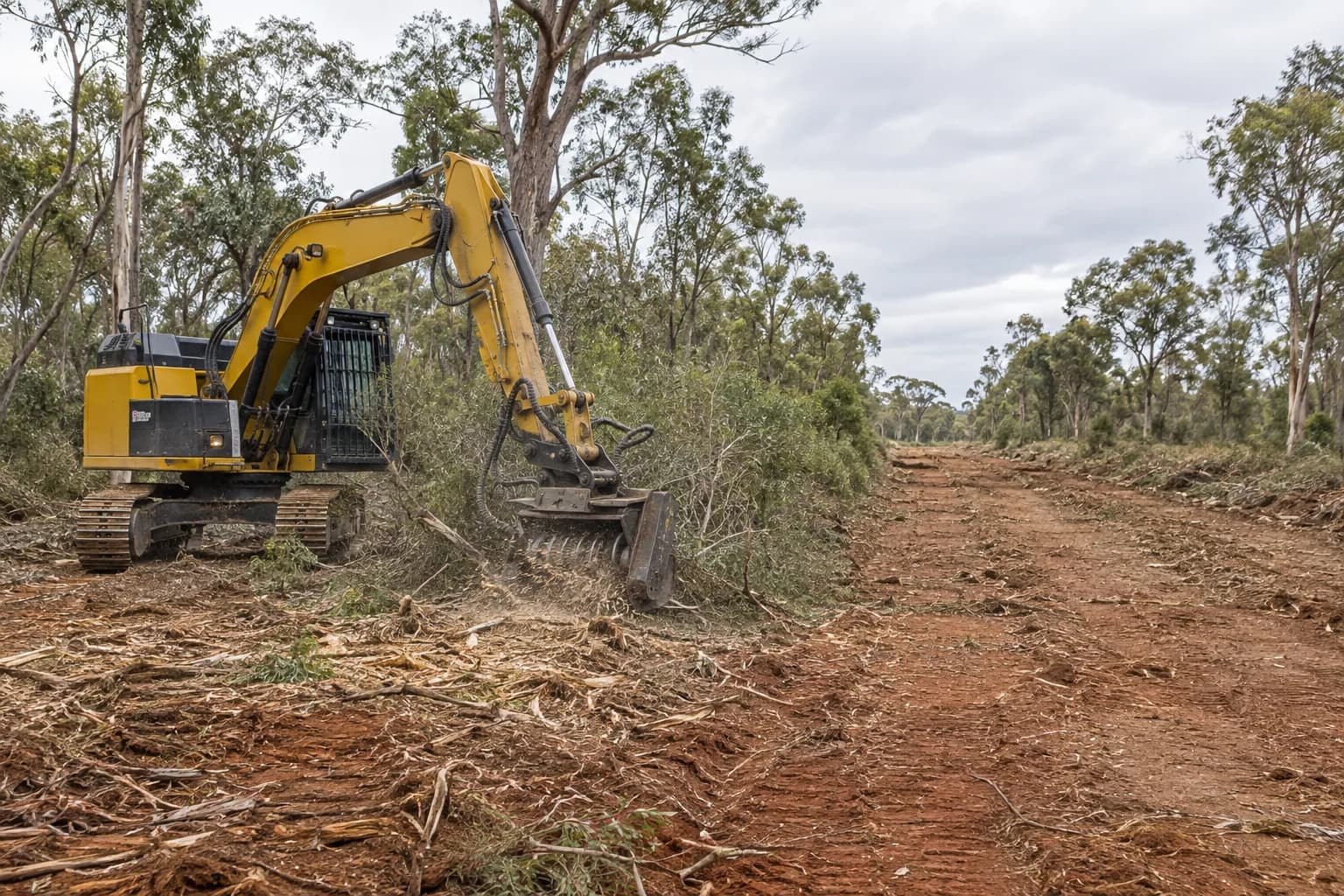 A1Field applicationLand clearingPlan the job →
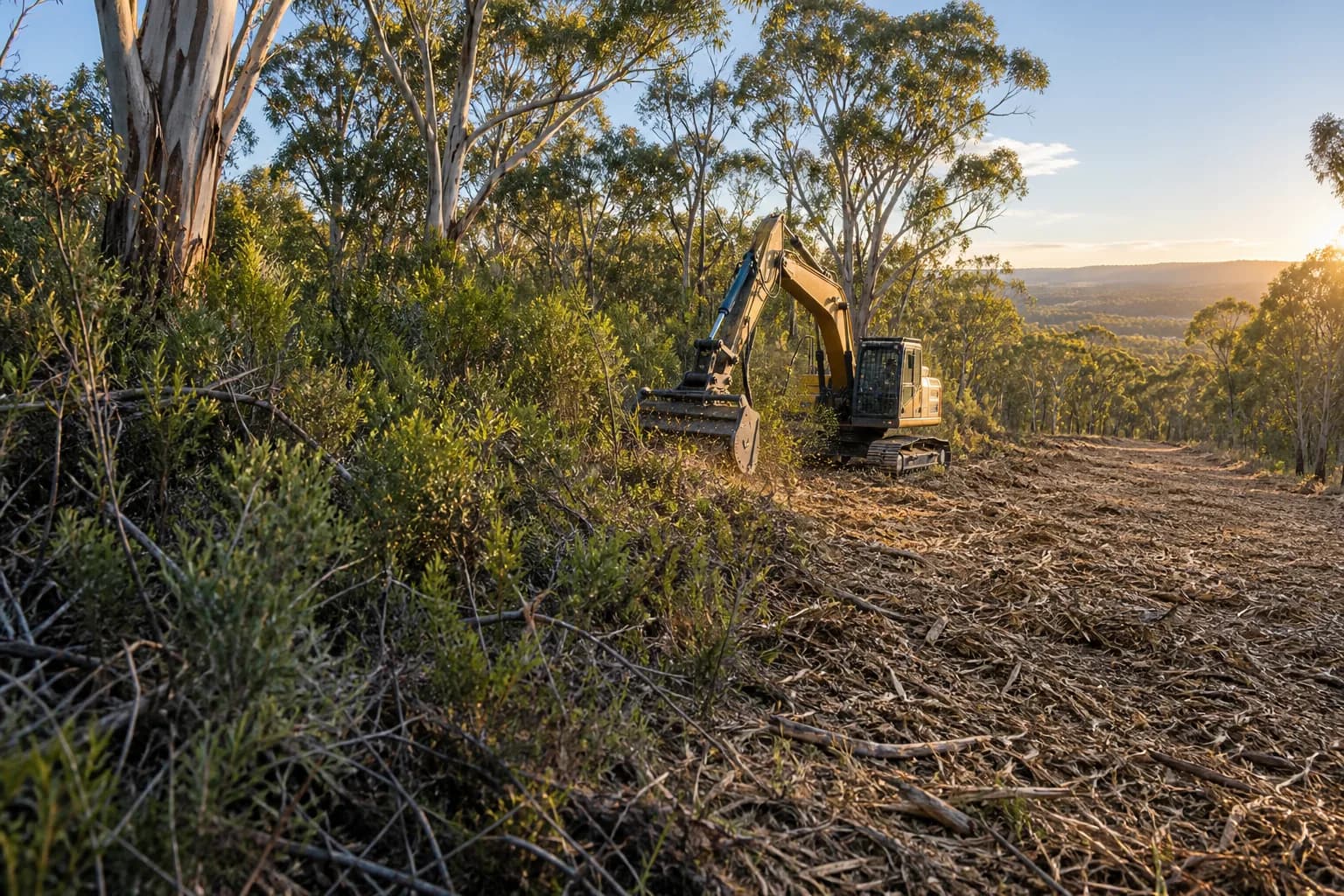 A3Field applicationFuel reductionPlan the job →
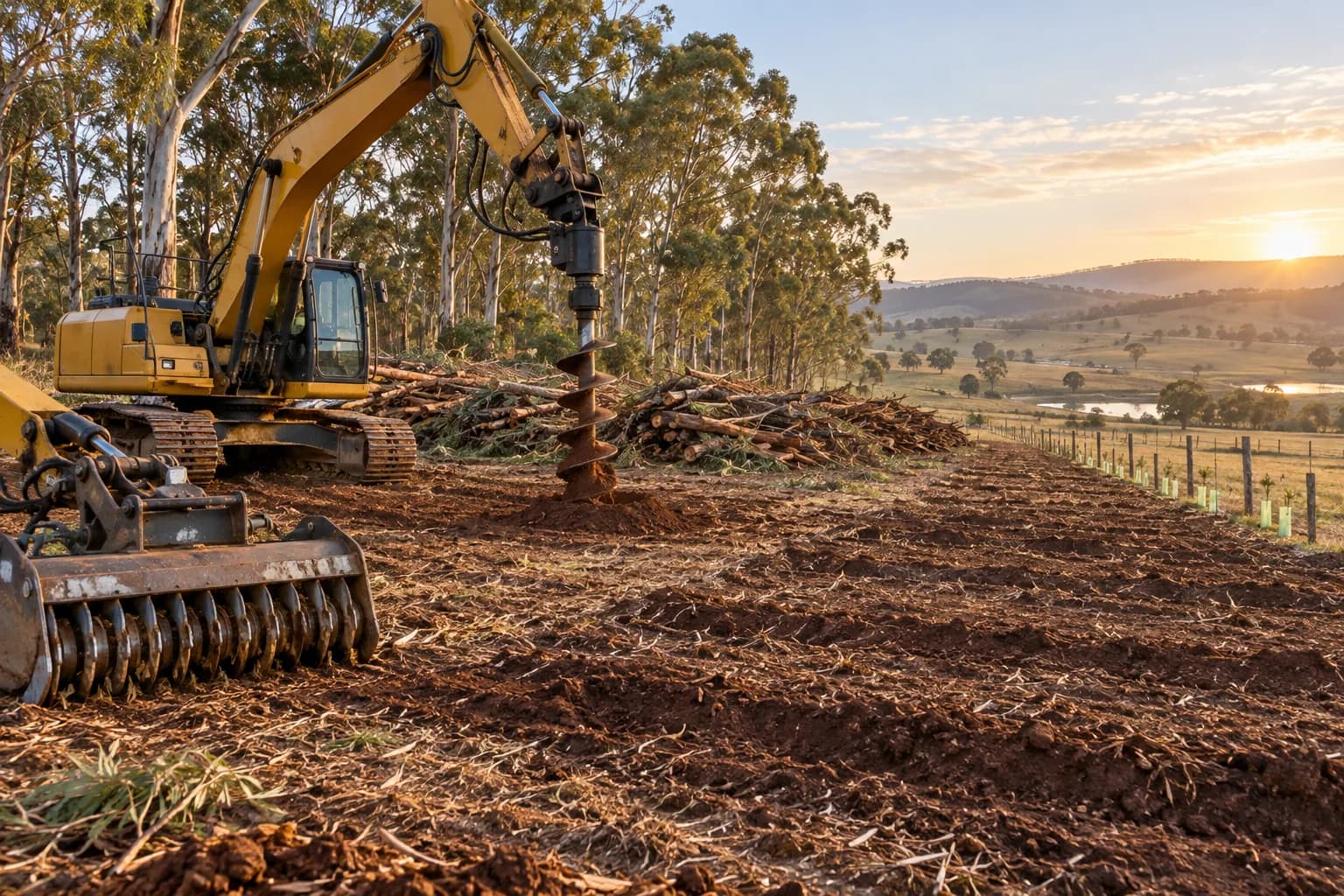 A4Field applicationFarm rehabilitationPlan the job →