Avoid paying for half a result
Clearing is not complete when the stems are down. Quote handling, access restoration and the next productive use of the ground.
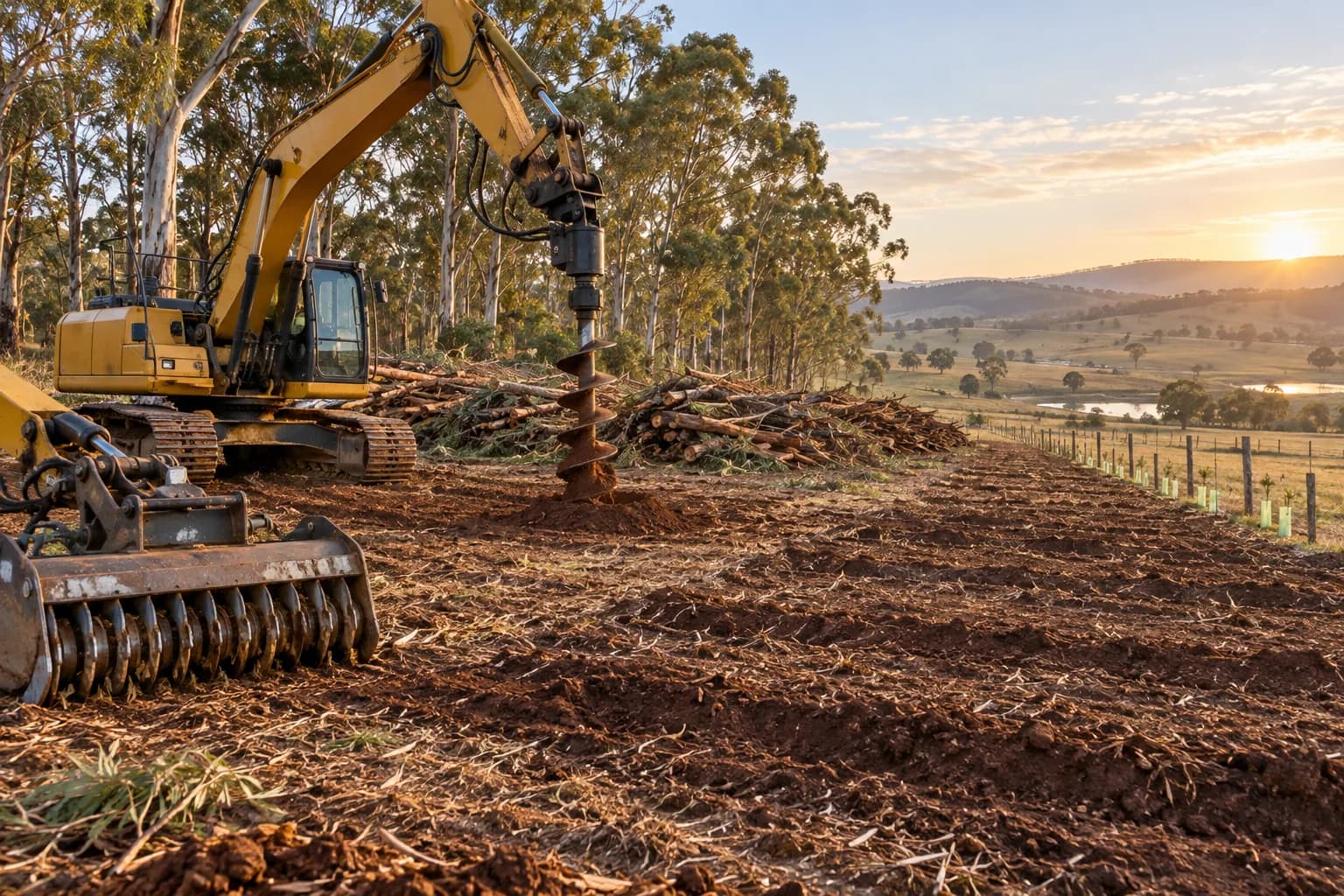
A4 · Agriculture and landcare
Carry the job beyond vegetation removal: handle timber, prepare access, drill, compact and leave productive ground rather than an expensive pile of debris.
The outcome
Clearing is not complete when the stems are down. Quote handling, access restoration and the next productive use of the ground.
A shear-and-grab sequence preserves material that a mulcher would turn into a disposal-free but unsaleable finish.
A planned attachment sequence can keep one excavator productive across felling, handling, drilling and compaction.
Farm clearing should be planned backwards from the intended use: renewed pasture, an access track, fencing, shelterbelt replacement, orchard work or planting. That outcome determines what may remain on the surface, where timber can be stored and whether stumps, roots or compaction must be addressed. A cheap felling-only quote can become the expensive option when another contractor must return to handle piles and restore access.
Mark retained vegetation, drainage lines, fences, services and erosion-sensitive ground before machinery arrives. Selective shearing and controlled placement help protect those boundaries. Mulching can retain soil cover and remove a transport step, but it also eliminates timber recovery and may not produce the surface required for cultivation. Use a grab when material value, habitat placement or controlled burn rows justify keeping stems intact.
One carrier can fell, handle, drill and compact when the attachment sequence, couplers and transport stands are designed together. Confirm that each attachment is within the carrier’s lift and hydraulic envelope and that changeover can occur on stable ground without people working beneath suspended equipment. Standardised couplers and protected hose storage save time only when the hydraulic functions and contamination-control procedure are equally well planned.
Arrange the work so the carrier does not repeatedly travel across finished ground. Fell and sort ahead, complete removal or in-place processing, then return for drainage, drilling or compaction. Record changeover time as part of the estimate. A broader attachment fleet increases utilisation only when the transitions are quick enough and the operator has a clear sequence; otherwise the machine becomes a mobile store of tools with low productive hours.
Ground pressure, moisture and slope influence when a tracked excavator can work without creating rehabilitation that exceeds the value of the clearing. Agree on wet-weather triggers, access routes and the treatment of ruts before starting. Keep heavy handling on planned paths and avoid placing debris where it redirects runoff. Where the scope includes compaction or drilling, test the finished result rather than treating a pass with the attachment as proof of compliance.
Price the job in measurable stages: vegetation removal, timber handling, residue processing, stump or root treatment, access restoration and final ground preparation. Separate saleable timber or avoided disposal from production income instead of using optimistic recovery to subsidise the base rate. The result is a quote that remains defensible when volumes, disposal permissions or the owner’s preferred finish change after work begins.
The quotation brief
Describe the farm outcome as a sequence: what is removed, what is retained, where timber goes, how residue is treated and what ground condition is required afterward. Provide carrier and hydraulic details for every intended attachment, not only the first one used. Ask suppliers to include stands, couplers and hose arrangements that support safe changeover in the field. Separate optional stages and unit rates in the quotation so additional fencing access, drilling, compaction or stump work can be instructed without renegotiating the whole job after machinery is already mobilised.
Attachment sequence
Other operating environments
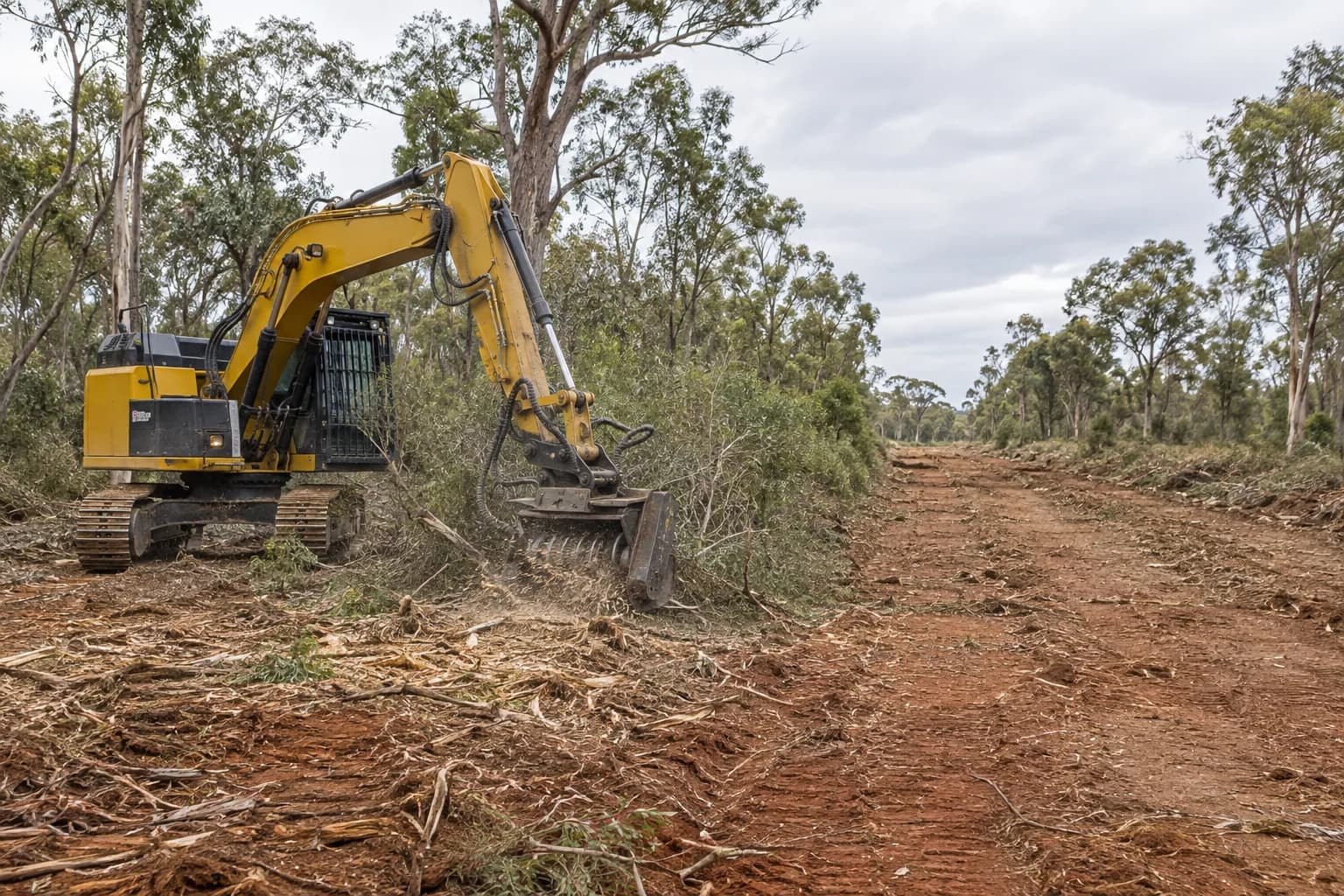 A1Field applicationLand clearingPlan the job →
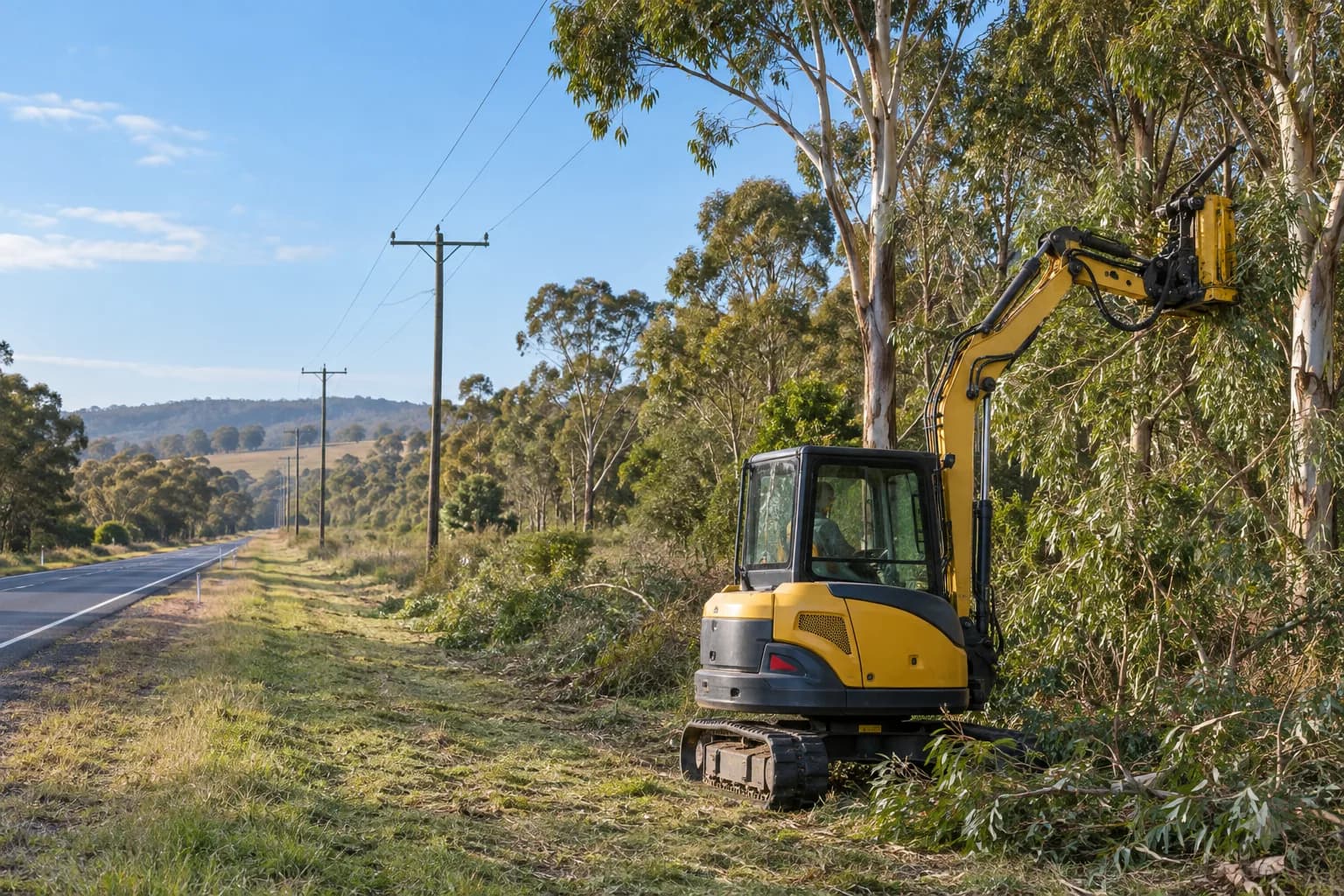 A2Field applicationUtility vegetationPlan the job →
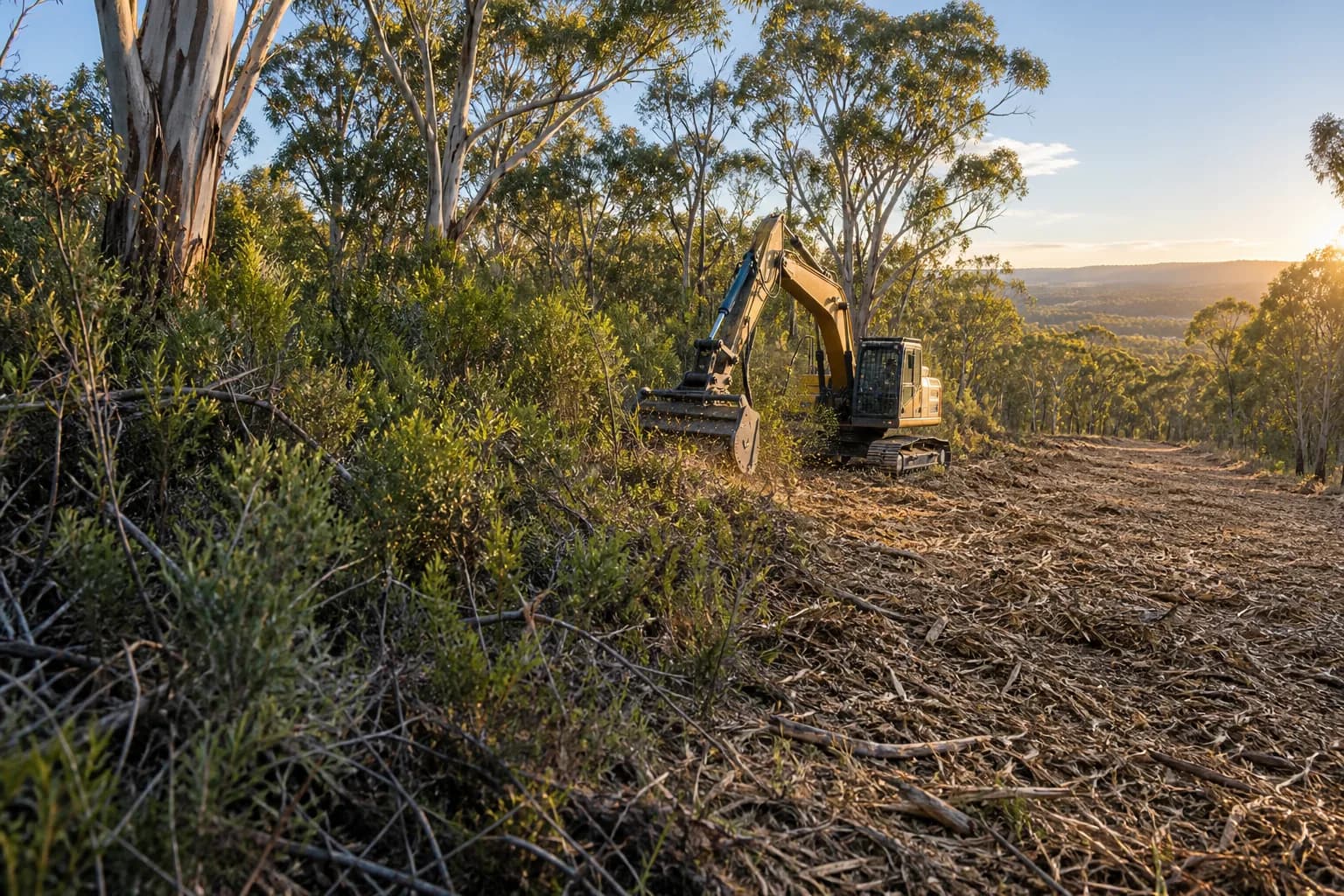 A3Field applicationFuel reductionPlan the job →