Define treated
Write down the target height, particle size, retained stems and acceptable windrow before calculating production.
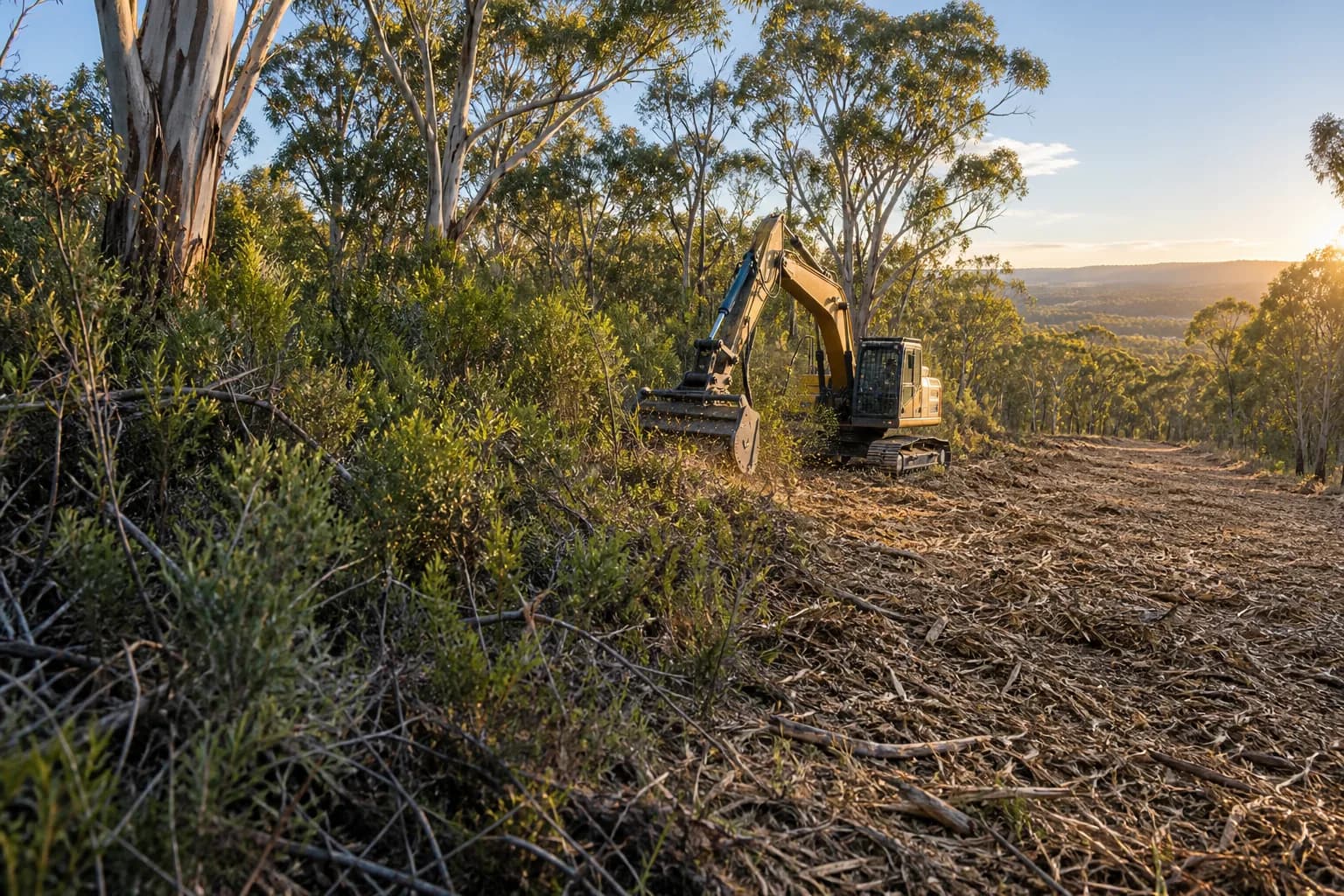
A3 · Hazard-reduction programs
Select machinery for treated hectares, terrain and the required residual fuel profile—not for the most dramatic single pass shown in a brochure.
The outcome
Write down the target height, particle size, retained stems and acceptable windrow before calculating production.
Slope, rocks, hidden wire and access can reduce real output far below an open-paddock demonstration rate.
Mulching is continuous hydraulic work. Cooling capacity, debris cleaning and fire-prevention checks belong in the hourly rate.
Fuel reduction is not a promise to make a block look cleaner. The scope should state treated area, retained stems, maximum residual height, acceptable particle size, windrow rules and protection requirements for soil, habitat and cultural values. Those measures decide whether vegetation can be processed in place or must be selectively removed. They also give both parties a finish that can be inspected instead of arguing over an undefined visual standard.
Sample vegetation across representative terrain and separate light regrowth from dense, woody material. Diameter, density, moisture, rocks, hidden wire and slope all change production. A single hectares-per-day figure without those conditions is not transferable. Build the estimate from productive machine hours in comparable material, then include travel, turning, inspection, cleaning and fire-watch time as explicit allowances rather than expecting the rotor to work every paid minute.
A forestry mulcher places a continuous load on the auxiliary circuit and throws fine debris toward the carrier. Confirm usable flow at working pressure, return-line limits and cooling capacity for the expected ambient temperature. Monitor hydraulic temperature during the trial rather than assuming a carrier that can run the head for ten minutes can sustain a full shift. Derating caused by heat belongs in the production model and may justify a cooling upgrade.
Document inspection and clean-down intervals for the radiator pack, belly, exhaust area and attachment. Provide accessible extinguishers or suppression equipment appropriate to the operating plan, define shutdown triggers and ensure the operator can identify changing fire conditions. These controls reduce ignition risk and protect availability: a machine stopped for repeated debris cleaning may still be the correct method, but the tender rate must carry that non-productive time.
Hazard-reduction programs are often split across scattered blocks. Mobilisation, low-loader access, refuelling, wash-down and daily travel can dominate a small treatment parcel even when mulching output is strong. Price each move and identify the minimum economical parcel size. A compact carrier may complete fewer hectares per hour yet produce a lower program cost when it travels without the same permit, escort or unloading constraints.
Track fuel, teeth, holders, belts, hoses and planned service against treated hectares as well as engine hours. The hectare measure lets estimators compare blocks with different densities and shows when wear is being driven by contamination or technique rather than ordinary use. Keep critical wear parts on the support vehicle for remote work and confirm replenishment lead times before mobilisation, because a small unavailable component can strand the entire treatment system.
The quotation brief
A fuel-reduction request should include treatment maps, vegetation samples, target residual condition, slope bands, contamination risks, access and the planned fire controls. Ask for sustained hydraulic requirements rather than a minimum flow figure, and require the supplier to address cooling, guarding, debris cleaning and the expected wear package for the material. Request production assumptions in hectares per productive hour with the qualifying conditions stated. Price mobilisation and standby separately so changing weather, access restrictions or fire-danger triggers do not turn a sound treatment rate into an unrecoverable whole-of-program cost. State who carries the fire-watch and post-treatment inspection obligations.
Attachment sequence
Other operating environments
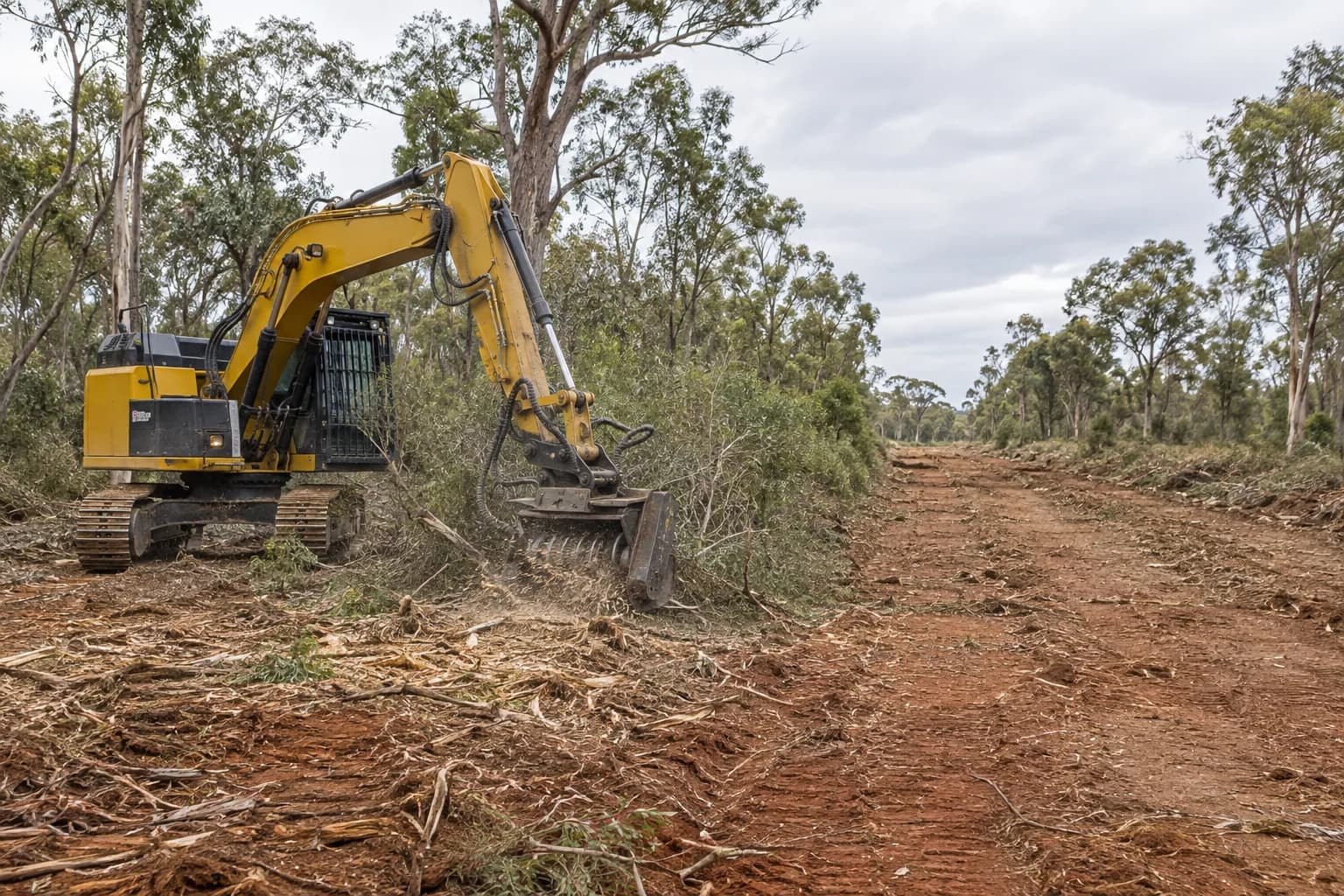 A1Field applicationLand clearingPlan the job →
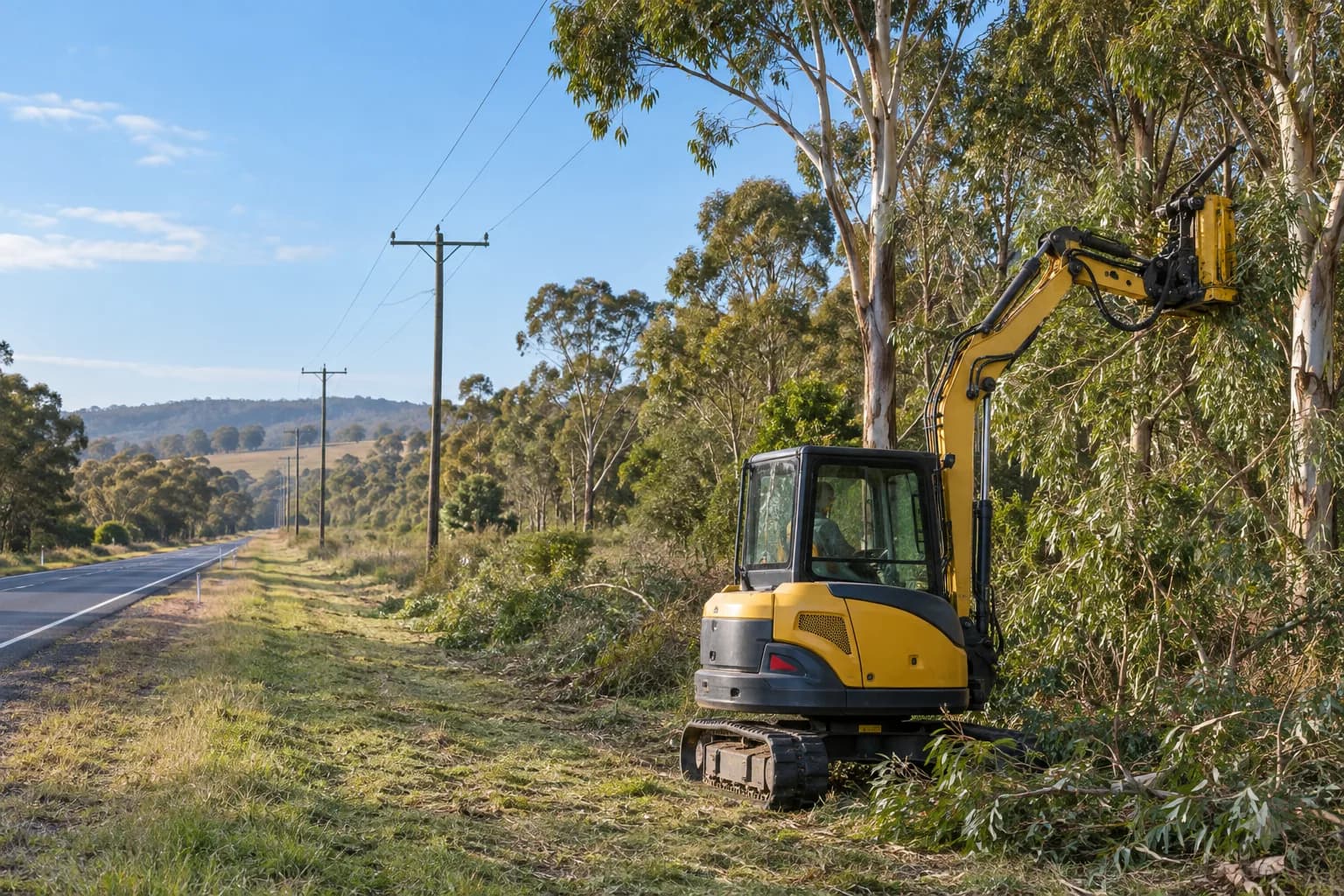 A2Field applicationUtility vegetationPlan the job →
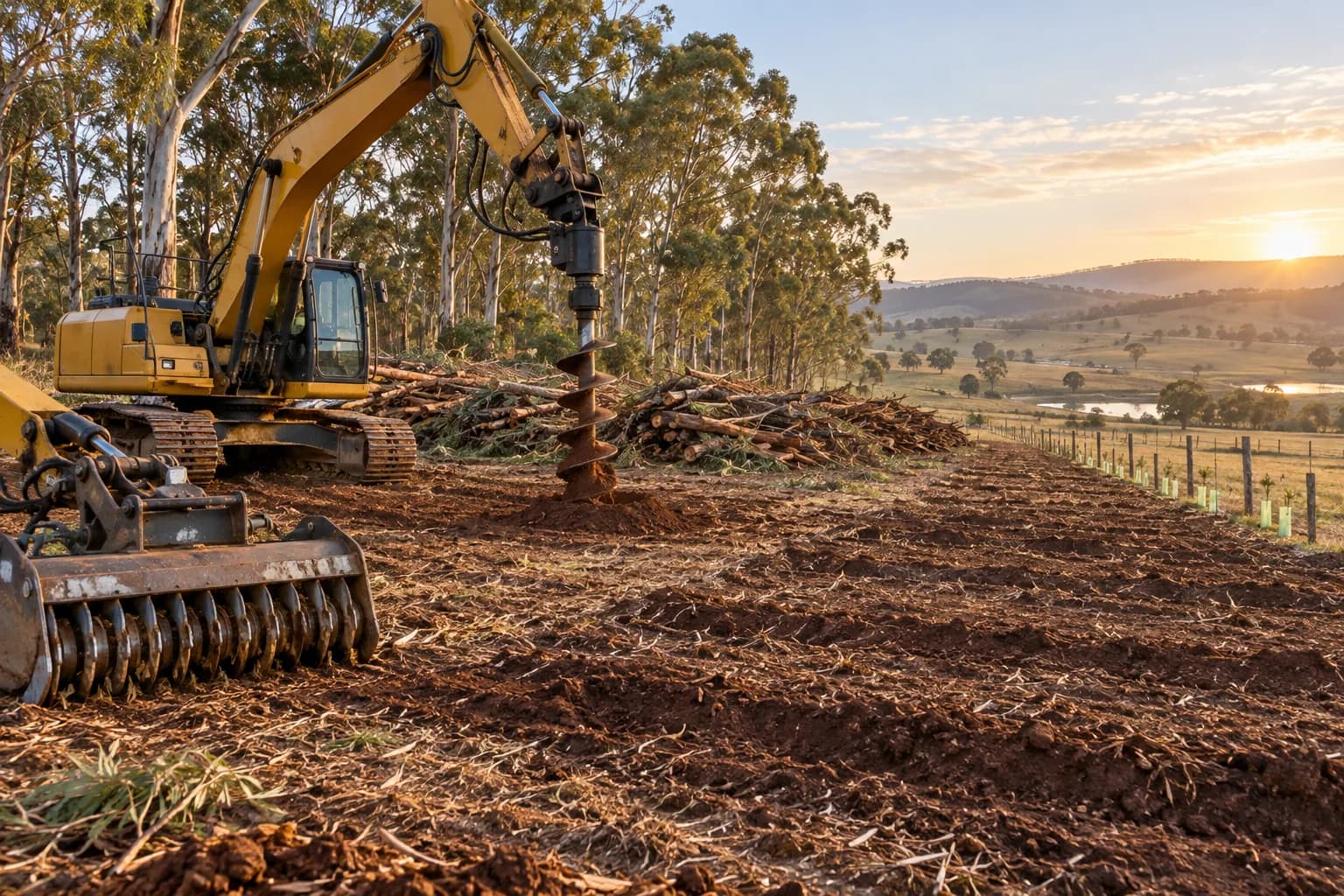 A4Field applicationFarm rehabilitationPlan the job →