Survive the duty cycle
Cooling, guarding, contamination and continuous hydraulic load matter before brochure capacity.
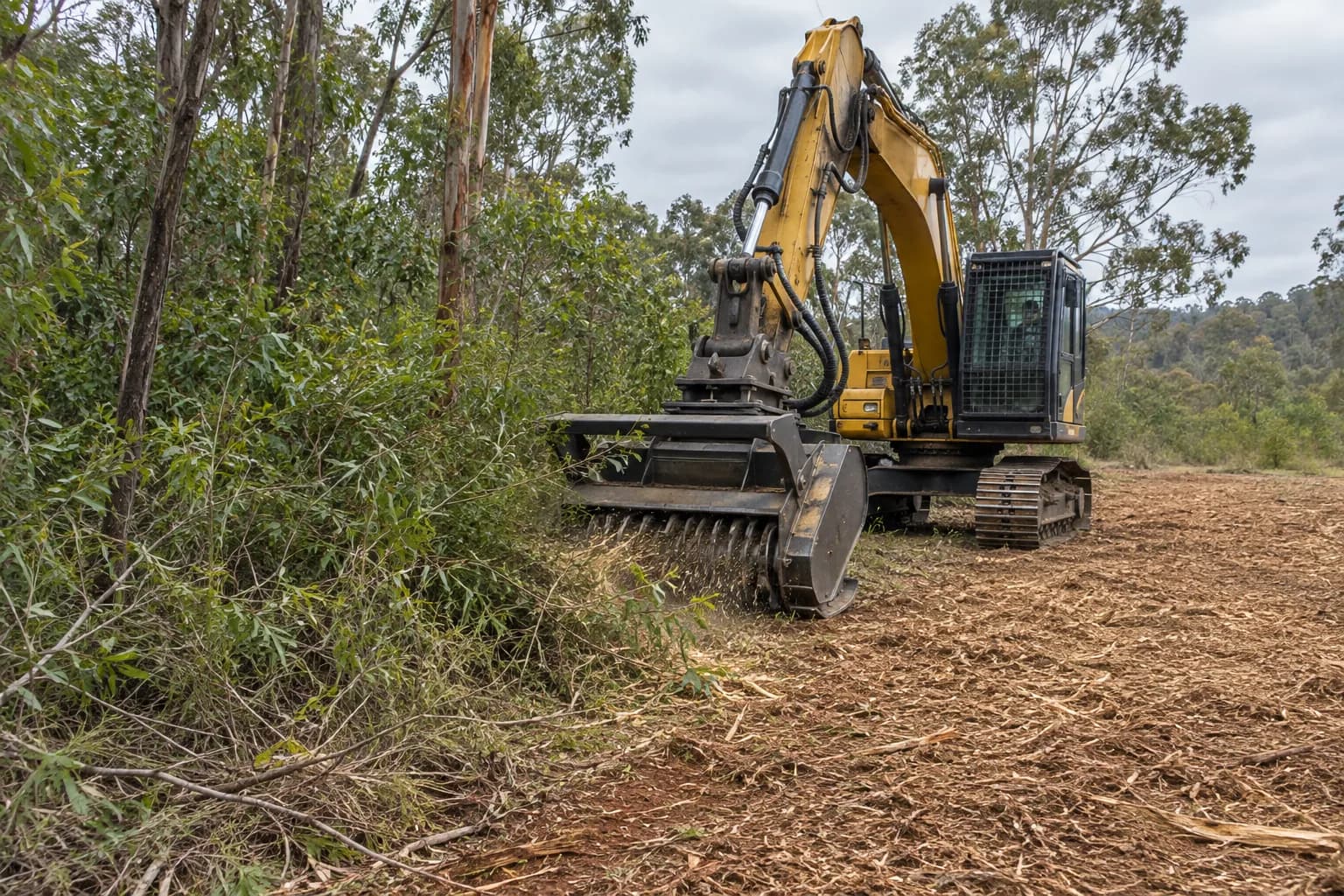
I5 · Mine sites · pipelines · transmission · renewables
Select heavy-duty forestry attachments for remote infrastructure clearing where mobilisation, carrier protection and support resilience shape the rate.
The commercial outcome
Cooling, guarding, contamination and continuous hydraulic load matter before brochure capacity.
Remote downtime turns small hoses, teeth and seals into schedule-critical inventory.
Distance, permits, escort, wash-down and staged access can dominate the attachment rate.
Mine, pipeline, transmission and renewable projects combine long travel, abrasive contamination, high ambient temperatures and production pressure. Confirm sustained auxiliary flow at working pressure, return limits and cooling performance rather than relying on maximum pump output. Inspect guarding for the cab, belly, hoses, coolers and electrical components against the actual debris path. A standard excavator with a compatible hitch is not automatically a forestry-ready carrier.
Sample vegetation and ground hazards across representative alignments. Rocks, wire, old fencing, dry hardwood and repeated side-slope operation change wear and production far more than the largest stem photograph. State the required residual finish and whether material remains, is windrowed or is loaded for removal. Those decisions determine rotor, tooth, shear and handling requirements and the support equipment that must travel with the attachment.
List components that can stop production and are practical to carry: teeth, blades, chains, bars, centre screws, holders, belts, hoses, couplers, seals and sensors. Confirm which repairs the site workshop can complete and which require a field technician. Record supplier response, freight cut-offs and critical lead times in the procurement evaluation. A lower purchase price is irrelevant when one unavailable part holds an excavator and crew idle for several shifts.
Transport stands, lifting points and protected hose storage should be included from delivery. Define whether the attachment travels fitted or separately and calculate combined mass and dimensions with hitch, bracket and any counterweight. Remote projects frequently move between work fronts; each move consumes productive time and introduces contamination and damage risk. Standardise changeover and inspection so mobilisation does not reset the maintenance problem at every site.
Use cleared hectares, released corridor kilometres or processed tonnes after the specified finish is achieved. Separate cutting from access, spotting, environmental holds, refuelling, clean-down, wear service and material handling. Price mobilisation, camp, inductions, standby and demobilisation as visible lines. That structure protects margin when the principal stages work differently from the tender program or supplies several disconnected work fronts.
Commission the attachment on the proposed carrier and retain temperatures, pressures, cycle times and wear observations from representative material. Review those against each swing before assuming a production rate. The data provides an early warning when cooling, contamination or technique is moving outside the planned envelope. It also gives the project team evidence for choosing a smaller mobile package or a larger production carrier on the next stage.
Before full mobilisation, complete a representative trial and log hydraulic temperature, working pressure, fuel, productive hours, wear consumption, service time, contamination and the finished project unit. Repeat the review after the first sustained shift because short demonstrations rarely expose cooling or debris-ingestion limits. Set minimum stock quantities from consumption and freight lead time, with reorder points that account for the next remote swing rather than the warehouse balance. Report hectares or corridor distance only after the specified finish and material placement are complete. This creates a rate that can absorb scheduled tooth changes, clean-down and field service, and gives the project team early evidence when different vegetation or ground conditions require a revised method or variation.
Continue the decision
Other industries
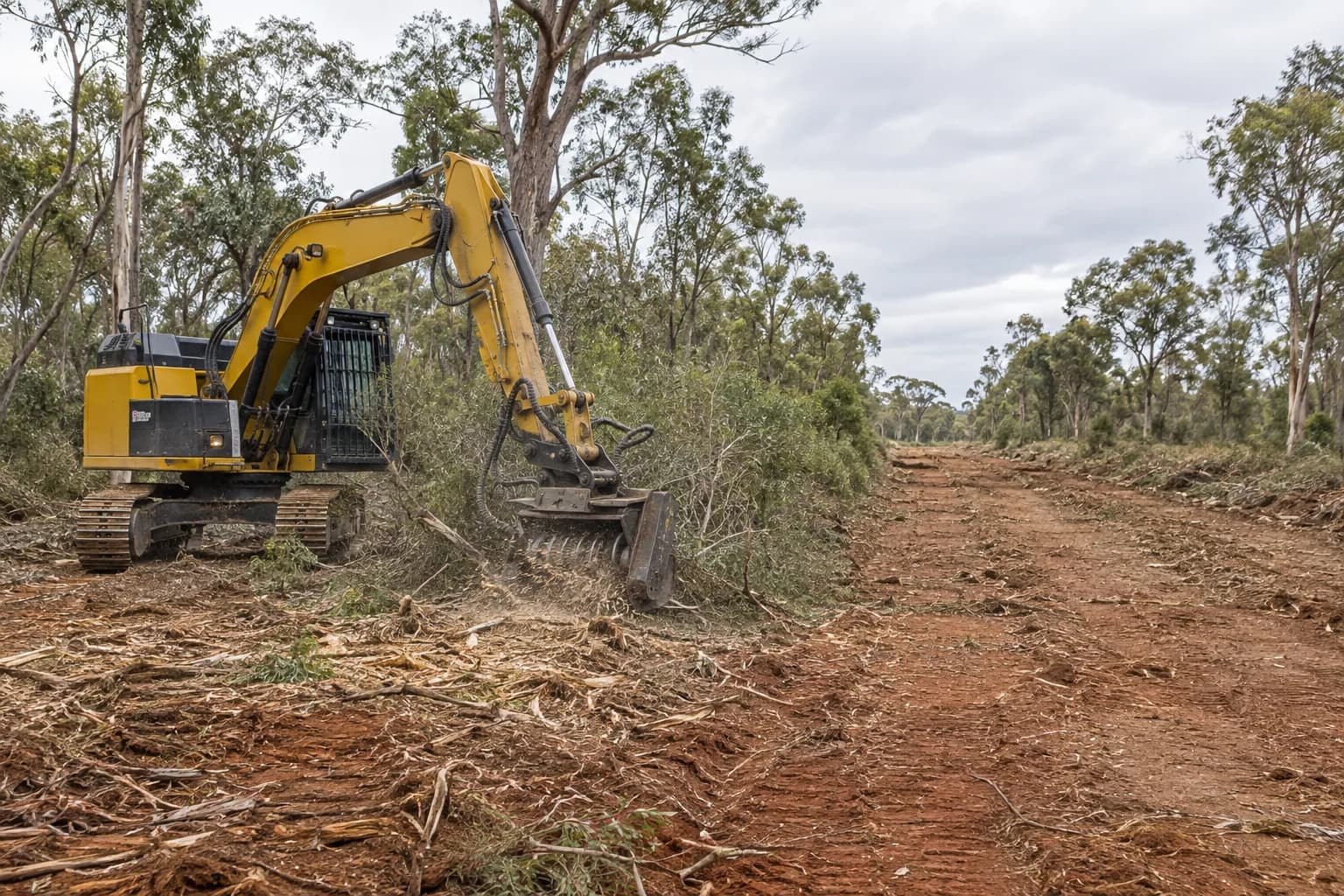 I1Industry profileCivil constructionOpen industry guide →
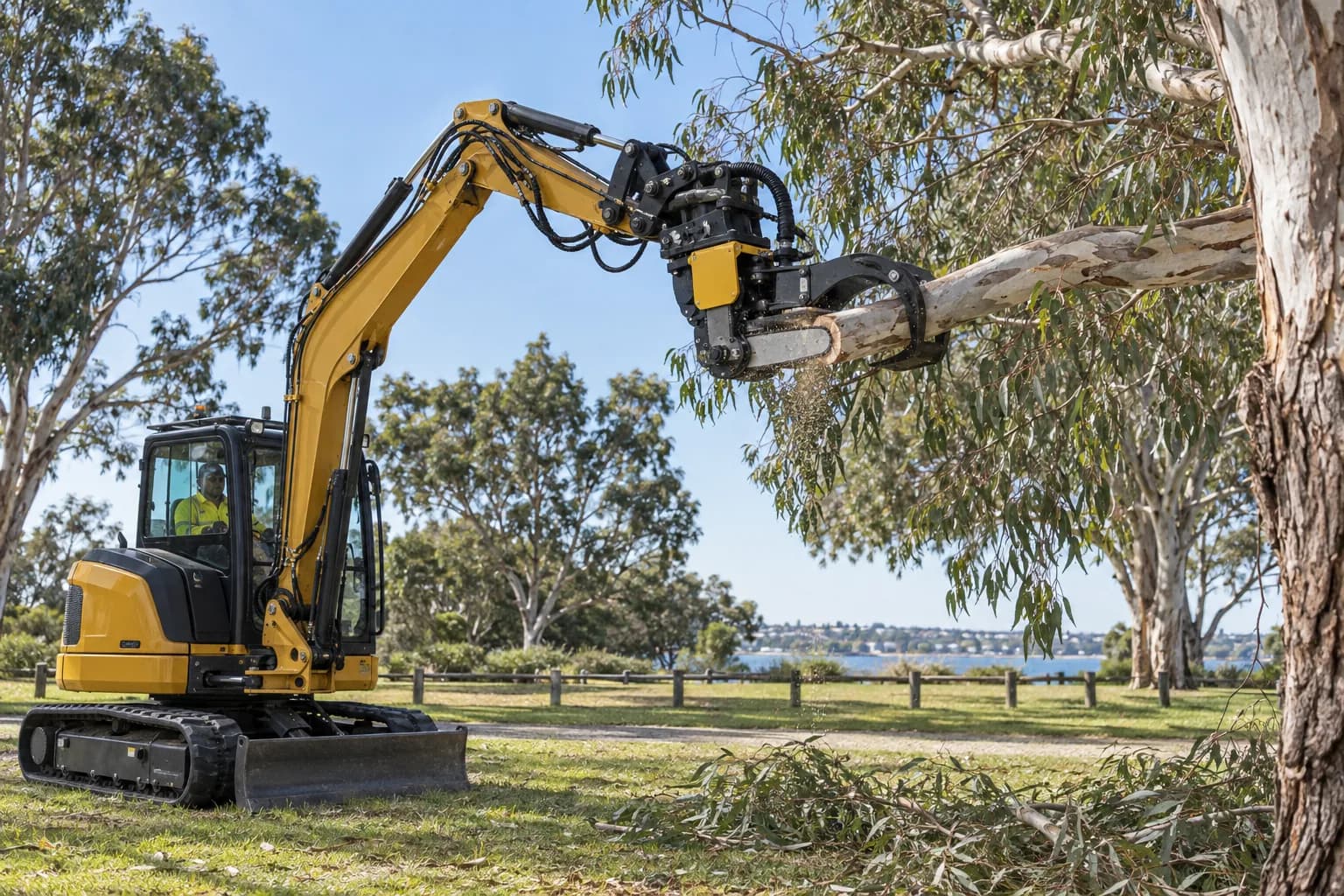 I2Industry profileArboristsOpen industry guide →
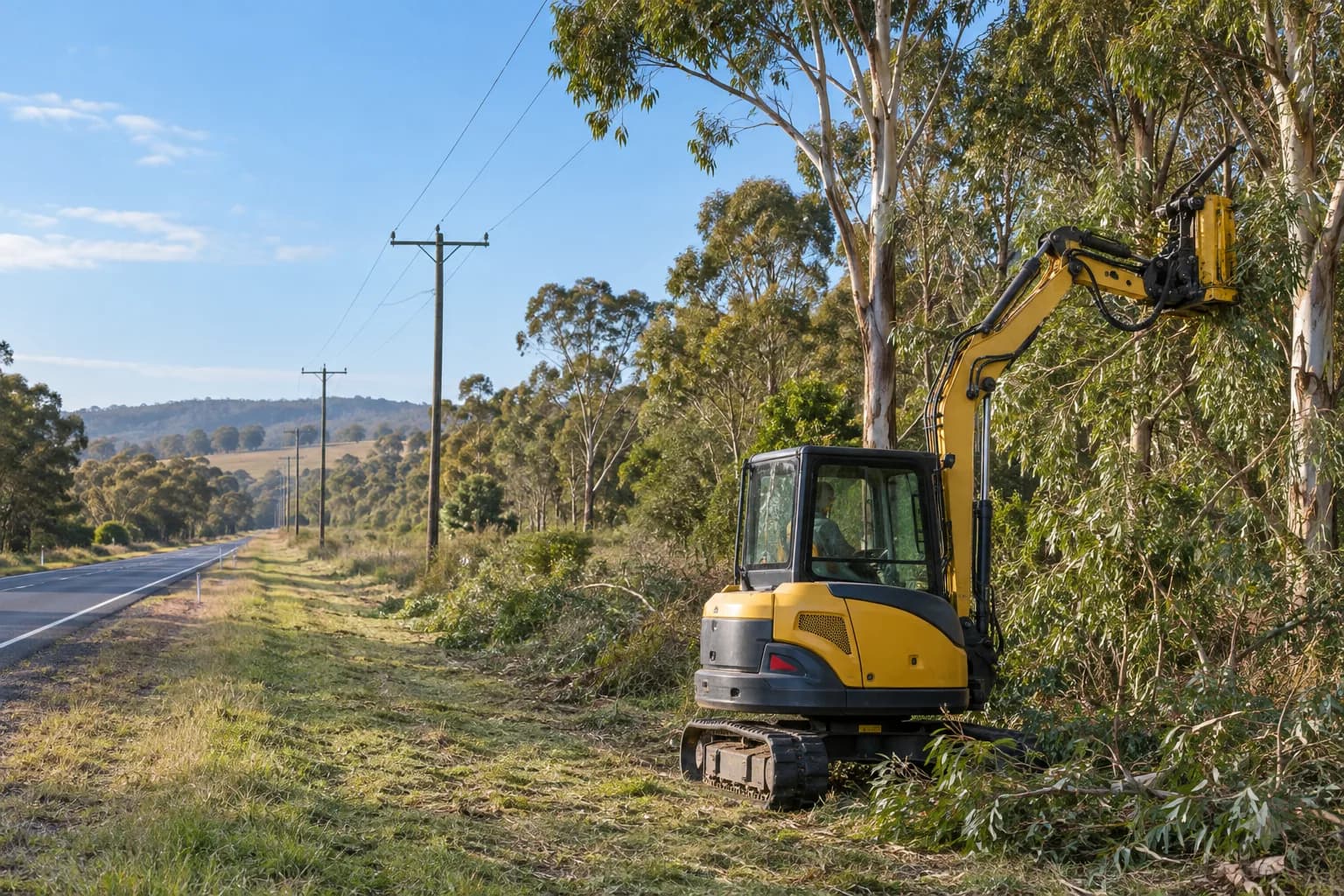 I3Industry profileCouncilsOpen industry guide →
 I4Industry profileUtilitiesOpen industry guide →
 I6Industry profileAgricultureOpen industry guide →