Serve dispersed sites
Mobilisation and setup often decide weekly output more than the attachment’s best cycle time.
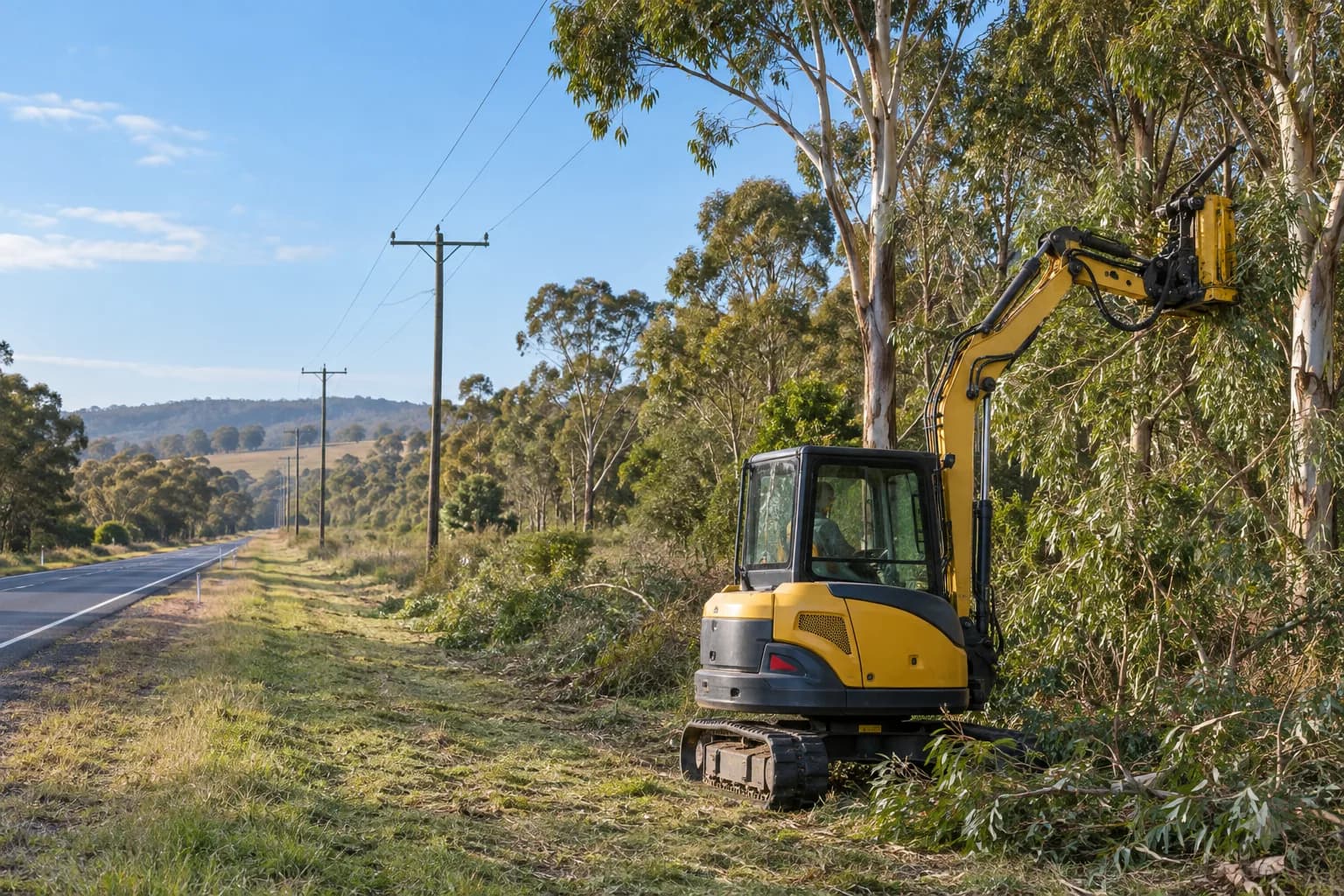
I3 · Parks · roadsides · reserves · storm cleanup
Specify versatile forestry attachments for council vegetation programs, dispersed sites, public interfaces and transparent whole-of-life procurement.
The commercial outcome
Mobilisation and setup often decide weekly output more than the attachment’s best cycle time.
Traffic, pedestrians, retained assets and reopening times belong in the production method.
Whole-of-life cost, support response and written assumptions must survive review beyond the initial buyer.
Council demand is spread across parks, roadsides, drainage corridors, reserves, street trees and storm response. Aggregate those tasks by attachment function and carrier class before choosing a machine. The right question is not whether one head can complete a showcase job, but whether it can complete enough repeat work across the year without creating transport, staffing or storage problems for the existing fleet.
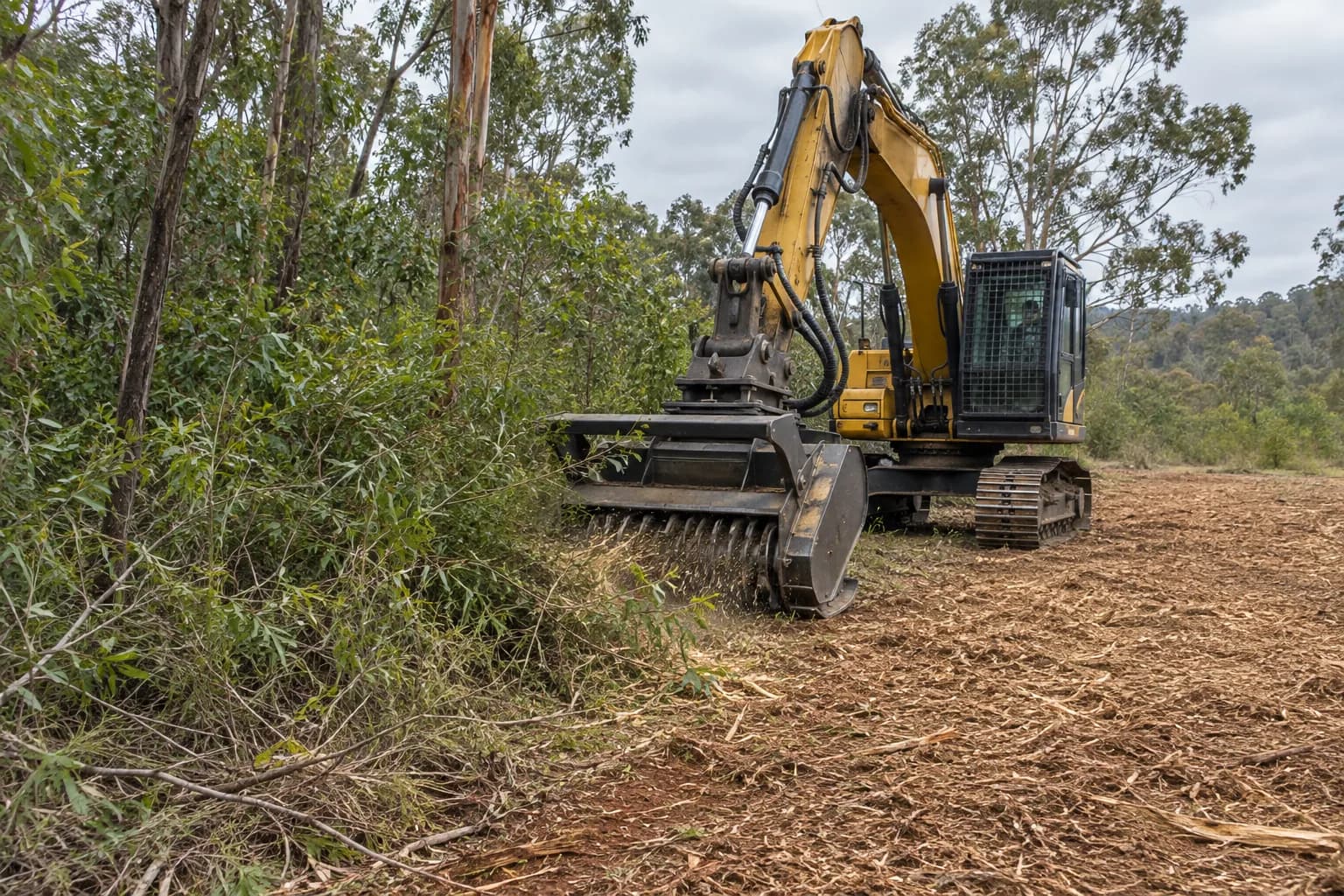
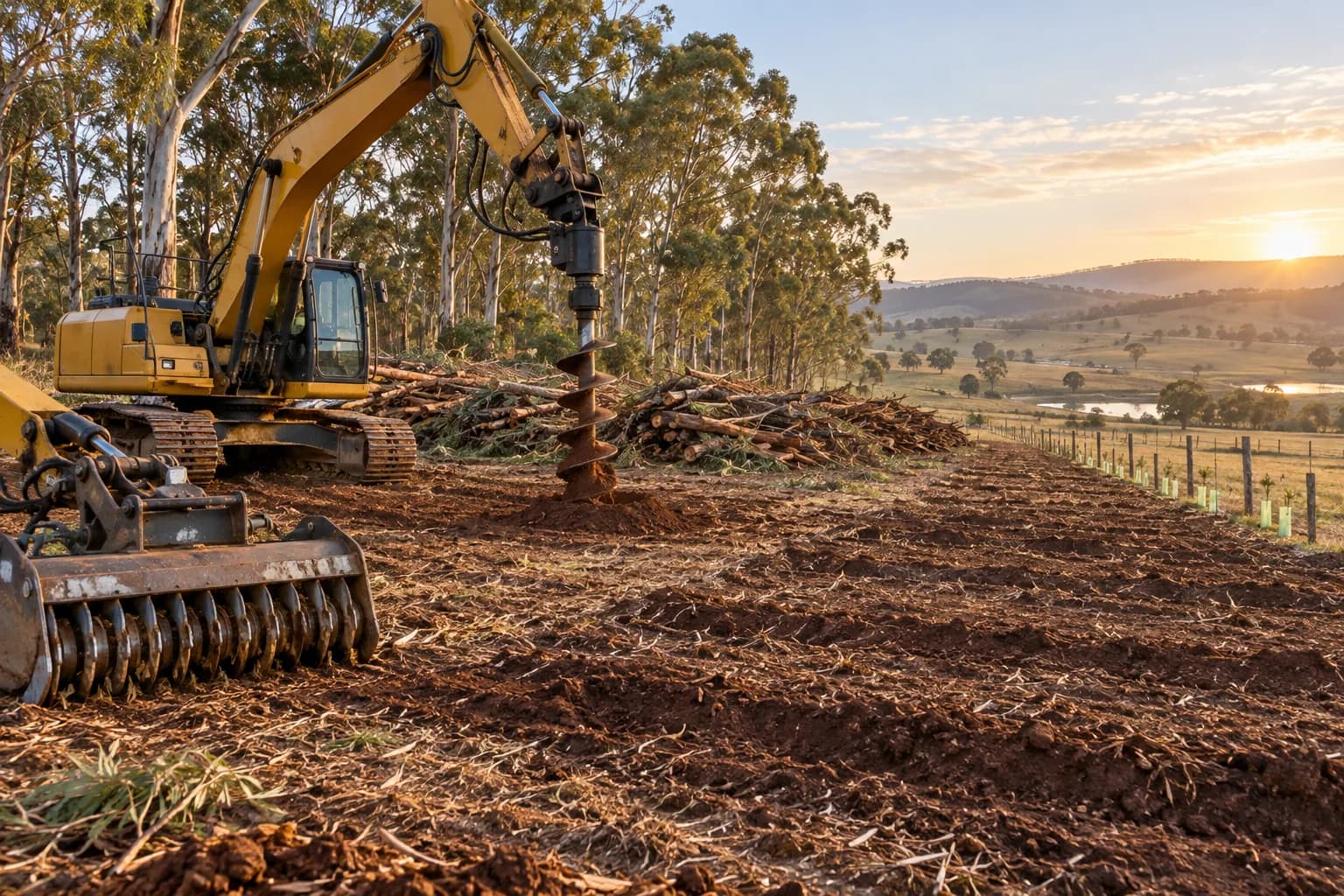
Map site frequency, average travel, unloading constraints and the finish required by each service team. A compact stump grinder on a readily mobilised carrier may complete more street sites each week than a larger unit with higher hourly output. A mulcher may suit broad reserve treatment but be unsuitable where public access, hidden contamination or retained habitat features require slower selective work. Procurement should preserve those distinctions.
Define clearance, cut quality, residual height, particle size, retained vegetation and debris location in measurable terms. Add traffic control, pedestrian management, noise windows, dust, fire precautions and reopening criteria. The operator then has an inspectable finish and tenderers price the same service. Without that detail, low rates are often built on a faster method that the superintendent cannot accept once work reaches a sensitive site.
Mechanised cutting should reduce exposure by keeping people outside the drop and debris zone. Review visibility, cameras, cab protection, emergency procedures and how the attachment is made safe for inspection. Plan where material is placed and which machine removes it. A fast cutting carrier waiting for a truck or chipper is not a productive system, and stockpiles left in public areas become an operational problem rather than completed maintenance.
An ownership case should include attachment capital, installation, guarding, transport, operator competency, planned maintenance, wear parts, storage and residual value. A contract case should include mobilisation, minimum charges, response time and availability during storm or fire programs. Compare both against a forecast of productive annual hours and the cost of work delayed or unavailable, rather than treating the contractor rate and purchase invoice as equivalent numbers.
Require suppliers to identify local inventory, service coverage, warranty exclusions, software or control dependencies and lead times for critical components. Score the complete installed package and request a demonstration on the proposed carrier. Keep measured output, fuel, wear and downtime by work type after deployment. That record supports audit, improves future specifications and prevents fleet replacement from relying on the memory of one operator or procurement cycle.
Run a documented pilot across several ordinary sites rather than one convenient demonstration area. Capture travel, unloading, setup, public and traffic controls, productive work, clean-up, inspection, reopening time, fuel, wear and any support call. Score the finished work against the written acceptance criteria and ask operators, supervisors and the receiving service team to record constraints. Convert the result into sites completed per crew week as well as an hourly cost. That evidence lets procurement compare ownership, dry hire and contracted delivery on the same annual program. It also reveals whether value comes from higher production, faster storm response, reduced subcontractor dependence or the ability to combine several maintenance tasks during one mobilisation.
Continue the decision
Other industries
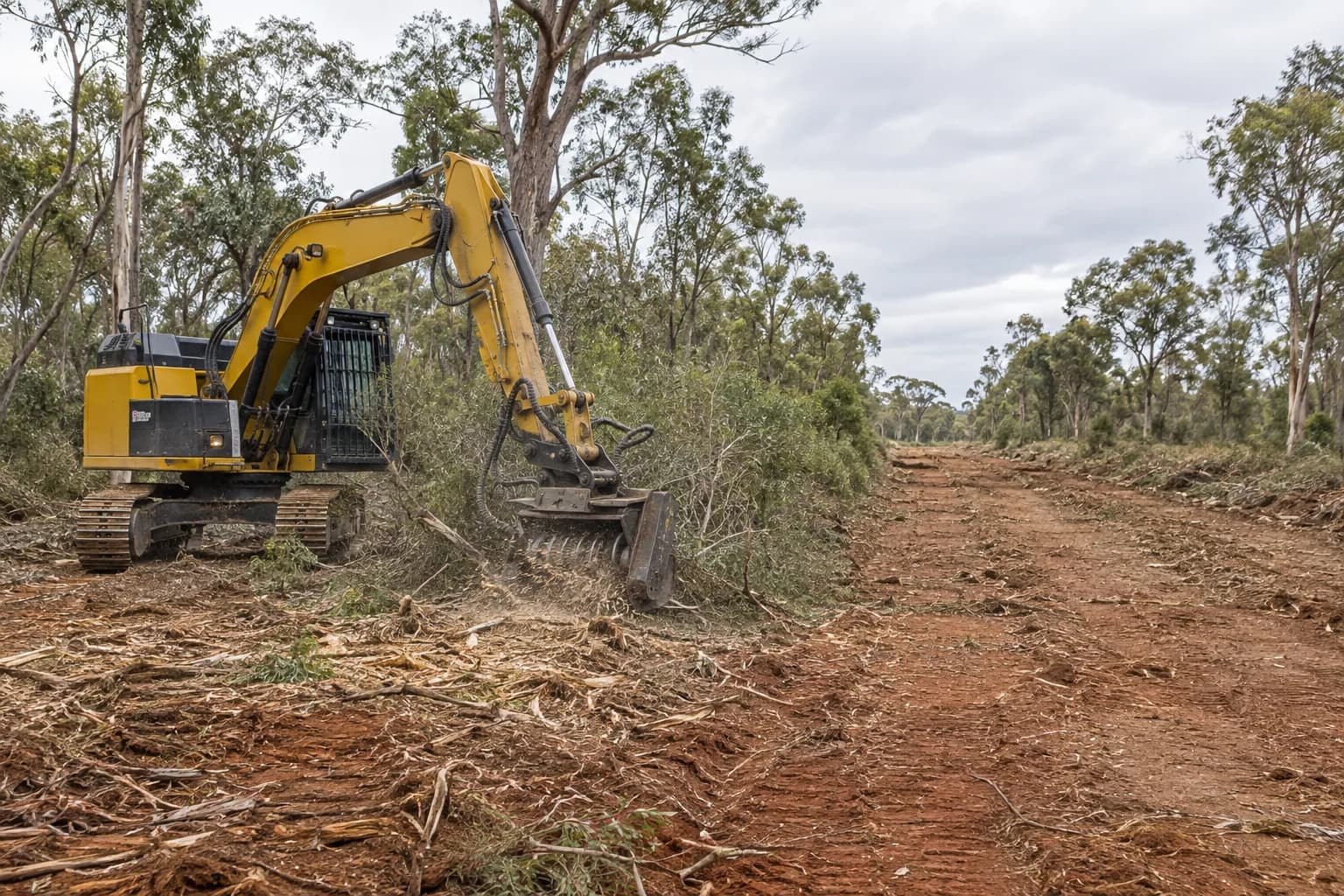 I1Industry profileCivil constructionOpen industry guide →
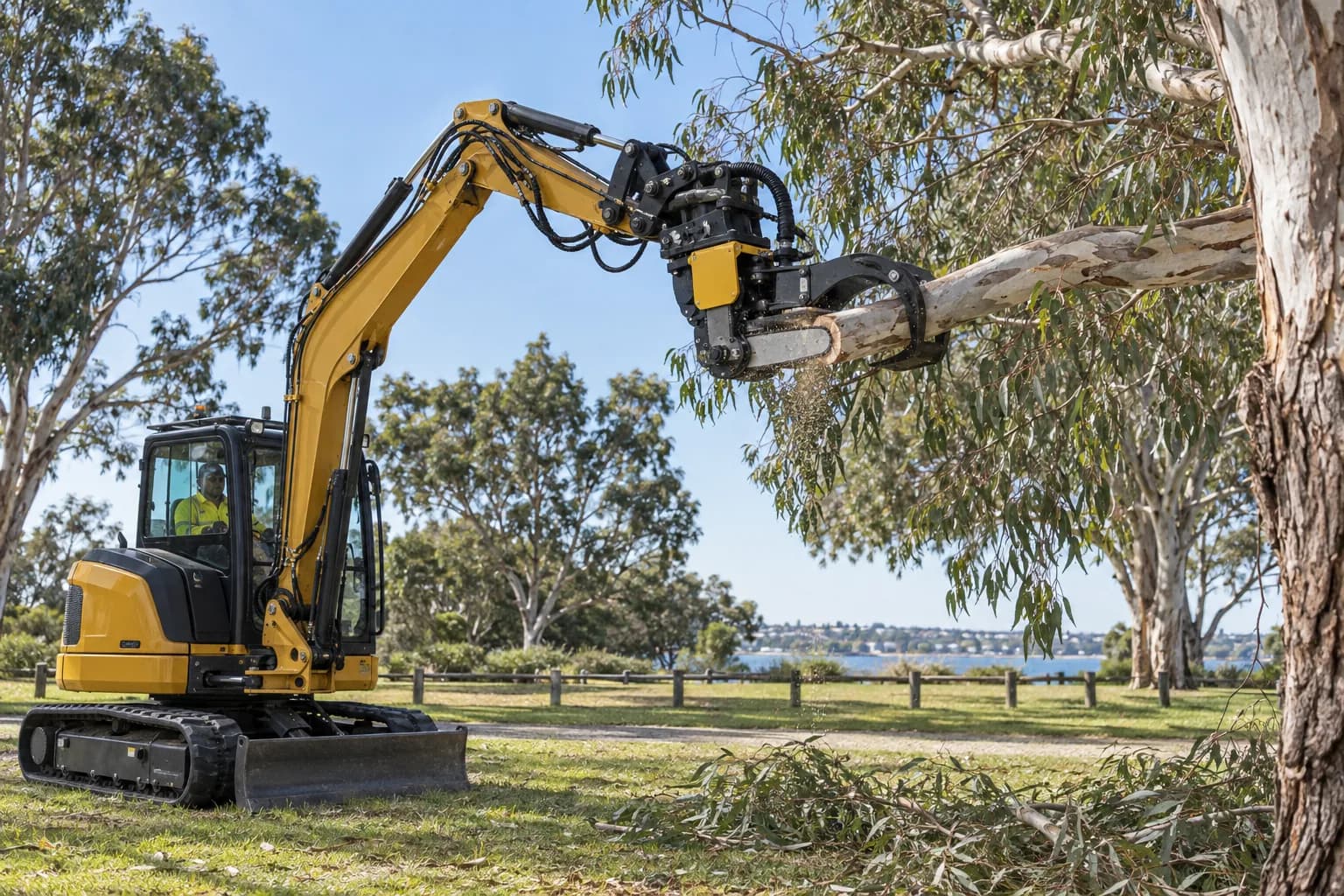 I2Industry profileArboristsOpen industry guide →
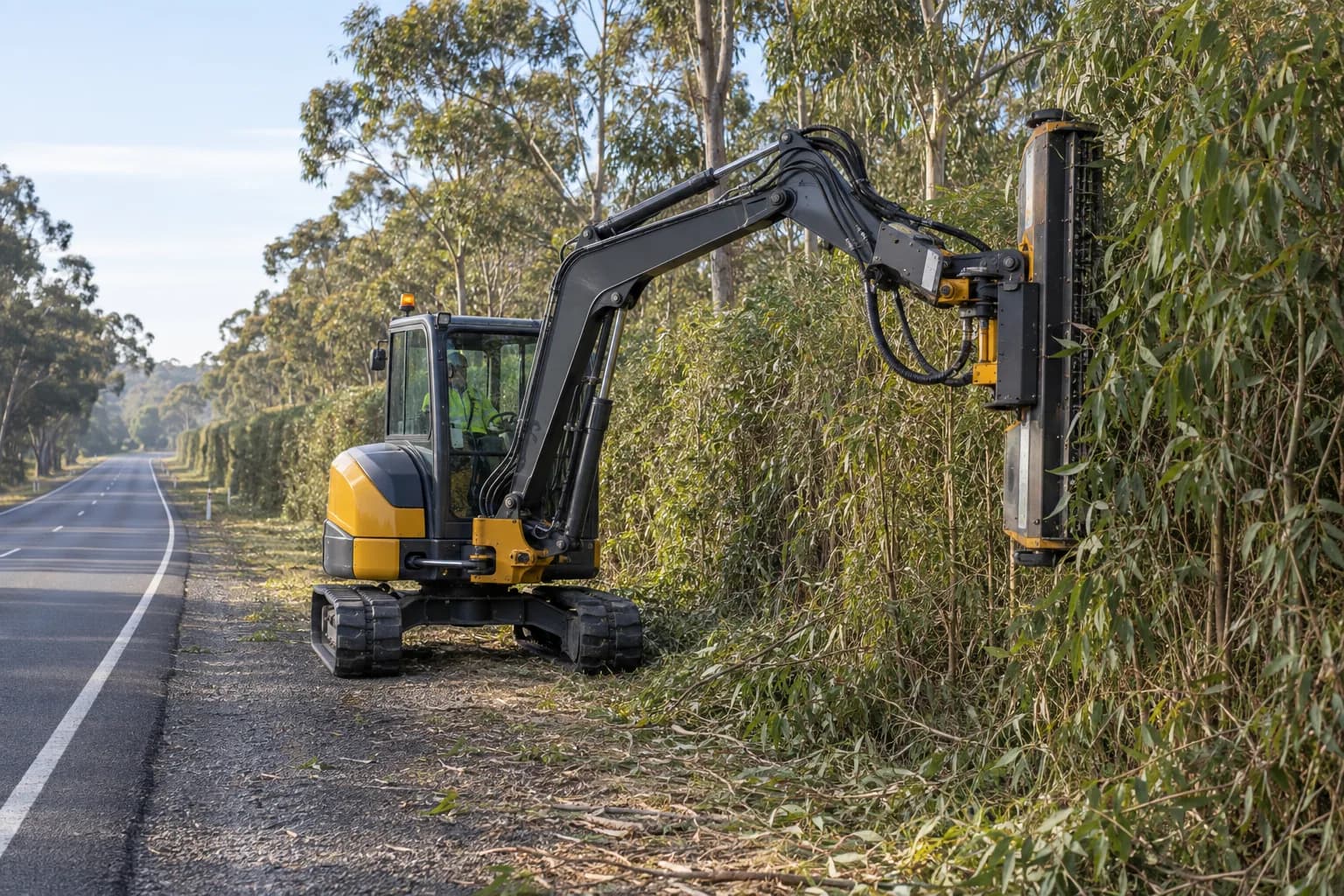 I4Industry profileUtilitiesOpen industry guide →
 I5Industry profileMining and energyOpen industry guide →
 I6Industry profileAgricultureOpen industry guide →