Work backwards from land use
Pasture, fencing, orchard access and planting each require a different clearing finish.
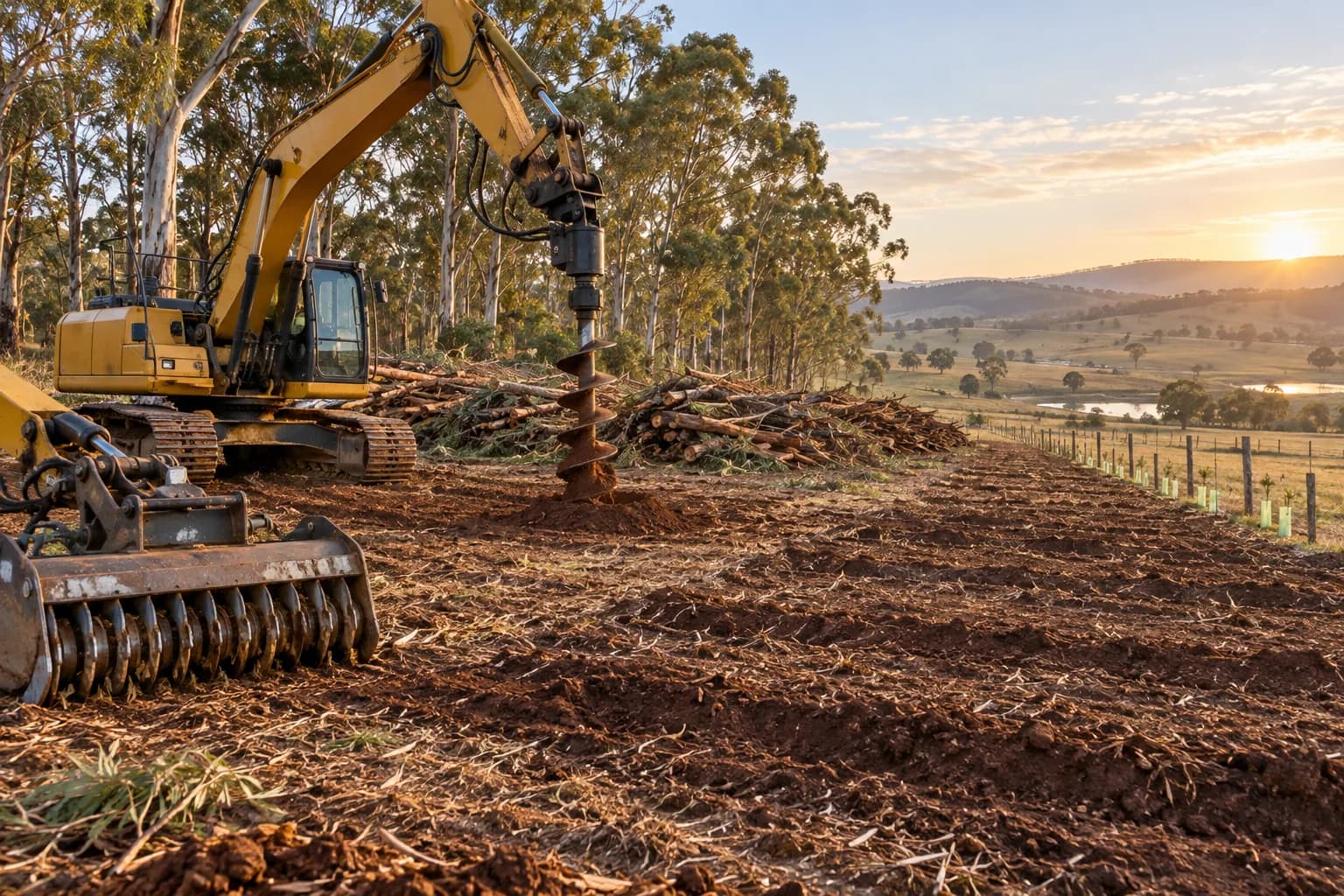
I6 · Farms · shelterbelts · orchards · rehabilitation
Plan farm forestry attachments around selective clearing, timber recovery, soil protection and the productive use required after vegetation removal.
The commercial outcome
Pasture, fencing, orchard access and planting each require a different clearing finish.
Separate usable timber and preserve soil, drainage, shelter and retained trees.
Safe, planned attachment changes can extend work from removal into drilling, compaction and rehabilitation.
Begin with the next use of the ground: pasture, fencing, access, orchard renewal, shelterbelt replacement or planting. Mark retained trees, drainage, services, erosion-sensitive areas and stock infrastructure before machinery enters. The attachment should create that condition with the fewest handling steps. Felling vegetation without a plan for timber, roots, residue and ground restoration usually purchases only the first half of the job.
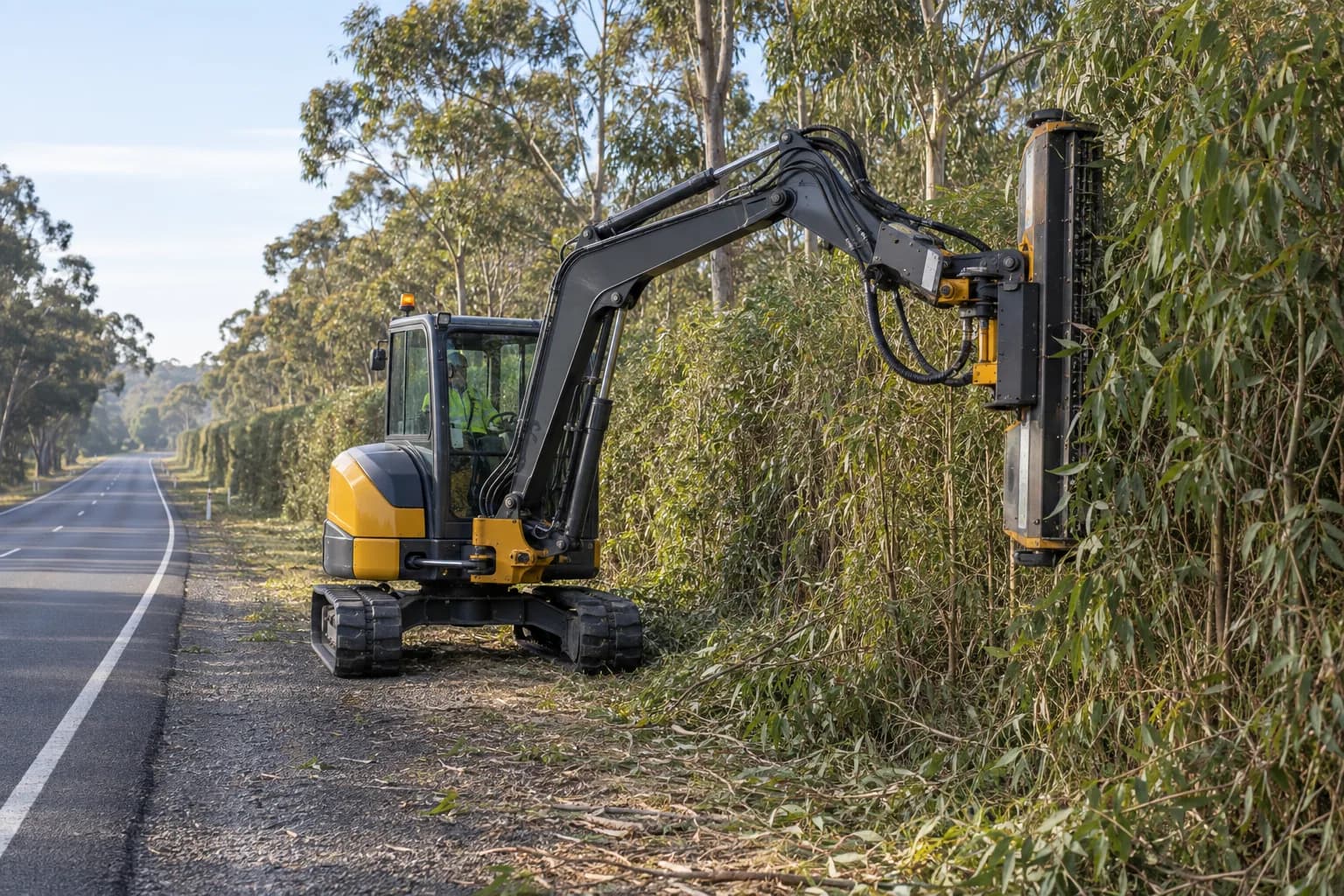
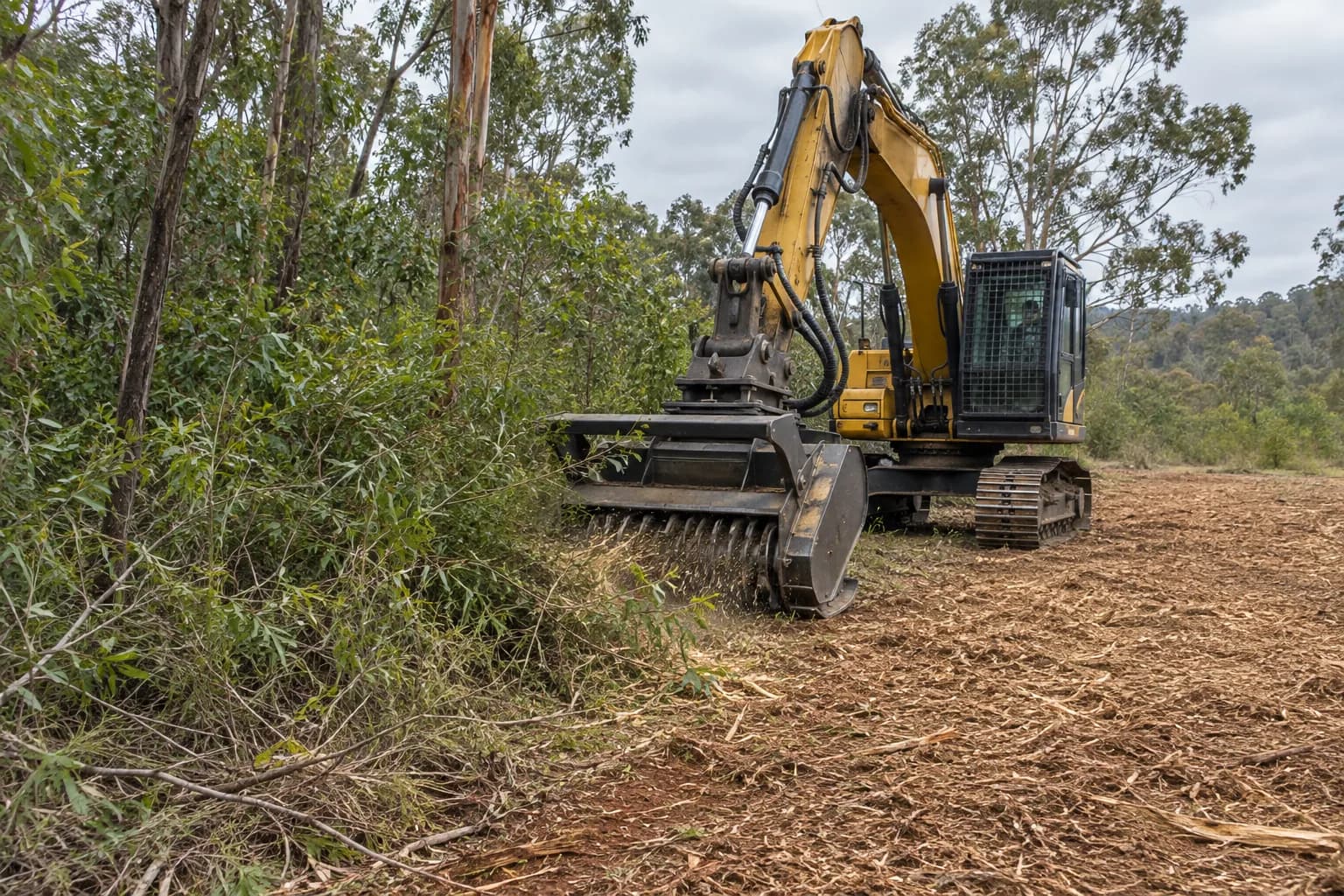
Tree shears provide controlled placement and preserve stems that may become posts, firewood, habitat or saleable logs. Mulchers process regrowth in place and retain surface cover but remove timber recovery and may not leave a cultivation-ready finish. Grabs sort and load material after cutting. Stump grinders avoid excavation spoil around access and orchard work, while tillage attachments extend the same carrier into drilling and compaction.
Ground moisture, slope and soil structure decide when a tracked carrier can work without creating more rehabilitation than the clearing is worth. Establish wet-weather stops, travel paths and where material can be placed without redirecting runoff. A lighter carrier may protect access and mobilise between farm blocks more easily; a larger machine may reduce hours on one open paddock. Compare the whole program rather than one production pass.
Agricultural use can be seasonal and intermittent. Add realistic annual hours across clearing, pruning, handling, drilling and compaction before choosing ownership. Include storage, hose protection, corrosion, operator familiarity after idle periods and the availability of a suitable carrier when the work window opens. Hiring or contracting can be cheaper at low utilisation, while ownership becomes valuable when timing and repeat attachment use prevent delayed planting or access work.
Separate vegetation removal, timber handling, residue processing, stump treatment and final ground preparation in the scope. State unit rates and assumptions for extra volume, difficult access and material removal. Do not subsidise the base rate with uncertain timber recovery. If saleable material exists, identify ownership, grading, stacking and transport explicitly so the recovery remains an upside rather than a disputed allowance.
For attachment purchases, provide the carrier lift and hydraulic schedule and ask for a complete installed quotation with hitch, bracket, hoses, controls, stands, freight and commissioning. Confirm wear pricing and support access outside metropolitan areas. Record completed units, fuel, wear and changeover time after the first jobs. Those figures show whether the attachment is creating a useful year-round system or should remain a hired capability for occasional work.
Measure each stage separately on the first farm blocks: controlled felling, sorting, residue processing, stump treatment, attachment changes and final ground preparation. Record completed area, stems or stumps, carrier hours, fuel, wear, timber recovered, material moved and any remediation caused by soil or access damage. Add the value of work completed inside the seasonal window rather than comparing machinery only on an hourly basis. A system that finishes fencing access before stock movements or prepares planting ground on time may justify ownership at lower annual hours, while an attachment used only for occasional open clearing may remain better hired. Review the figures after wet and dry conditions so the plan reflects the limits of the ground as well as the head.
Continue the decision
Other industries
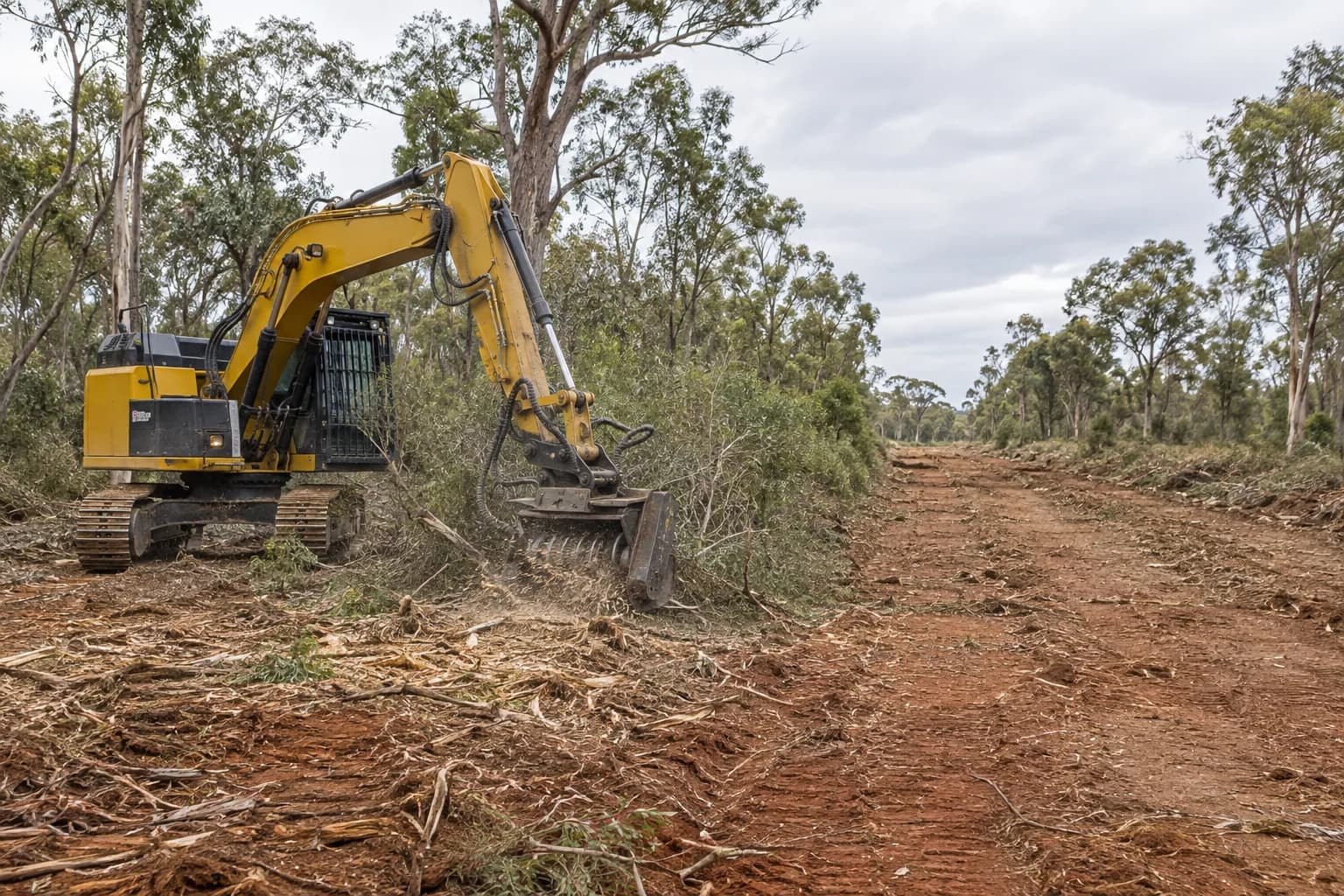 I1Industry profileCivil constructionOpen industry guide →
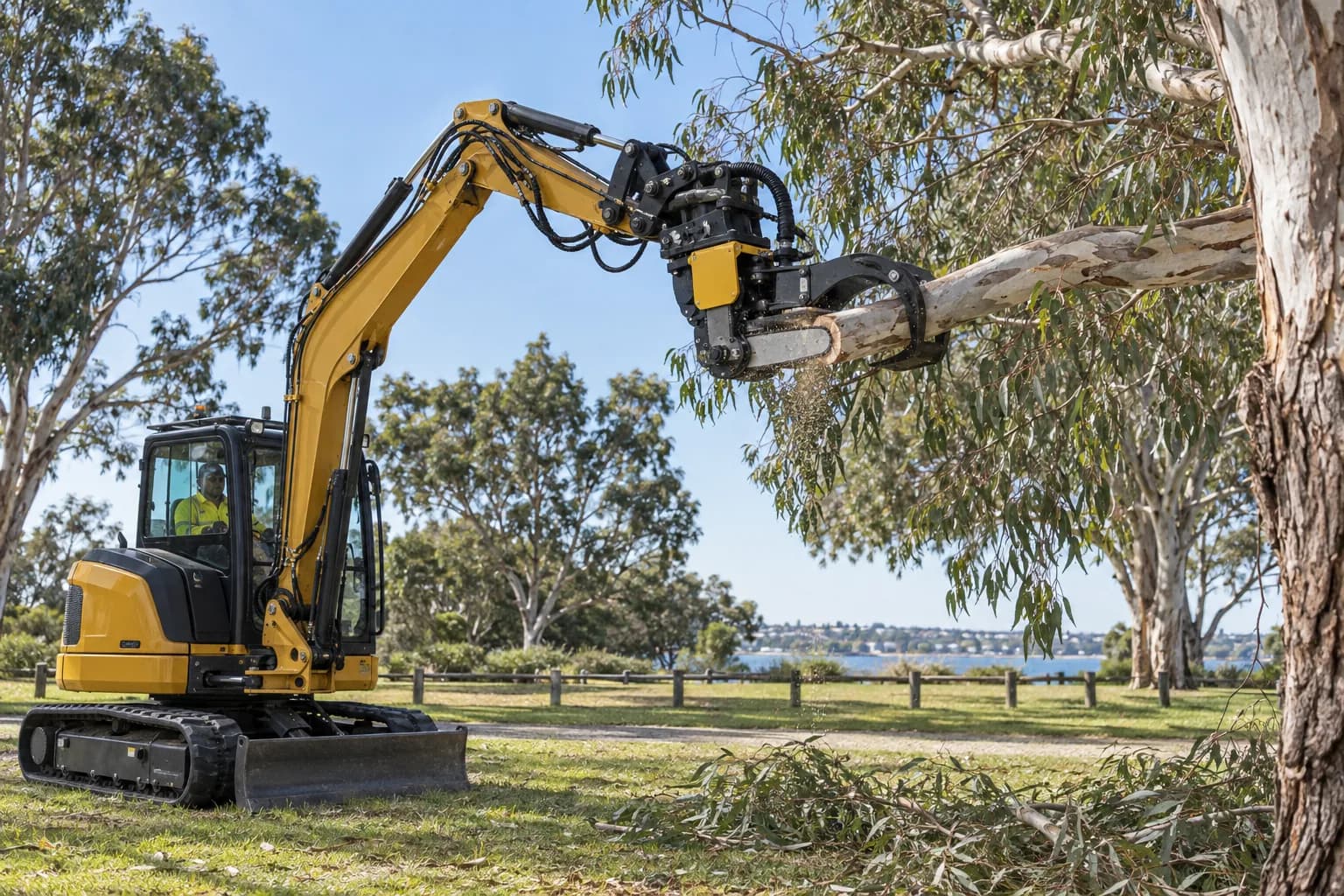 I2Industry profileArboristsOpen industry guide →
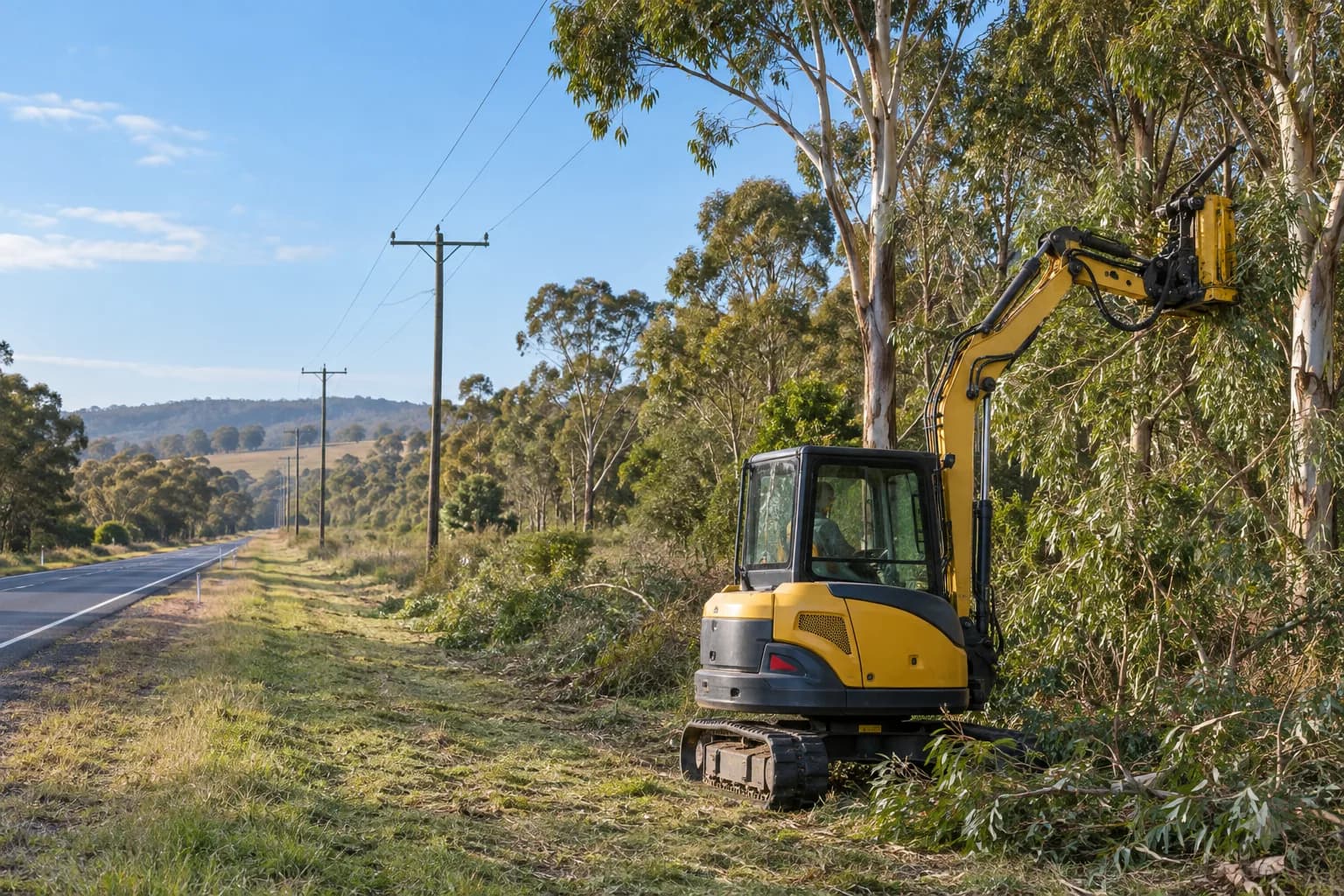 I3Industry profileCouncilsOpen industry guide →
 I4Industry profileUtilitiesOpen industry guide →
 I5Industry profileMining and energyOpen industry guide →