Release the work front
Production matters only when drainage, earthworks or services can enter the completed area on program.
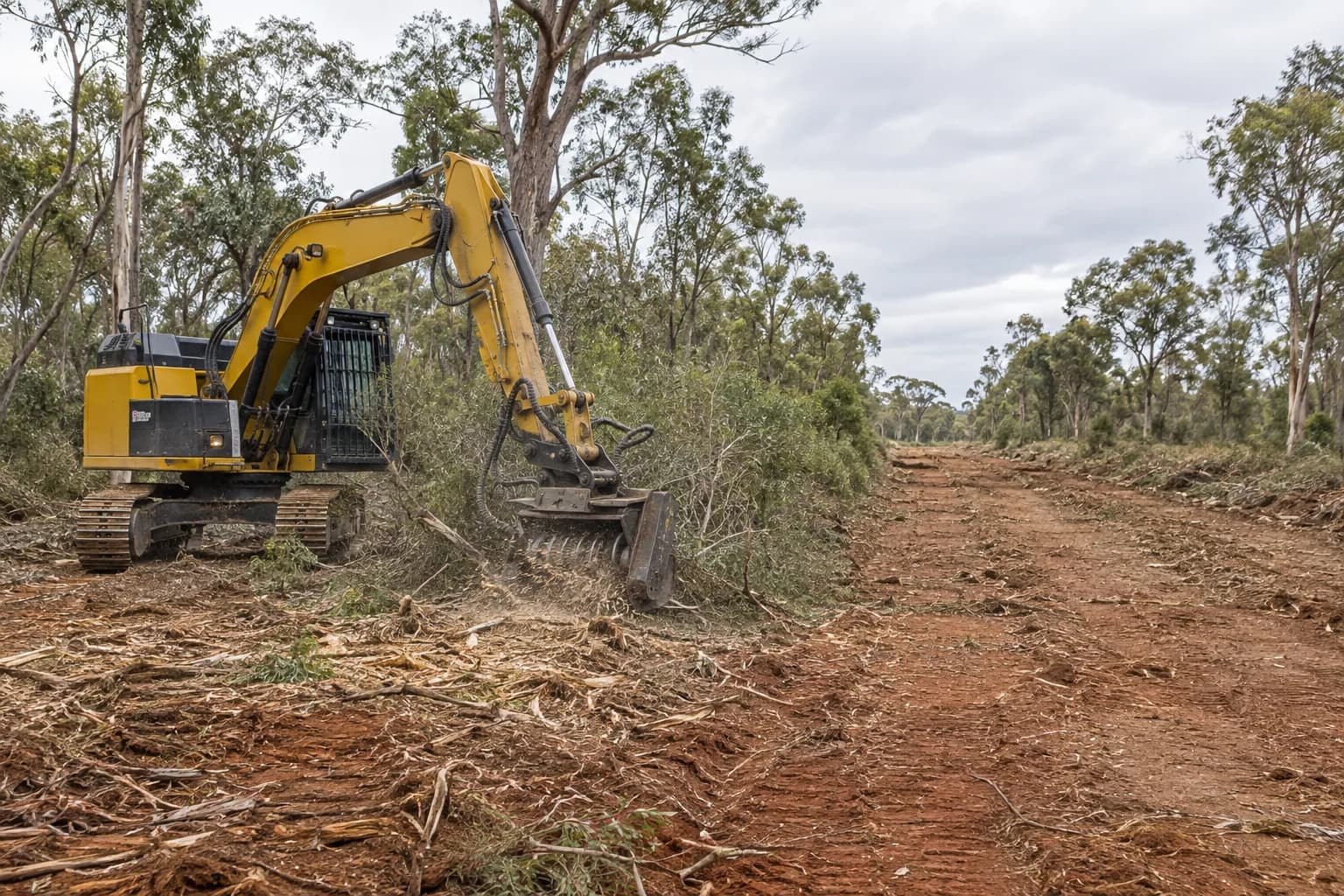
I1 · Subdivisions · roads · renewable projects
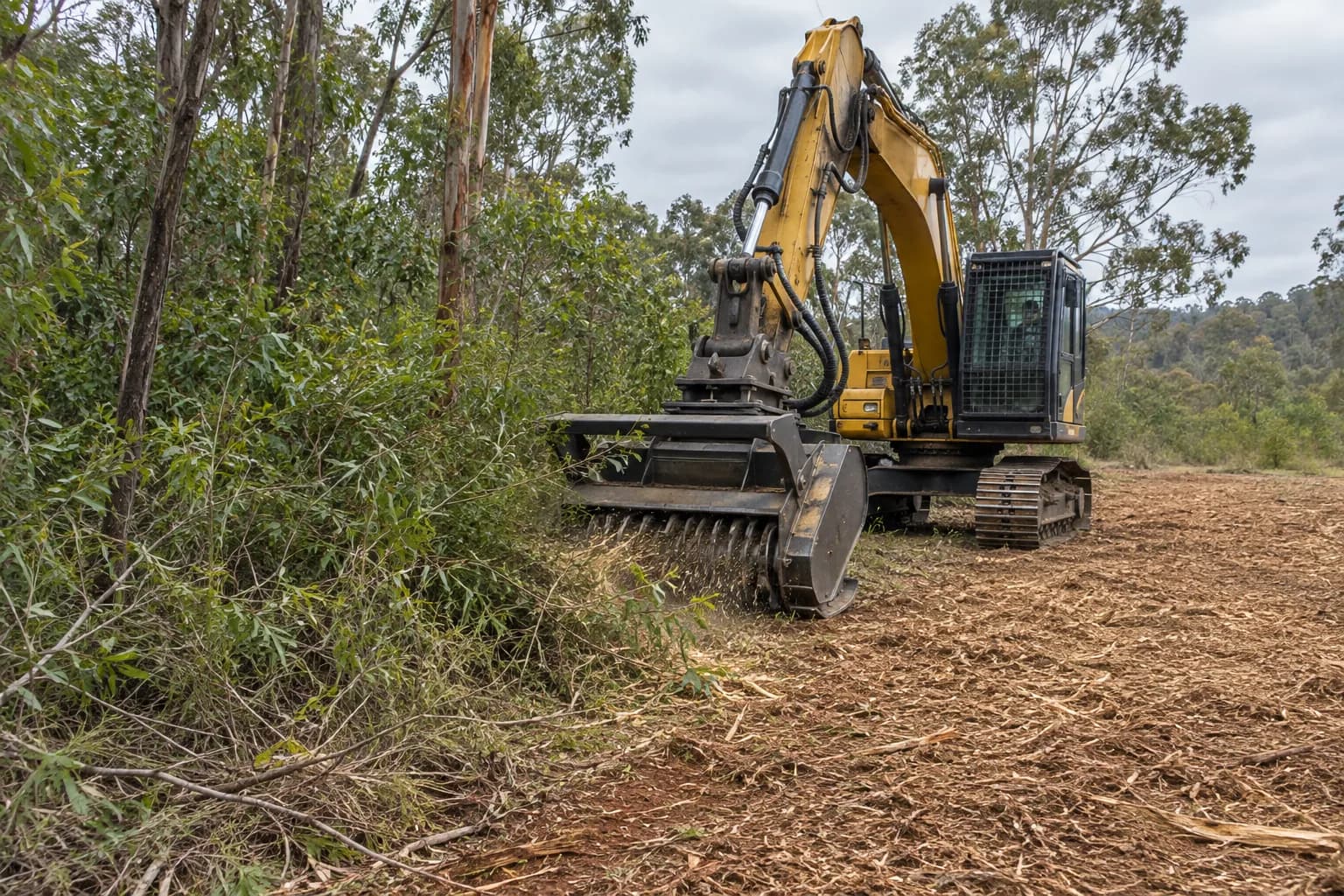
Plan clearing attachments for civil sites around staged access, material handling, mobilisation and the finish required by the next trade.
The commercial outcome
Production matters only when drainage, earthworks or services can enter the completed area on program.
Choose whether material is recovered, mulched, stacked or removed before the first stem is cut.
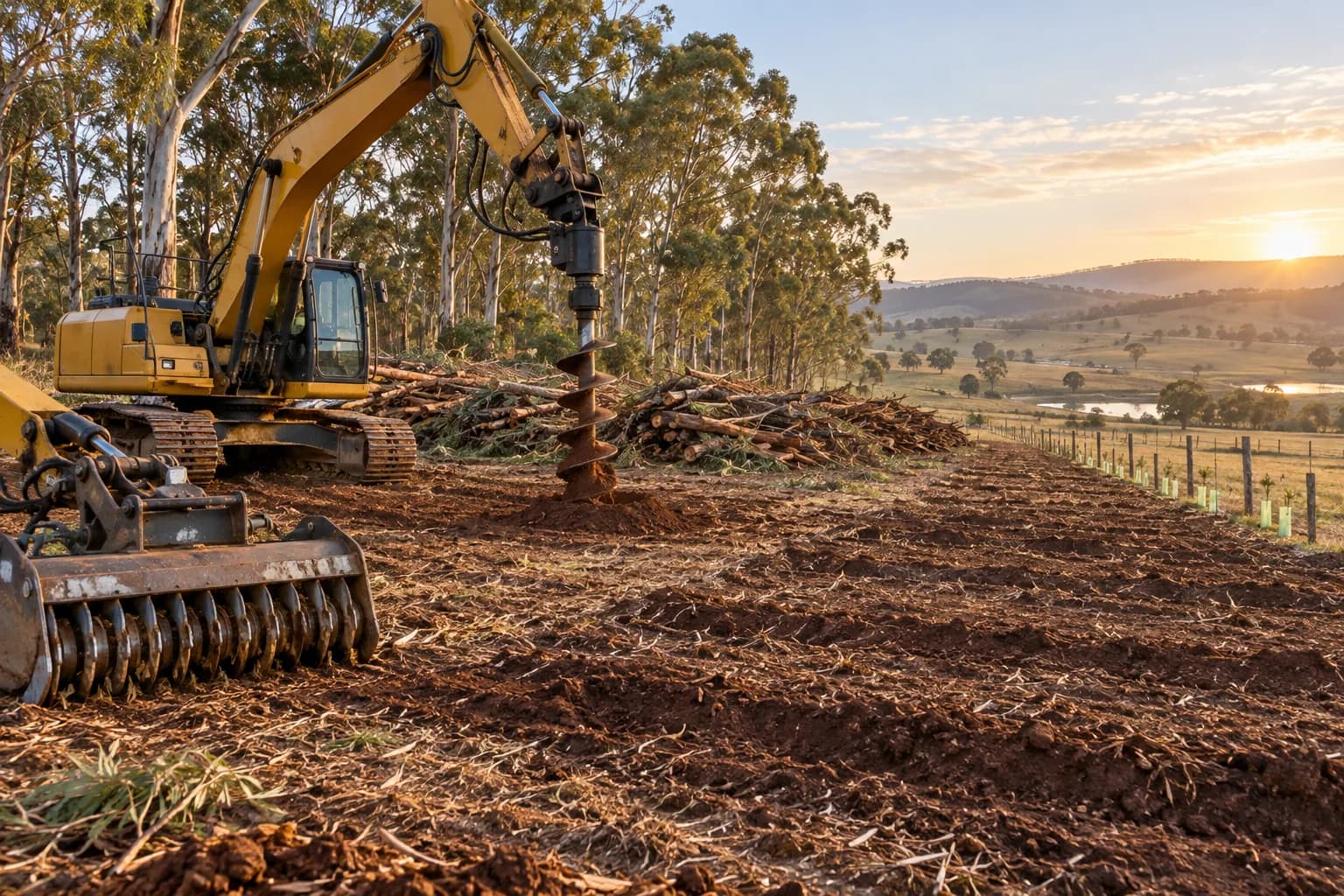
A deliberate attachment sequence lets the clearing excavator continue into drilling, compaction and rehabilitation.
Civil clearing is rarely one open block completed in isolation. Subdivisions, road corridors, solar farms and service easements release work fronts in stages, often around survey control, environmental exclusions and access needed by other trades. The clearing method should follow that sequence. Record the area, vegetation profile, required finish and release date for each parcel so mobilisation and material handling are priced against the actual program rather than one optimistic continuous run.
Define what ‘clear’ means at handover. A mulched surface may be acceptable beneath a future batter but unsuitable where stripping, trenching or proof rolling follows immediately. Whole stems may have recovery value, yet that value disappears if they are contaminated or stacked where the bulk earthworks fleet must move them again. The attachment choice therefore starts with the downstream method statement, not with maximum cutting diameter.
A tree shear can place stems accurately and preserve saleable sections. A mulcher can remove the transport step by reducing vegetation in place. A rotating grab can sort logs, brash and unsuitable material without repeated carrier repositioning. None is automatically the fastest system. Follow material through the entire site and find the queue: if trucks, chippers or disposal approvals control output, more cutting capacity simply creates a larger stockpile.
Measure completed hectares or corridor metres after material is in its accepted location. Separate productive cutting time from travel, clearing around retained assets, attachment changes, tooth or blade service and clean-down. That record becomes the evidence for variation rates and future tenders. It also shows whether the next investment belongs in a larger head, a handling attachment, transport capacity or faster changeover between civil and forestry tools.
Issue suppliers with the carrier model, serial range, boom and hitch configuration, lift chart, measured auxiliary flow, pressure, return arrangement and case-drain status. Require attachment mass with bracket, rotator and ordered options included. A head that fits the excavator’s advertised class can still exceed lift capacity at working radius or place a continuous heat load on a circuit designed around intermittent breaker use.
The quotation should include guarding, hose routing, controls, commissioning, training, freight, initial wear parts and regional support. State site access, transport limits and how often the project is likely to move the machine. A smaller combination may win a staged program because it mobilises and unloads easily, while a larger carrier wins on a single uninterrupted block. The commercially correct answer comes from the whole program, not the best production hour.
For the first representative work front, record hectares released, productive attachment hours, excavator hours, fuel, tooth or blade consumption, attachment-change time, truck movements and the hours spent waiting on access or downstream plant. Photograph the accepted finish and note vegetation density, diameter range, slope and contamination. Review the result with the site program rather than a standalone hourly target: a method that costs slightly more at the clearing face can still be the best civil system when it releases drainage or earthworks earlier, eliminates rehandling and avoids a return mobilisation. Use those records to set separate rates for open clearing, selective work, difficult material and small staged parcels instead of carrying one blended hectare rate into every variation.
Continue the decision
Other industries
 I2Industry profileArboristsOpen industry guide →
 I3Industry profileCouncilsOpen industry guide →
 I4Industry profileUtilitiesOpen industry guide →
 I5Industry profileMining and energyOpen industry guide →
 I6Industry profileAgricultureOpen industry guide →