
The short answer
A published carrier range only opens the conversation. Approve the ordered Trevi Benne model using installed attachment mass, lift capacity at the real radius, measured flow at working pressure, return and drain limits, simultaneous functions, machine protection and a loaded commissioning test.
Five gates
Approve the combination in this order
- 01
Define the work
State material, maximum representative size, required output, working radius, terrain, annual hours and whether the head retains material. The same model can be suitable for one controlled workflow and unstable or commercially wrong for another.
- 02
Build installed mass
Add bracket, hitch, rotator, hoses, ordered options and retained material to the head. Compare the complete load with the exact boom, arm, counterweight, blade and undercarriage configuration on the excavator lift chart.
- 03
Measure hydraulics
Record stable flow at the required pressure with hot oil, plus relief setting, return pressure and case-drain pressure where applicable. Confirm circuit direction and which functions must operate at the same time.
- 04
Protect and transport
Specify cab, roof, belly, hose and cooler protection for the debris path. Calculate transport mass and dimensions with the installed package and establish whether the attachment travels fitted or on a stand.
- 05
Commission under load
Test representative material through the intended working envelope. Record settings, pressure, temperature, stability, cycle time and operator limits. Keep the signed result with both carrier and attachment serial numbers.
Apply those gates to the Trevi Benne series
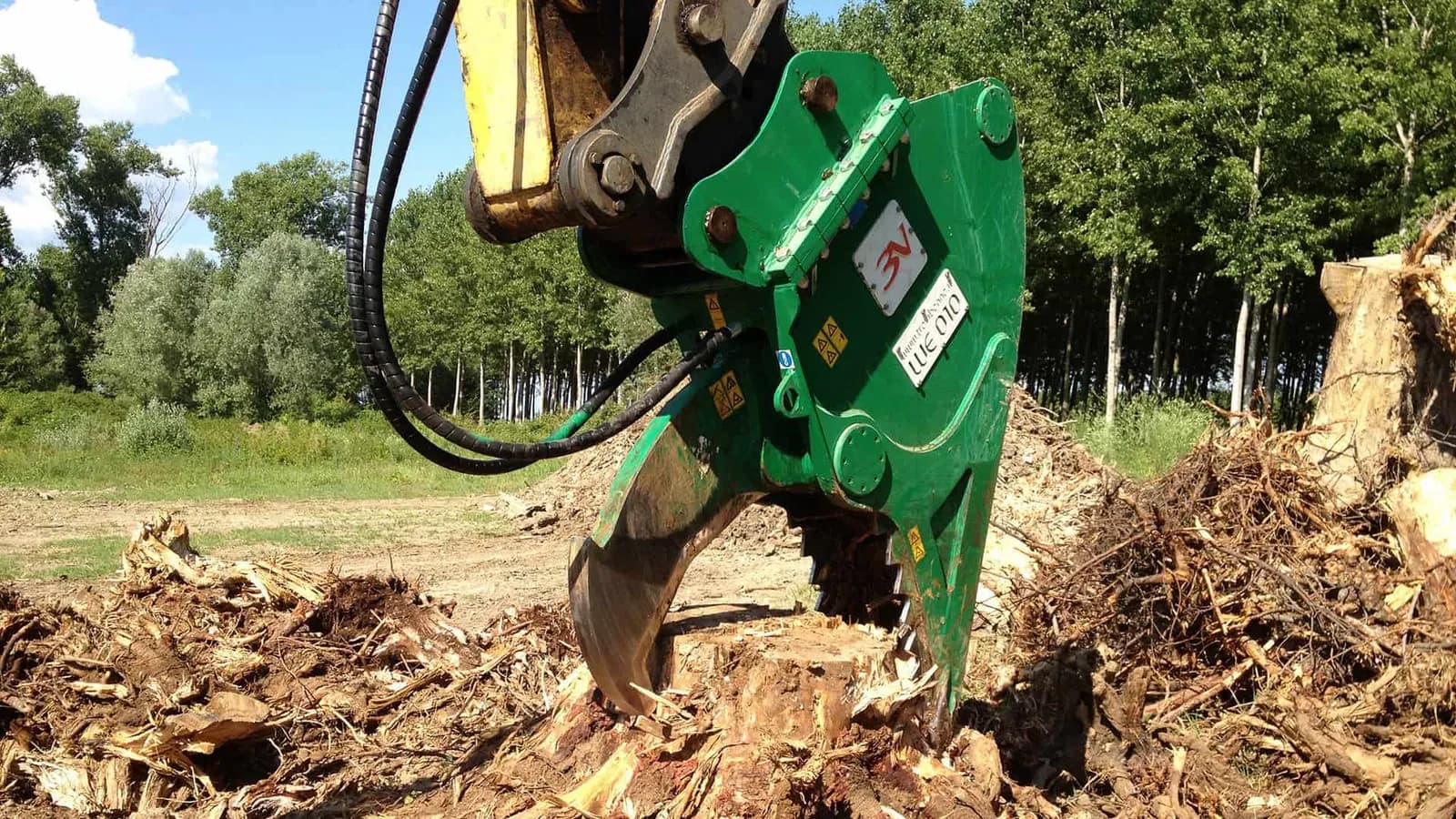
WE series stump cutters
11.5 to 28 t carriers; splits extracted stumps and larger material. Verify the current model specification and every ordered option; the series description does not approve an individual carrier.
Installation risks to resolve
Fitment is a load path, not a hole pattern. Use a bracket and hitch interface designed for the carrier and ordered attachment, check pin engagement and clearances through the full articulation range, and confirm the hose sweep with tilt or rotation where fitted. Record the installed mass rather than repeating a dry catalogue figure.
Control logic must support the work cycle. List every function and identify which need to operate simultaneously. Diverter valves can make functions technically available while slowing production or interrupting grip. Confirm safe behaviour after an engine stop, hose failure or controller fault and document the recovery method for a disabled head.
Continuous tools place a different heat load on the excavator from an intermittent breaker. Test at operating temperature and monitor the cooling system. Return and case-drain restrictions can damage a motor even when supply flow appears correct, so pressure limits must be measured at the specified point.
Known limits and support questions
The narrowest carrier range of any category in this guide, at 11.5 to 28 tonnes. There is no mini excavator option, which rules the tool out for a large part of the Australian arborist market.
It is one series covering one job. There is no adjacent product to grow into within the brand, so this is a single-purpose purchase.
Demand is the smallest in the forestry set. That is not a quality judgement, but it does mean fewer machines in the country and a thinner pool of operator experience to draw on.
Commissioning and support record
Supplied in Australia through Machinery Specialist from South Windsor, NSW, with delivery nationally.
The consumable pattern is a blade and jaw rebuild on a periodic basis rather than a constant tooth spend, which makes running costs more predictable than a grinder but concentrated into larger, less frequent events. Budget for the rebuild rather than a monthly line.
Because this is a single-series relationship rather than a whole range, confirm parts lead time specifically for the WE series rather than assuming broader distributor coverage applies.
Keep the final quotation, carrier data, lift assessment, hydraulic test, installation drawings, saved monitor settings, commissioning readings, training record and wear-parts list together. That file becomes the baseline when production changes and protects the next operator from rediscovering the installation by trial and error.
After the first representative job, review completed production, paid hours, fuel, wear, hydraulic temperature, faults and changeover time against the buying assumptions. Update operator limits and the parts kit while the experience is current. Compatibility is not only a delivery-day pass; it is a working envelope that should become more accurate as the combination accumulates evidence.