The short answer
Grind in place when access, spoil, buried assets and reinstatement make excavation expensive. Excavate when the ground is already being stripped, the root plate must be exposed, or the stump can be handled inside an existing earthworks and disposal stream. Compare the completed site, not the minutes spent at the stump.
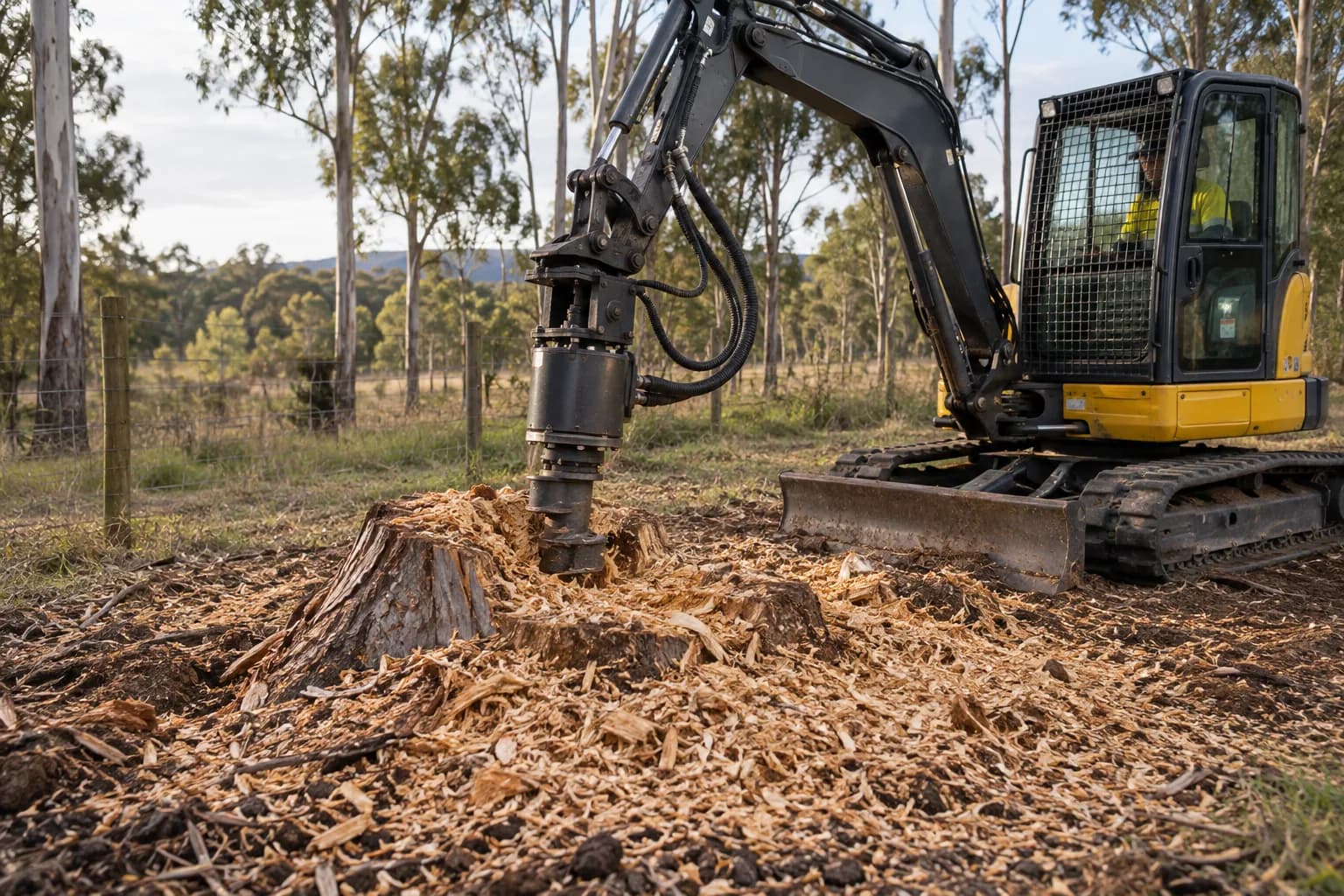
Stump grinder
Destroys the stump and root plate with limited excavation spoil
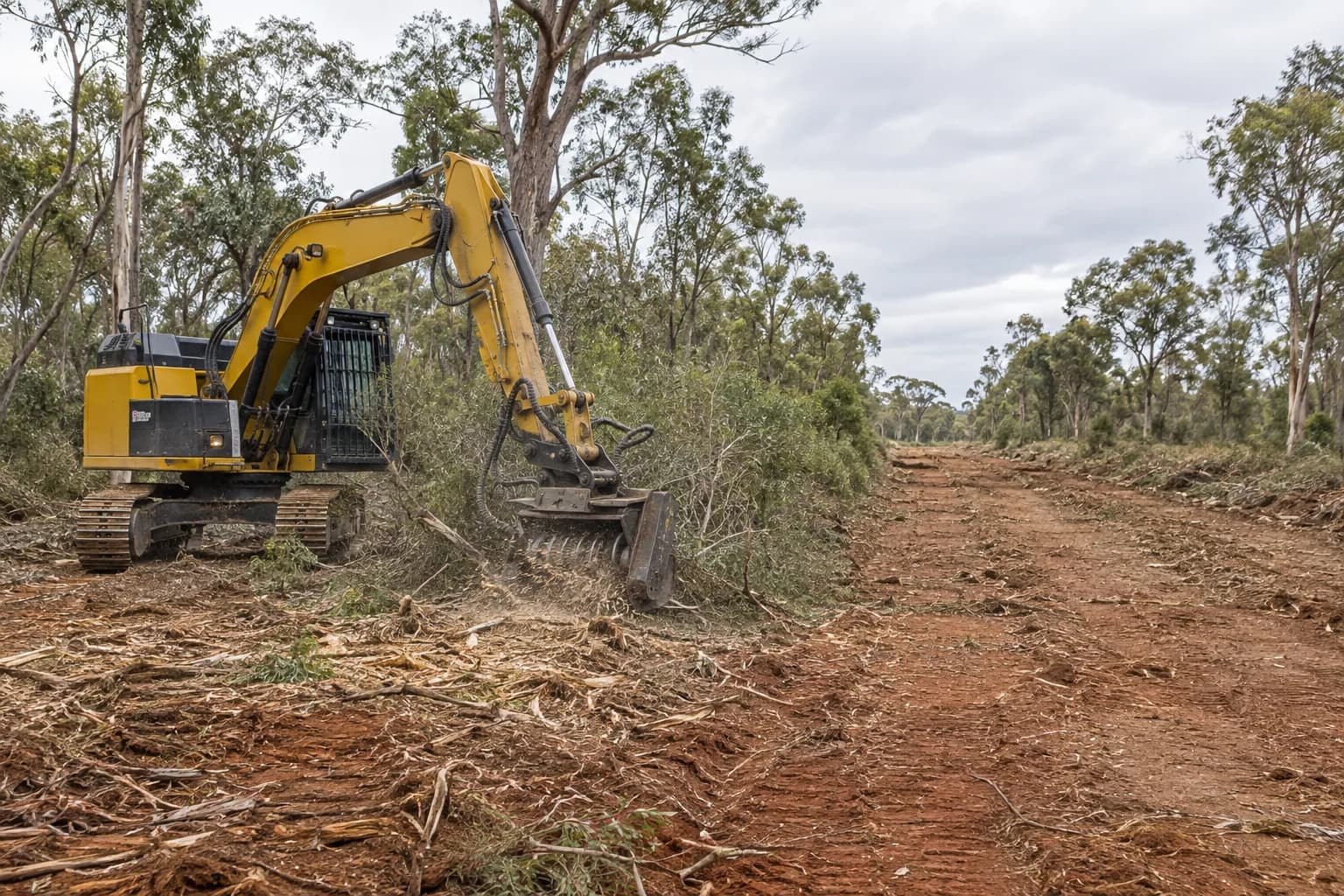
Excavator removal
Digs, extracts, handles and disposes of the root mass
Side by side
| Criterion | Stump grinder | Excavator removal |
|---|---|---|
| Ground disturbance | Localised processing below grade | Excavation around and beneath the root plate |
| Material stream | Chip mixed with soil, normally retained for backfill | Root ball, soil and spoil requiring handling or processing |
| Near services and finishes | Controlled footprint but services still require location | Larger excavation and higher reinstatement exposure |
| Open civil clearing | Adds a specialist processing step | Can fit the existing earthworks sequence |
| Dominant cost | Teeth, productive time and grinder capital | Excavator time, spoil handling, transport and reinstatement |
| Useful measure | Completed cost per stump | Completed removal and disposal cost per stump or area |
Define what finished means
Specify required depth, whether roots beyond the central plate remain, backfill, compaction, imported material, surface restoration and disposal. A stump that is no longer visible is not necessarily a completed site. Grinding and excavation can both appear cheap when reinstatement is left outside the comparison.
Locate services and understand access before selecting either method. A grinder does not make buried assets irrelevant, and excavation near structures or services can enlarge the controlled area rapidly. Record exclusion distances and the method for uncertain locations in the work plan.
Follow every tonne of material
Excavation creates a root mass mixed with soil that may be awkward to load, transport or accept at disposal. The excavator can spend more time cleaning, reducing and rehandling the stump than extracting it. If civil earthworks already include spoil movement, those costs may be absorbed; on a finished urban site they dominate.
Grinding leaves processed material in the excavation and avoids cartage, but tooth consumption rises in abrasive soil and contaminated fill. The chip is useful for reinstatement and poor as clean biomass. Price the output honestly rather than assigning recovery value to soil-contaminated material.
Use a matched sample to set the rate
Record diameter, species, access, ground, depth, productive time, teeth, carrier and crew hours for a representative group. For excavation, include digging, cleaning, loading, transport, disposal and reinstatement. For grinding, include setup, processing, tooth service, backfill and surface completion.
Use a distribution rather than one average stump. Large buttressed hardwood, old fence lines and urban fill behave differently from open softwood. State which conditions sit inside the base rate and price a transparent method for oversize, rock, buried metal or restricted access.
Run a matched field trial before committing
Choose a representative work area for each method and define the same accepted endpoint before the clock starts. Record mobilisation, setup, productive work, repositioning, supporting crew and plant, consumables, fuel, delays, material handling, clean-up and inspection. Include every paid hour until the site or work front is released. A trial that stops when the cutting action finishes measures a mechanism rather than a service.
Document material size and density, terrain, access, weather, contamination and operator experience so the result can be reused honestly. Compare completed units per crew shift and total cost per accepted unit, then test the result against low and high production cases. Keep safety controls and exposure changes visible beside the cost: a method may justify itself through fewer people in a drop zone, a smaller exclusion period or less rehandling even when its direct hourly rate is higher.
Use the trial to set operating assumptions, not to declare a permanent winner. Different work packages can reverse the result. Retain a clear boundary for conditions that require the other method and price those exceptions rather than forcing one system across every site.
How this choice goes wrong
Timing only extraction
The root ball still has to be cleaned, reduced, loaded, moved and the hole reinstated.
Assuming grinding is service-safe
Underground services must still be located and protected before below-grade work.
Ignoring soil in wear
Abrasive or contaminated ground can move grinder tooth cost dramatically.
No disposal acceptance
A destination may reject root balls or charge differently for soil-contaminated green waste.
Decision record
- Required depth and finish
- Service locations
- Access and setup
- Root mass destination
- Soil and contamination
- Reinstatement specification
- Representative stump sample
- Completed cost per stump
Continue the decision
Stump grinder guide
Understand mechanisms, carriers and running cost.
Cost per stump
Model the complete grinding system.
Ground rehabilitation
Plan the productive condition after vegetation removal.
More comparisons